| Pub. 901, U.S. Tax Treaties |
2004 Tax Year |
Main Contents
This is archived information that pertains only to the 2004 Tax Year. If you
are looking for information for the current tax year, go to the Tax Prep Help Area.
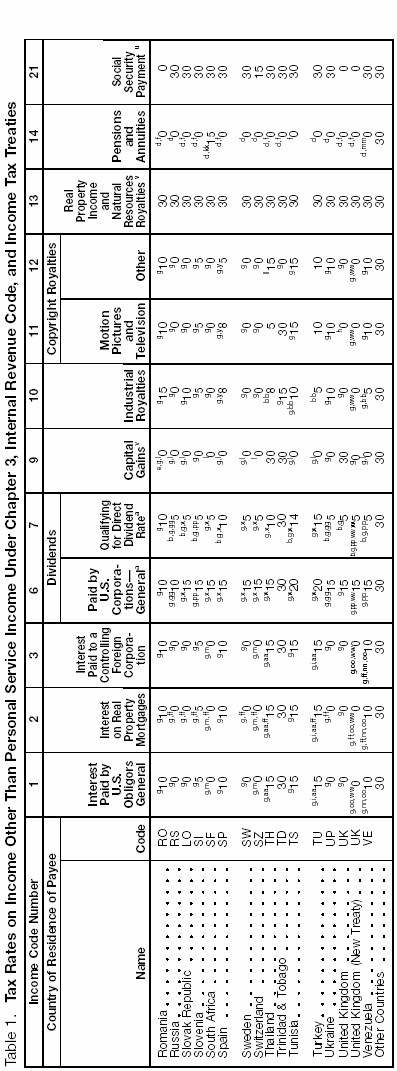
The United States has income tax treaties with a number of foreign countries. Under these treaties, residents (not necessarily
citizens) of foreign
countries are taxed at a reduced rate, or are exempt from U.S. income taxes on certain items of income they receive from sources
within the United
States. These reduced rates and exemptions vary among countries and specific items of income.
If the treaty does not cover a particular kind of income, or if there is no treaty between your country and the United States,
you must pay tax on
the income in the same way and at the same rates shown in the instructions for Form 1040NR. Also see Publication 519.
Many of the individual states of the United States tax the income of their residents. Therefore, you should consult the tax
authorities of the
state in which you live to find out if that state taxes the income of individuals and, if so, whether the tax applies to any
of your income.
Tax treaties reduce the U.S. taxes of residents of foreign countries. With certain exceptions, they do not reduce the U.S.
taxes of U.S. citizens
or residents. U.S. citizens and residents are subject to U.S. income tax on their worldwide income.
Treaty provisions generally are reciprocal (apply to both treaty countries); therefore, a U.S. citizen or resident who receives
income from a
treaty country may refer to the tables in this publication to see if a tax treaty might affect the tax to be paid to that
foreign country. Foreign
taxing authorities sometimes require certification from the U.S. Government that an applicant filed an income tax return as
a U.S. citizen or
resident, as part of the proof of entitlement to the treaty benefits. For information on this, see Publication 686.
Disclosure of a treaty-based position that reduces your tax.
If you take the position that any U.S. tax is overruled or otherwise reduced by a U.S. treaty (a treaty-based position),
you generally must
disclose that position on Form 8833 and attach it to your return. If you are not required to file a return because of your
treaty-based position, you
must file a return anyway to report your position. The filing of Form 8833 does not apply to a reduced rate of withholding
tax on noneffectively
connected income, such as dividends, interest, rents or royalties, or to a reduced rate of tax on pay received for services
performed as an employee,
including pensions, annuities, and social security. For more information, get Publication 519.
If you fail to file Form 8833, you may have to pay a $1,000 penalty. Corporations are subject to a $10,000 penalty
for each failure.
Tax Exemptions Provided by Treaties
In addition to the tables in the back of this publication, this publication contains discussions of the exemptions from tax
and certain other
effects of the tax treaties on the following types of income.
-
Pay for certain personal services performed in the United States.
-
Pay of a professor, teacher, or researcher who teaches or performs research in the United States for a limited time.
-
Amounts received for maintenance and studies by a foreign student or apprentice who is here for study or experience.
-
Wages, salaries, and pensions paid by a foreign government.
Pay for certain personal services performed in the United States is exempt from U.S. income tax if you are a resident of one
of the countries
discussed below, if you are in the United States for a limited number of days and if you meet certain other conditions. For
this purpose, the word
“day” means a day during any part of which you are physically present in the United States.
Terms defined.
Several terms appear in many of the discussions that follow. The exact meanings of the terms are determined by the
particular tax treaty under
discussion; thus, the meanings vary among treaties. The definitions that follow are, therefore, general definitions that may
not give the exact
meaning intended by a particular treaty.
The terms fixed base and permanent establishment generally mean a fixed place of business, such as an office, a factory,
a warehouse, or a mining
site, through which an enterprise carries on its business.
The term borne by generally means having ultimate financial accounting responsibility for or providing the monetary
resources for an expenditure or
payment, even if another entity in another location actually made the expenditure or payment.
Income that residents of Australia receive for performing personal services as independent contractors or self-employed individuals
(independent
personal services) in the United States during the tax year is exempt from U.S. income tax if the residents:
-
Are in the United States for no more than 183 days during the tax year, and
-
Do not have a fixed base regularly available to them in the United States for the purpose of performing the services.
If they have a fixed base available in the United States, they are taxed on the income attributable to the fixed base.
Pay that residents of Australia receive for labor or personal services performed in the United States as employees (dependent
personal services),
including services as a director of a company, is exempt from U.S. income tax if:
-
The residents are in the United States for no more than 183 days during the tax year,
-
The pay is paid by, or on behalf of, an employer or company that is not a resident of the United States, and
-
The pay is not deductible in determining the taxable income of the trade or business of the employer (or company) in the United
States.
These exemptions do not apply to public entertainers (such as theater, motion picture, radio, or television entertainers,
musicians and athletes)
from Australia who earn more than $10,000 in gross receipts, including reimbursed expenses, from their entertainment activities
in the United States
during the tax year.
Income that residents of Austria receive for personal services as independent contractors or self-employed individuals (independent
personal
services) in the United States is exempt from U.S. income tax if they do not have a fixed base regularly available to them
in the United States for
performing the services. If they have a fixed base available in the United States, they are taxed on the income attributable
to the fixed base.
Income that residents of Austria receive for services performed in the United States as employees (dependent personal services)
is exempt from U.S.
income tax if the residents meet the following requirements.
-
They are in the United States for no more than 183 days in any 12-month period beginning or ending in the tax year.
-
Their income is paid by, or on behalf of, an employer who is not a U.S. resident.
-
Their income is not borne by a permanent establishment or a fixed base that the employer has in the United States.
These exemptions do not apply to public entertainers (such as theater, motion picture, radio, or television entertainers,
musicians and athletes)
from Austria who earn more than $20,000 in gross receipts, including reimbursed expenses, from their entertainment activities
in the United States
during the tax year.
Income received by a resident of Austria for services performed as an employee and member of the regular complement of a ship
or aircraft operated
in international traffic is exempt from U.S. income tax.
Income that residents of Barbados receive for performing personal services as independent contractors or self-employed individuals
(independent
personal services) in the United States during the tax year is exempt from U.S. income tax if the residents:
-
Are in the United States for no more than 89 days during the tax year,
-
Earn net income for independent services provided to U.S. residents that is not more than $5,000 (there is no dollar limit
if the
contractors are not U.S. residents), and
-
Do not have a regular base available in the United States for performing the services.
If they have a regular base available in the United States but otherwise meet the conditions for exemption, they are taxed
only on the income
attributable to the regular base.
Income that residents of Barbados receive for personal services performed in the United States as employees (dependent personal
services) is exempt
from U.S. tax if the residents meet four requirements.
-
They are in the United States for no more than 183 days during the calendar year.
-
The income earned in the calendar year in the United States is not more than $5,000.
-
Their income is paid by or for an employer who is not a U.S. resident.
-
The income is not borne by a permanent establishment or regular base of the employer in the United States.
Income of a Barbadian resident from employment as a member of the regular complement of a ship or aircraft operated in international
traffic is
exempt from U.S. tax.
These exemptions do not apply to Barbadian resident public entertainers (such as theater, motion picture, radio, or television
artists, musicians,
or athletes) who receive gross receipts of more than $250 per day or $4,000 in the tax year, not including reimbursed expenses,
from their
entertainment activities in the United States. However, the exemptions do apply regardless of these limits on gross receipts
if the entertainer's
visit to the United States is substantially supported by Barbadian public funds or if the entertainer's services are provided
to a nonprofit
organization.
Income that residents of Belgium receive for performing personal services as independent contractors or self-employed individuals
(independent
personal services) in the United States during the tax year is exempt from U.S. income tax if the residents:
-
Are present in the United States less than 183 days during the tax year, and
-
Do not maintain a fixed base in the United States for a period or periods that total more than 182 days during the tax year.
If they do not meet condition (2), they are taxed on the income attributed to the fixed base.
The exemption for independent personal services does not apply to individuals who are public entertainers (theater, motion
picture, or television
artists, musicians, or athletes), if they are in the United States for more than 90 days during the tax year or if their pay
for services as public
entertainers is more than $3,000.
Income that residents of Belgium receive for labor or personal services performed in the United States as employees (dependent
personal services),
including services as an officer of a corporation, is exempt from U.S. income tax if the residents meet three requirements.
-
They are present in the United States less than 183 days during the tax year.
-
They are employees of a resident of Belgium or of a permanent establishment in Belgium.
-
Their income is not borne by a permanent establishment that the employer has in the United States.
Income for services performed by an individual as an employee aboard a ship or an aircraft registered in Belgium and operated
by a resident of
Belgium in international traffic is exempt from U.S. tax if the individual is a member of the regular complement of the ship
or aircraft.
These exemptions do not apply to fees received by a resident of Belgium for services performed as a director of a U.S. corporation
if the fees are
treated as a distribution of profits and cannot be taken as a deduction by the corporation.
Income that residents of Canada receive for personal services as independent contractors or self-employed individuals (independent
personal
services) that they perform during the tax year in the United States is exempt from U.S. tax if they do not have a fixed base
regularly available to
them in the United States for performing the services. If they have a fixed base available in the United States, they are
taxed on the income
attributable to the fixed base.
Income that residents of Canada receive for personal services performed as employees (dependent personal services) in the
United States is exempt
from U.S. tax if it is not more than $10,000 for the year. If the income is more than $10,000 for the year, it is exempt only
if:
-
The residents are present in the United States for no more than 183 days during the calendar year, and
-
The income is not borne by a U.S. resident employer or by a permanent establishment or fixed base of an employer in the United
States.
These exemptions do not apply to public entertainers (such as theater, motion picture, radio, or television artists, musicians,
or athletes) from
Canada who derive more than $15,000 in gross receipts, including reimbursed expenses, from their entertainment activities
in the United States during
the calendar year. However, the exemptions do apply, regardless of this $15,000 limit, to athletes participating in team sports
in leagues with
regularly scheduled games in both Canada and the United States.
Pay received by a resident of Canada for employment regularly done in more than one country on a ship, aircraft, motor vehicle,
or train operated
by a Canadian resident is exempt from U.S. tax.
China, People's Republic of
Income that residents of the People's Republic of China receive for personal services as independent contractors or self-employed
individuals
(independent personal services) that they perform during the tax year in the United States is exempt from U.S. income tax
if the residents:
-
Are present in the United States for no more than 183 days in the calendar year, and
-
Do not have a fixed base regularly available in the United States for performing the services.
If they have a fixed base available in the United States, they are taxable on the income attributable to the fixed base.
Pay received by residents of the People's Republic of China for services performed as employees (dependent personal services)
in the United States
is exempt from U.S. tax if:
-
The residents are present in the United States for no more than 183 days in the calendar year,
-
The pay is paid by or for an employer who is not a U.S. resident, and
-
The pay is not borne by a permanent establishment or fixed base that the employer has in the United States.
These exemptions do not apply to directors' fees for service on the board of directors of a U.S. corporation.
These exemptions generally do not apply to income received as a public entertainer (such as a theater, motion picture, radio,
or television artist,
musician, or athlete). However, income of athletes or public entertainers from China participating in a cultural exchange
program agreed upon by the
U.S. and Chinese governments is exempt from U.S. tax.
Commonwealth of Independent States
Income that residents of a C.I.S. member receive for performing personal services in the United States is exempt from U.S.
income tax if those
residents are in the United States for no more than 183 days during the tax year.
Pay received by an employee who is a member of the regular complement of a ship or aircraft operated in international traffic
by a C.I.S. member or
a resident of a C.I.S. member is exempt from U.S. tax.
Income that residents of Cyprus receive for performing personal services as independent contractors or self-employed individuals
(independent
personal services) in the United States during the tax year is exempt from U.S. income tax if the residents:
-
Are present in the United States for less than 183 days in the tax year, and
-
Do not have a fixed base regularly available to them in the United States for performing the services.
If they have a fixed base available in the United States, they are taxable on the income attributable to the fixed base.
Pay received by residents of Cyprus from services performed as employees (dependent personal services), including services
as an officer of a
corporation, is exempt from U.S. income tax if:
-
The residents are in the United States for less than 183 days during the tax year,
-
The pay is paid by or for an employer who is not a U.S. resident, and
-
The pay is not borne by a permanent establishment, fixed base, or trade or business that the employer has in the United States.
Pay received by a Cyprus resident for performing personal services as an employee and member of the regular complement of
a ship or aircraft
operated in international traffic by a resident of Cyprus is exempt from U.S. tax.
These exemptions do not apply to Cyprus resident public entertainers (theater, motion picture, radio, or television artists,
musicians, or
athletes) who receive gross receipts of more than $500 per day or $5,000 for the tax year, not including reimbursed expenses,
from their entertainment
activities in the United States.
Directors' fees received by residents of Cyprus for service on the board of directors of a U.S. corporation are exempt from
U.S. income tax to the
extent of a reasonable fixed amount payable to all directors for each day of attendance at directors' meetings held in the
United States.
Income that residents of the Czech Republic receive for performing personal services as independent contractors or self-employed
individuals
(independent personal services) in the United States is exempt from U.S. income tax if the residents:
-
Are present in the United States for no more than 183 days in any 12-month period, and
-
Do not have a fixed base regularly available to them in the United States for performing the services.
If they have a fixed base available, they are taxed only on income attributable to the fixed base.
Income that residents of the Czech Republic receive for employment in the United States (dependent personal services) is exempt
from U.S. income
tax if the following three requirements are met.
-
The resident is present in the United States for no more than 183 days in any 12-month period.
-
The income is paid by, or on behalf of, an employer who is not a U.S. resident.
-
The income is not borne by a permanent establishment or a fixed base that the employer has in the United States.
These exemptions do not apply to income residents of the Czech Republic receive as public entertainers (such as theater, motion
picture, radio, or
television artists, or musicians) or sportsmen if their gross receipts, including reimbursed expenses, are more than $20,000
during the tax year.
Regardless of these limits, income of Czech entertainers and sportsmen is exempt from U.S. income tax if their visit to the
United States is
substantially supported by public funds of the Czech Republic, its political subdivisions, or local authorities, or the visit
is made pursuant to a
specific arrangement between the United States and the Czech Republic.
These exemptions do not apply to directors' fees and similar payments received by a resident of the Czech Republic as a member
of the board of
directors of a company that is a resident of the United States.
Income from employment as a member of the regular complement of a ship or aircraft operated by a Czech enterprise in international
traffic is
exempt from U.S. income tax.
Income that residents of Denmark receive for personal services as independent contractors or self-employed individuals (independent
personal
services) in the United States is exempt from U.S. income tax if they do not have a fixed base regularly available to them
in the United States for
performing the services. If they have a fixed base available in the United States, they are taxed on the income attributable
to the fixed base.
Income that residents of Denmark receive for services performed in the United States as employees (dependent personal services)
is exempt from U.S.
income tax if the residents meet the following requirements.
-
They are in the United States for no more than 183 days in any 12-month period beginning or ending in the tax year.
-
Their income is paid by, or on behalf of, an employer who is not a U.S. resident.
-
Their income is not borne by a permanent establishment or a fixed base that the employer has in the United States.
These exemptions do not apply to directors' fees and similar payments received by a resident of Denmark as a member of the
board of directors of a
company that is a resident of the United States.
These exemptions do not apply to public entertainers (such as theater, motion picture, radio, or television artists, musicians,
and athletes) from
Denmark who earn more than $20,000 in gross receipts, including reimbursed expenses, from their entertainment activities in
the United States during
the tax year.
Income received by a resident of Denmark for services performed as an employee and member of the regular complement of a ship
or aircraft operated
in international traffic is exempt from U.S. income tax.
Income that residents of Egypt receive for performing personal services as independent contractors or as self-employed individuals
(independent
personal services) in the United States during the tax year is exempt from U.S. income tax if they are in the United States
for no more than 89 days
during the tax year.
Income that residents of Egypt receive for labor or personal services performed in the United States as employees (dependent
personal services),
including income for services performed by an officer of a corporation or company, is exempt from U.S. income tax if the residents
meet four
requirements.
-
They are in the United States for no more than 89 days during the tax year.
-
They are employees of a resident of, or a permanent establishment in, Egypt.
-
Their income is not borne by a permanent establishment that the employer has in the United States.
-
Their income is subject to Egyptian tax.
Pay received by a resident of Egypt who is an employee and member of the regular complement of a ship or an aircraft operated
in international
traffic by a resident of Egypt is exempt.
These exemptions do not apply to Egyptian resident public entertainers (theater, motion picture, radio, or television artists,
musicians, or
athletes), who earn income for services as public entertainers if the gross amount of the income is more than $400 for each
day they are in the United
States performing the services.
Income that residents of Estonia receive for performing personal services as independent contractors or self-employed individuals
(independent
personal services) in the United States is exempt from U.S. income tax if the residents:
-
Are in the United States for no more than 183 days in any 12-month period beginning or ending in the tax year, and
-
Do not have a fixed base regularly available to them in the United States for performing the services.
If they have a fixed base available, they are taxed on the income attributable to the fixed base.
Income that residents of Estonia receive for services performed in the United States as employees (dependent personal services)
is exempt from U.S.
income tax if the following requirements are met.
-
The resident is in the United States for no more than 183 days in any 12-month period beginning or ending in the tax year.
-
The income is paid by, or on behalf of, an employer who is not a U.S. resident.
-
The income is not borne by a permanent establishment or a fixed base that the employer has in the United States.
These exemptions do not apply to directors' fees and similar payments received by a resident of Estonia as a member of the
board of directors or
similar body of a company that is a U.S. resident.
Income from employment as a member of the regular complement of a ship or an aircraft operated by an Estonian enterprise in
international traffic
is exempt from U.S. income tax.
These exemptions do not apply to income residents of Estonia receive as public entertainers (such as theater, motion picture,
radio, or television
artists, or musicians) or sportsmen if their gross receipts, including reimbursed expenses, are more than $20,000 for their
personal activities in the
United States during the tax year. Regardless of these limits, income of Estonian entertainers or athletes is exempt from
U.S. income tax if their
visit to the United States is wholly or mainly supported by public funds of Estonia, its political subdivisions, or local
authorities.
Income that residents of Finland receive for performing personal services as independent contractors or self-employed individuals
(independent
personal services) in the United States is exempt from U.S. income tax if they do not have a fixed base regularly available
to them in the United
States for performing the services. If they have a fixed base available in the United States, they are taxed on the income
attributable to the fixed
base.
Income that residents of Finland receive for labor or personal services performed in the United States as employees (dependent
personal services)
is exempt from U.S. income tax if the residents meet three requirements.
-
They are in the United States for no more than 183 days during any 12-month period.
-
Their income is paid by, or on behalf of, an employer who is not a resident of the United States.
-
Their income is not borne by a permanent establishment, fixed base, or trade or business that the employer has in the United
States.
Income received for performing personal services as an employee and member of the regular complement of a ship or aircraft
operated in
international traffic by a resident of Finland is exempt from U.S. tax.
These exemptions do not apply to income residents of Finland receive as public entertainers or sportsmen if the gross income,
including reimbursed
expenses, is more than $20,000 for their personal activities in the United States during the calendar year.
Income that residents of France receive for performing personal services as independent contractors or self-employed individuals
(independent
personal services) in the United States is exempt from U.S. income tax if they do not have a fixed base regularly available
to them in the United
States for performing the services. If they have a fixed base available in the United States, they are taxed on the income
attributable to the fixed
base.
Income that residents of France receive for labor or personal services performed in the United States as employees (dependent
personal services) is
exempt from U.S. income tax if the residents meet three requirements.
-
They are in the United States for no more than 183 days in any 12–month period.
-
Their income is paid by, or on behalf of, an employer who is not a resident of the United States.
-
Their income is not borne by a permanent establishment or a fixed base that the employer has in the United States.
Income for services performed by a resident of France as an employee and member of the regular complement of a ship or an
aircraft operated in
international traffic is exempt from tax in the United States.
These exemptions do not apply to public entertainers (such as theater, motion picture, radio, or television artists, musicians),
or sportsmen from
France who earn more than $10,000 in gross receipts, including reimbursed expenses, from their entertainment activities in
the United States during
the tax year. Regardless of these limits, income of French entertainers or sportsmen is exempt from U.S. tax if their visit
is principally supported
by public funds of France.
These exemptions do not apply to directors' fees and similar payments received by a resident of France as a member of the
board of directors of a
company that is a resident of the United States.
Income that residents of Germany receive for performing personal services as independent contractors or self-employed individuals
(independent
personal services) in the United States is exempt from U.S. income tax if the income is not attributable to a fixed base regularly
available in the
United States.
Income that residents of Germany receive for labor or personal services performed in the United States as employees (dependent
personal services)
is exempt from U.S. tax if the residents meet three requirements.
-
They are in the United States for no more than 183 days during the calendar year.
-
The income is paid by, or on behalf of, an employer who is not a resident of the United States.
-
The income is not borne by a permanent establishment or a fixed base that the employer has in the United States.
Pay received by a resident of Germany for services performed as an employee and member of the regular complement of a ship
or aircraft operated in
international traffic is exempt from U.S. tax.
These exemptions do not apply to directors' fees and other similar payments received by a resident of Germany for services
performed in the United
States as a member of the board of directors of a company resident in the United States.
These exemptions do not apply to income residents of Germany receive as public entertainers (such as theater, motion picture,
radio or television
artists, or musicians) or athletes if their gross receipts, including reimbursed expenses, are more than $20,000 during the
calendar year. Regardless
of these limits, income of German entertainers or athletes is exempt from U.S. tax if their visit to the United States is
substantially supported by
public funds of Germany, its political subdivisions, or local authorities.
Income that residents of Greece receive for labor or personal services (including practicing liberal and artistic professions)
is exempt from U.S.
income tax if they are in the United States for no more than 183 days during the tax year and the pay is not more than $10,000.
The pay, regardless of
amount, is exempt from U.S. income tax if it is for labor or personal services performed as employees of, or under contract
with, a resident of Greece
or a Greek corporation or other entity of Greece, and if the residents are in the United States for no more than 183 days
during the tax year.
Income that residents of Hungary receive for performing personal services as independent contractors or self-employed individuals
(independent
personal services) in the United States during the tax year is exempt from U.S. tax if the residents:
-
Are in the United States for no more than 183 days during the tax year, and
-
Do not have a fixed base regularly available in the United States.
If they have a fixed base available in the United States, they are taxed on the income attributable to the fixed base.
Income that residents of Hungary receive for labor or personal services performed in the United States as employees (dependent
personal services)
is exempt from U.S. income tax if the residents meet three requirements.
-
They are in the United States for no more than 183 days during the tax year.
-
Their income is paid by or on behalf of an employer who is not a resident of the United States.
-
Their income is not borne by a permanent establishment or a fixed base that the employer has in the United States.
Pay received by an employee who is a member of the regular complement of a ship or aircraft operated by a resident of Hungary
in international
traffic is also exempt.
Income that residents of Iceland receive for performing personal services as independent contractors or self-employed individuals
(independent
personal services) in the United States during the tax year is exempt from U.S. income tax if the residents:
-
Are present in the United States for no more than 182 days during the tax year, and
-
Do not maintain a fixed base in the United States for a period or periods totaling more than 182 days during the tax year.
If they do not meet condition (2), they are taxed on the income that is attributable to the fixed base.
This exemption does not apply to residents of Iceland who are public entertainers (theater, motion picture, or television
artists, musicians, or
athletes) if they are in the United States for more than 90 days during the tax year or their pay for services as public entertainers
is more than
$100 per day.
Income that residents of Iceland receive for labor or personal services performed in the United States as employees (dependent
personal services)
is exempt from U.S. income tax if the employees meet three requirements:
-
They are in the United States for no more than 182 days during the tax year.
-
They are employees of a resident of Iceland or of a permanent establishment of a resident of a state other than Iceland if
the permanent
establishment is located in Iceland.
-
Their income is not borne by a permanent establishment that the employer has in the United States.
Income for services performed by an employee aboard a ship or an aircraft operated by a resident of Iceland in international
traffic or in fishing
on the high seas is exempt from U.S. tax if the individual is a member of the regular complement of the ship or aircraft.
Income that residents of India receive for performing personal services in the United States during the tax year as independent
contractors or
self-employed individuals (independent personal services) is exempt from U.S. income tax if the residents:
-
Are present in the United States for no more than 89 days during the tax year, and
-
Do not have a fixed base regularly available to them in the United States for performing the services.
If they have a fixed base available, they are taxed only on income attributable to the fixed base.
Income that residents of India receive for personal services performed in the United States as employees (dependent personal
services) is exempt
from U.S. income tax if the residents meet three requirements.
-
They are present in the United States for no more than 183 days during the tax year.
-
The income is paid by, or on behalf of, an employer who is not a resident of the United States.
-
The income is not borne by a permanent establishment, fixed base, or trade or business the employer has in the United States.
These exemptions do not apply to directors' fees and similar payments received by an Indian resident as a member of the board
of directors of a
company that is a U.S. resident.
Pay received by a resident of India for services performed as an employee aboard a ship or aircraft operated by an Indian
enterprise in
international traffic is exempt from U.S. tax.
These exemptions do not apply to income residents of India receive as public entertainers (such as theater, motion picture,
radio, or television
artists, or musicians) or athletes if their net income is more than $1,500 during the tax year for their entertainment activities
in the United
States. Regardless of this limit, the income of Indian entertainers and athletes is exempt from U.S. tax if their visit to
the United States is wholly
or substantially supported from the public funds of the Indian Government, its political subdivisions, or local authorities.
Income that residents of Indonesia receive for performing personal services as individual contractors or self-employed individuals
(independent
personal services) in the United States during the tax year is exempt from U.S. income tax if the residents:
-
Are present in the United States for no more than 119 days during any consecutive 12-month period, and
-
Do not have a fixed base regularly available to them in the United States for performing the services.
If they have a fixed base available, they are taxed only on the income attributable to the fixed base.
Income that residents of Indonesia receive for personal services performed in the United States as employees (dependent personal
services) is
exempt from U.S. income tax if the residents meet three requirements.
-
They are present in the United States no more than 119 days during any consecutive 12-month period.
-
The income is paid by, or on behalf of, an employer who is not a resident of the United States.
-
The income is not borne or reimbursed by a permanent establishment the employer has in the United States.
Pay received by an individual for services performed as an employee aboard a ship or aircraft operated by an Indonesian resident
in international
traffic is exempt from U.S. tax if the individual is a member of the regular complement of the ship or aircraft.
These exemptions do not apply to income residents of Indonesia receive as public entertainers (such as theater, motion picture,
radio, or
television artists, or musicians) or athletes if their gross receipts, including reimbursed expenses, are more than $2,000
during any consecutive
12-month period. Regardless of these limits, income of Indonesian entertainers and athletes is exempt from U.S. tax if their
visit to the United
States is substantially supported or sponsored by the Indonesian Government and the Indonesian competent authority certifies
that the entertainers or
athletes qualify for this exemption.
Income that residents of Ireland receive for personal services as independent contractors or self-employed individuals (independent
personal
services) in the United States is exempt from U.S. income tax if they do not have a fixed base regularly available to them
in the United States for
performing the services. If they have a fixed base available in the United States, they are taxed on the income attributable
to the fixed base.
Income that residents of Ireland receive for services performed in the United States as employees (dependent personal services)
is exempt from U.S.
income tax if the residents meet the following requirements.
-
They are in the United States for no more than 183 days in any 12-month period beginning or ending in the tax year.
-
Their income is paid by, or on behalf of, an employer who is not a U.S. resident.
-
Their income is not borne by a permanent establishment or a fixed base that the employer has in the United States.
These exemptions do not apply to directors' fees and similar payments received by a resident of Ireland as a member of the
board of directors of a
company that is a resident of the United States. However, amounts received for attending meetings in Ireland are not subject
to U.S. income tax.
Income received by a resident of Ireland for services performed as an employee and member of the regular complement of a ship
or aircraft operated
in international traffic is exempt from U.S. income tax.
These exemptions do not apply to public entertainers (such as theater, motion picture, radio, or television entertainers,
musicians and athletes)
from Ireland who earn more than $20,000 in gross receipts, including reimbursed expenses, from their entertainment activities
in the United States
during the tax year.
Income that residents of Israel receive for performing personal services as independent contractors or as self-employed individuals
(independent
personal services) in the United States during the tax year is exempt from U.S. income tax if they are in the United States
for no more than 182 days
during the tax year.
Income that residents of Israel receive for labor or personal services performed in the United States as employees (dependent
personal services),
including income for services performed by an officer of a corporation or company, is exempt from U.S. income tax if the residents
meet four
requirements.
-
They are in the United States for no more than 182 days during the tax year.
-
They are employees of a resident of, or a permanent establishment in, Israel.
-
Their income is not borne by a permanent establishment that the employer has in the United States.
-
Their income is subject to Israeli tax.
Generally, pay received by an employee of a resident of Israel for labor or personal services performed as a member of the
regular complement of a
ship or an aircraft operated in international traffic by a resident of Israel is exempt.
These exemptions do not apply to income that residents of Israel receive as public entertainers (such as theater, motion picture,
radio or
television artists, musicians, or athletes), if the gross amount of the income is more than $400 for each day they are in
the United States performing
the services.
Income that residents of Italy receive for performing personal services in the United States during the tax year as independent
contractors or
self-employed individuals (independent personal services) is exempt from U.S. income tax if the residents:
-
Are present in the United States for no more than 183 days in the tax year, and
-
Do not have a fixed base regularly available to them in the United States for performing the services.
If they have a fixed base available, they are taxed only on the income attributable to the fixed base.
Income that residents of Italy receive for personal services performed in the United States as employees (dependent personal
services) is exempt
from U.S. income tax if:
-
The residents are present in the United States for not more than 183 days during the tax year,
-
The income is paid by or for an employer who is not a U.S. resident, and
-
The income is not borne by a permanent establishment or fixed base that the employer has in the United States.
Pay received by a resident of Italy from employment regularly exercised aboard a ship or aircraft operated by an Italian enterprise
in
international traffic is exempt from U.S. tax.
These exemptions do not apply to directors' fees and similar payments received by an Italian resident as a member of the board
of directors of a
company that is a U.S. resident.
These exemptions do not apply to income residents of Italy receive as public entertainers (such as theater, motion picture,
radio, or television
artists, musicians, or athletes) if they are present in the United States for more than 90 days during the tax year or their
gross receipts, including
reimbursed expenses, are more than $12,000 during the tax year for their entertainment activities in the United States.
Income that residents of Jamaica receive for the performance of personal services as independent contractors or self-employed
individuals
(independent personal services) in the United States during the tax year is exempt from U.S. income tax if the residents:
-
Are in the United States for no more than 89 days during the tax year,
-
Do not have a fixed base regularly available to them in the United States for performing their services, and
-
Earn net income for those services that is not more than $5,000 during the tax year if the income is from a U.S. contractor.
If they have a fixed base available in the United States, they are taxed only on the income that is attributable to the fixed
base. There is no
dollar limit for condition (3) if the contractor is from a country other than the United States.
Income that residents of Jamaica receive for personal services performed in the United States as employees (dependent personal
services) is exempt
from U.S. income tax if the residents meet four requirements.
-
They are in the United States for no more than 183 days during the tax year.
-
Their income is paid by or for an employer who is not a resident of the United States.
-
Their income is not borne by a permanent establishment or a fixed base that the employer has in the United States.
-
Their net income received for the services is not more than $5,000 during the tax year.
Pay received from employment as a member of the regular complement of a ship or an aircraft operated in international traffic
by a Jamaican
enterprise is exempt.
These exemptions do not apply to income that residents of Jamaica receive for performing services in the United States as
entertainers, such as
theater, motion picture, radio, or television artists, musicians, or athletes, if the gross receipts (excluding reimbursements
for expenses) from the
services are more than $400 a day or $5,000 for the tax year.
Directors' fees received by residents of Jamaica for services performed in the United States as members of boards of directors
of U.S. corporations
are exempt from U.S. tax if the fees (excluding reimbursed expenses) are not more than $400 per day for each day the directors
are present in the
United States to perform the services.
Note:
See the effective dates of the new treaty under What's New at the beginning of this publication.
New treaty.
Income that residents of Japan receive for personal services as independent contractors or self-employed individuals
are subject to the provisions
of Article 7 (business profits) of the treaty. Under that provision, business profits are exempt from U.S. income tax unless
they have a permanent
establishment in the United States. If they have a permanent establishment available in the United States, they are taxed
on the income attributable
to the permanent establishment.
Income that residents of Japan receive for services performed in the United States as employees (dependent personal
services) is exempt from U.S.
income tax if the residents meet the following requirements.
-
They are in the United States for no more than 183 days in any 12-month period beginning or ending in the tax year.
-
Their income is paid by, or on behalf of, an employer who is not a U.S. resident.
-
Their income is not borne by a permanent establishment that the employer has in the United States.
The exemption does not apply to directors' fees and similar payments received by a resident of Japan for services
performed as a member of the
board of directors of a company that is a resident of the United States.
This exemption does not apply to a resident of Japan who performs services as an employee aboard a ship or an aircraft
operated in international
traffic by a U.S. resident.
These exemptions do not apply to public entertainers (such as theater, motion picture, radio, or television artists,
musicians, or athletes) from
Japan who earn more than $10,000 in gross receipts, including reimbursed expenses, from their entertainment activities in
the United States during the
tax year.
Former treaty.
Income that residents of Japan receive for performing personal services as independent contractors or self-employed
individuals (independent
personal services) in the United States during the tax year is exempt from U.S. income tax if the residents:
-
Are present in the United States for no more than 183 days during the tax year, and
-
Do not maintain a fixed base in the United States for more than 183 days during the tax year.
If they do not meet condition (2), they are taxed on only the income attributable to the fixed base.
This exemption does not apply to residents of Japan who are public entertainers (theater, motion picture, or television
artists, musicians, or
athletes) if they are in the United States for more than 90 days during the tax year or their pay (excluding reimbursed travel
expenses) for services
as public entertainers is more than $3,000 during the tax year.
Income that residents of Japan receive for labor or personal services performed in the United States as employees
(dependent personal services),
including pay received by an officer or a member of the board of directors of a corporation, is exempt from U.S. income tax
if the residents meet
three requirements.
-
They are in the United States for no more than 183 days during the tax year.
-
They are employees of a resident of Japan or of a permanent establishment of a resident of a state other than Japan if the
permanent
establishment is located in Japan.
-
Their income is not borne by a permanent establishment that the employer has in the United States.
However, the exemption does not apply in certain cases in which the employee owns stock of the employer or is a member of
the employer's board of
directors.
Pay received from employment as a member of the regular complement of a ship or aircraft operated in international traffic
by a resident of Japan
is exempt.
Income that residents of Kazakstan receive for performing personal services as independent contractors or self-employed individuals
(independent
personal services) in the United States is exempt from U.S. income tax if:
-
The residents are in the United States for no more than 183 days in any consecutive 12-month period, and
-
The income is not attributable to a fixed base in the United States which is regularly available to the residents.
If the residents have a fixed base available, they are taxed only on the income attributable to the fixed base.
Income that residents of Kazakstan receive for employment in the United States (dependent personal services) is exempt from
U.S. income tax if the
following three requirements are met.
-
The resident is in the United States for no more than 183 days in any 12-month period.
-
The income is paid by, or on behalf of, an employer who is not a resident of the United States.
-
The income is not borne by a permanent establishment or a fixed base that the employer has in the United States.
Income from employment as a member of the regular complement of a ship or aircraft operated in international traffic is exempt
from U.S. tax.
These exemptions do not apply to directors' fees and similar payments received by a resident of Kazakstan as a member of the
board of directors or
similar body of a company that is a U.S. resident.
Income that residents of the Republic of Korea receive for performing personal services as independent contractors or self-employed
individuals
(independent personal services) in the United States during the tax year is exempt from U.S. tax if the residents:
-
Are in the United States for no more than 182 days during the tax year,
-
Earn income for those services that is not more than $3,000 during the tax year, and
-
Do not maintain a fixed base in the United States for more than 182 days during the tax year.
If they maintain a fixed base in the United States for more than 182 days, they are taxed on the income attributable to the
fixed base.
Income that residents of Korea receive for labor or personal services performed in the United States as employees (dependent
personal services),
including pay for services performed as an officer of a corporation, is exempt from U.S. tax if the residents meet four requirements.
-
They are in the United States for no more than 182 days during the tax year.
-
They are employees of a resident of Korea or of a permanent establishment maintained in Korea.
-
Their compensation is not borne by a permanent establishment that the employer has in the United States.
-
Their income for those services is not more than $3,000.
Pay received by employees who are members of the regular complement of a ship or aircraft operated by a resident of Korea
in international traffic
is exempt.
Income that residents of Latvia receive for performing personal services as independent contractors or self-employed individuals
(independent
personal services) in the United States is exempt from U.S. income tax if the residents:
-
Are in the United States for no more than 183 days in any 12-month period beginning or ending in the tax year, and
-
Do not have a fixed base regularly available to them in the United States for performing the services.
If they have a fixed base available, they are taxed only on the income attributable to the fixed base.
Income that residents of Latvia receive for services performed in the United States as employees (dependent personal services)
is exempt from U.S.
income tax if the following requirements are met.
-
The resident is in the United States for no more than 183 days in any 12-month period beginning or ending in the tax year.
-
The income is paid by, or on behalf of, an employer who is not a U.S. resident.
-
The income is not borne by a permanent establishment or a fixed base that the employer has in the United States.
These exemptions do not apply to directors' fees and similar payments received by a resident of Latvia as a member of the
board of directors or
similar body of a company that is a U.S. resident.
Income from employment as a member of the regular complement of a ship or an aircraft operated by a Latvian enterprise in
international traffic is
exempt from U.S. income tax.
These exemptions do not apply to income residents of Latvia receive as public entertainers (such as theater, motion picture,
radio, or television
artists, or musicians) or sportsmen if their gross receipts, including reimbursed expenses, are more than $20,000 for their
personal activities in the
United States during the tax year. Regardless of these limits, income of Latvian entertainers or athletes is exempt from U.S.
income tax if their
visit to the United States is wholly or mainly supported by public funds of Latvia, its political subdivisions, or local authorities.
Income that residents of Lithuania receive for performing personal services as independent contractors or self-employed individuals
(independent
personal services) in the United States is exempt from U.S. income tax if the residents:
-
Are in the United States for no more than 183 days in any 12-month period beginning or ending in the tax year, and
-
Do not have a fixed base regularly available to them in the United States for performing the services.
If they have a fixed base available, they are taxed only on the income attributable to the fixed base.
Income that residents of Lithuania receive for services performed in the United States as employees (dependent personal services)
is exempt from
U.S. income tax if the following requirements are met.
-
The resident is in the United States for no more than 183 days in any 12-month period beginning or ending in the tax year.
-
The income is paid by, or on behalf of, an employer who is not a U.S. resident.
-
The income is not borne by a permanent establishment or a fixed base that the employer has in the United States.
These exemptions do not apply to directors' fees and similar payments received by a resident of Lithuania as a member of the
board of directors or
similar body of a company that is a U.S. resident.
Income from employment as a member of the regular complement of a ship or an aircraft operated by a Lithuanian enterprise
in international traffic
is exempt from U.S. income tax.
These exemptions do not apply to income residents of Lithuania receive as public entertainers (such as theater, motion picture,
radio, or
television artists, or musicians) or sportsmen if their gross receipts, including reimbursed expenses, are more than $20,000
for their personal
activities in the United States during the tax year. Regardless of these limits, income of Lithuanian entertainers or athletes
is exempt from U.S.
income tax if their visit to the United States is wholly or mainly supported by public funds of Lithuania, its political subdivisions,
or local
authorities.
Income that residents of Luxembourg receive for personal services as independent contractors or self-employed individuals
(independent personal
services) in the United States is exempt from U.S. income tax if they do not have a fixed base regularly available to them
in the United States for
performing the services. If they have a fixed base available in the United States, they are taxed on the income attributable
to the fixed base.
Income that residents of Luxembourg receive for services performed in the United States as employees (dependent personal services)
is exempt from
U.S. income tax if the residents meet the following requirements.
-
They are in the United States for no more than 183 days in any 12-month period beginning or ending in the tax year.
-
Their income is paid by, or on behalf of, an employer who is not a U.S. resident.
-
Their income is not borne by a permanent establishment or a fixed base that the employer has in the United States.
These exemptions do not apply to directors' fees and similar payments received by a resident of Luxembourg for services performed
in the United
States as a member of the board of directors of a company that is a resident of the United States.
These exemptions do not apply to public entertainers (such as theater, motion picture, radio, or television artists, musicians,
or athletes) from
Luxembourg who earn more than $10,000 in gross receipts, including reimbursed expenses, from their entertainment activities
in the United States
during the tax year.
Income received by a resident of Luxembourg for services continuously or predominantly performed as an employee of a ship
or aircraft operated in
international traffic by a Luxembourg enterprise may be taxed by Luxembourg.
Income that residents of Mexico receive for performing personal services as independent contractors or self-employed individuals
(independent
personal services) in the United States is exempt from U.S. income tax if the residents:
-
Are in the United States for no more than 183 days in a 12-month period, and
-
Do not have a fixed base that they regularly use for performing the services.
If they have a fixed base available, they are taxed only on income attributable to the fixed base.
Income that residents of Mexico receive for employment in the United States (dependent personal services) is exempt from U.S.
tax if the following
three requirements are met.
-
The resident is present in the United States for no more than 183 days in a 12-month period.
-
The income is paid by, or on behalf of, an employer who is not a resident of the United States.
-
The income is not borne by a permanent establishment or fixed base that the employer has in the United States.
These exemptions do not apply to director's fees and similar payments received by a resident of Mexico for services performed
outside Mexico as a
director or overseer of a company that is a U.S. resident.
These exemptions do not apply to income residents of Mexico receive as public entertainers (such as theater, motion picture,
radio, or television
artists, or musicians) or athletes if the income, including reimbursed expenses, is more than $3,000 during the tax year for
their entertainment
activities in the United States. This includes income from activities performed in the United States relating to the entertainer
or athlete's
reputation, such as endorsements of commercial products. Regardless of this limit, the income of Mexican entertainers and
athletes is exempt from U.S.
tax if their visit to the United States is substantially supported by public funds of Mexico, its political subdivisions,
or local authorities.
Income that residents of Morocco receive for performing personal services as independent contractors or as self-employed persons
(independent
personal services) in the United States during the tax year is exempt from U.S. income tax if the residents:
-
Are in the United States for no more than 182 days during the tax year,
-
Do not maintain a fixed base in the United States for more than 89 days during the tax year, and
-
Earn total income for those services that is not more than $5,000.
If they have a fixed base in the United States for more than 89 days, they are taxed only on the income attributable to the
fixed base.
Income that residents of Morocco receive for labor or personal services performed in the United States as employees (dependent
personal services)
is exempt from U.S. income tax if the residents meet three requirements.
-
They are in the United States for less than 183 days during the tax year.
-
They are employees of a resident of Morocco or of a permanent establishment of a resident of a country other than Morocco
if the permanent
establishment is located in Morocco.
-
Their income is not borne by a permanent establishment that the employer has in the United States.
Compensation received for services performed by a member of the board of directors of a corporation does not qualify for this
exemption.
Income received by an individual for performing labor or personal services as an employee aboard a ship or an aircraft operated
in international
traffic by a Moroccan resident is exempt from U.S. income tax if the individual is a member of the regular complement of the
ship or aircraft.
These exemptions do not apply to income received for services performed in the United States by professional entertainers,
including theater, film,
radio, and television performers, musicians, and athletes, unless the services are performed by, or for the account of, a
Moroccan nonprofit
organization.
Income that residents of the Netherlands receive for performing personal services as independent contractors or self-employed
individuals
(independent personal services) in the United States is exempt from U.S. income tax if the income is not attributable to a
fixed base in the United
States that is regularly available for performing the services.
Income that residents of the Netherlands receive for employment in the United States (dependent personal services) is exempt
from U.S. income tax
if the following three requirements are met.
-
The resident is in the United States for no more than 183 days during the tax year.
-
The income is paid by, or on behalf of, an employer who is not a U.S. resident.
-
The income is not borne by a permanent establishment or fixed base the employer has in the United States.
Income received by a Netherlands resident for employment as a member of the regular complement of a ship or aircraft operated
in international
traffic is exempt from U.S. tax.
These exemptions do not apply to directors' fees and other similar payments received by a resident of the Netherlands for
services performed
outside the Netherlands as a member of the board of directors of a company resident in the United States.
These exemptions do not apply to income residents of the Netherlands receive as public entertainers (such as theater, motion
picture, radio, or
television artists, or musicians) or athletes if the gross income, including reimbursed expenses, is more than $10,000.
Income that residents of New Zealand receive for performing personal services as independent contractors or self-employed
individuals (independent
personal services) in the United States in any tax year is exempt from U.S. income tax if the residents:
-
Are present in the United States for no more than 183 days during any consecutive 12-month period, and
-
Do not have a fixed base regularly available to them in the United States for performing the services.
If they have a fixed base available in the United States, they are taxed on the income attributable to the fixed base.
Income that residents of New Zealand receive for labor or personal services performed in the United States as employees (dependent
personal
services) is exempt from U.S. income tax if the residents meet these requirements.
-
They are present in the United States for no more than 183 days in any consecutive 12-month period.
-
Their income is paid by or on behalf of an employer that is not a resident of the United States.
-
Their income is not borne by a permanent establishment or fixed base of the employer in the United States.
Pay received by a New Zealand resident as an employee and member of the regular complement of a ship or aircraft operated
in international traffic
is exempt from U.S. tax.
The exemption from U.S. tax on income from both independent and dependent personal services does not apply to public entertainers
(artists,
athletes, etc.) from New Zealand who earn more than $10,000 in gross receipts, including reimbursed expenses, from their entertainment
activities in
the United States during the tax year.
Income that residents of Norway receive for performing personal services as independent contractors or self-employed individuals
(independent
personal services) in the United States during the tax year is exempt from U.S. income tax if the residents:
-
Are present in the United States for no more than 182 days during the tax year, and
-
Do not maintain a fixed base in the United States for more than 182 days during the tax year.
If they do not meet requirement (2), they are taxed only on the income attributable to the fixed base.
This exemption does not apply to residents of Norway who are public entertainers (theater, motion picture, or television artists,
musicians, or
athletes) if they are in the United States for more than 90 days during the tax year or their pay for services as public entertainers
is more than
$10,000 during the tax year.
Income that residents of Norway receive for labor or personal services performed in the United States as employees (dependent
personal services) is
exempt from U.S. income tax if the residents meet three requirements.
-
They are in the United States less than 183 days during the tax year.
-
They are employees of a resident of Norway or of a permanent establishment of a resident of a state other than Norway if the
permanent
establishment is situated in Norway.
-
Their income is not borne by a permanent establishment that the employer has in the United States.
However, the exemption does not apply to a resident of Norway who performs services as an employee aboard a ship or an aircraft
operated by a
United States resident in international traffic or in fishing on the high seas if the resident of Norway is a member of the
regular complement of the
ship or aircraft.
Residents of Pakistan who perform personal services (including professional services) for or on behalf of a resident of Pakistan
while in the
United States for no more than 183 days during the tax year are exempt from U.S. income tax on the income from the services
if they are subject to
Pakistani tax.
Income that residents of the Philippines receive for performing personal services as independent contractors or as self-employed
individuals
(independent personal services) in the United States during the tax year is exempt from U.S. income tax if the residents:
-
Are in the United States for no more than 89 days during the tax year,
-
Earn gross income for those services that is not more than $10,000 for the tax year if the income is from U.S. contractors,
and
-
Do not have a fixed base regularly available to them in the United States for performing their services.
If they have a fixed base available in the United States, they are taxed only on the income attributable to the fixed base.
There is no dollar
limit for condition (2) if the contractor is a resident of a country other than the United States.
Income that residents of the Philippines receive for personal services performed in the United States as employees (dependent
personal services) is
exempt from U.S. income tax if the residents meet three requirements.
-
They are in the United States for no more than 89 days during the tax year.
-
They are employees of a resident of the Philippines or of a permanent establishment maintained in the Philippines.
-
Their income is not borne by a permanent establishment that the employer has in the United States.
Pay received by an employee of a resident of the Philippines for personal services performed as a member of the regular complement
of a ship or an
aircraft operated in international traffic by a resident of the Philippines is exempt.
These exemptions do not apply to income residents of the Philippines receive for performing services (both independent and
dependent personal
services) in the United States as entertainers, such as theater, motion picture, radio, or television artists, musicians,
or athletes, if the income
is more than $100 a day or $3,000 for the tax year. Regardless of these limits, income of Philippine entertainers is exempt
from U.S. tax if their
visit to the United States is substantially supported or sponsored by the Philippine Government and the entertainers are certified
as qualified for
this exemption by the Philippine competent authority.
Income that residents of Poland receive for performing personal services as independent contractors or self-employed individuals
(independent
personal services) in the United States is exempt from U.S. income tax if they are in the United States for no more than 182
days during the tax year.
Income that residents of Poland receive for labor or personal services performed as employees (dependent personal services),
including services
performed by an officer of a corporation or company, in the United States during the tax year is exempt from U.S. income tax
if the residents meet
three requirements.
-
They are in the United States for no more than 182 days during the tax year.
-
Their income is paid by or on behalf of an employer who is not a U.S. resident.
-
Their income is not borne by a permanent establishment that the employer has in the United States.
Pay received by employees who are members of the regular complement of a ship or aircraft operated by a resident of Poland
in international traffic
is exempt.
Income that residents of Portugal receive for performing personal services as independent contractors or self-employed individuals
(independent
personal services) in the United States is exempt from U.S. income tax if the residents:
-
Are in the United States for no more than 182 days in any 12-month period, and
-
Do not have a fixed base regularly available to them in the United States for performing the activities.
If they have a fixed base available, they are taxed only on the income attributable to the fixed base.
Income that residents of Portugal receive for employment in the United States (dependent personal services) is exempt from
U.S. income tax if the
following three requirements are met.
-
The resident is in the United States for no more than 183 days in any 12-month period.
-
The income is paid by, or on behalf of, an employer who is not a U.S. resident.
-
The income is not borne by a permanent establishment or fixed base that the employer has in the United States.
Income received by a resident of Portugal for employment as a member of the regular complement of a ship or aircraft operated
in international
traffic is exempt from U.S. tax.
These exemptions do not apply to income residents of Portugal receive as public entertainers (such as theater, motion picture,
radio, or television
artists, or musicians) or athletes if that income, including reimbursed expenses, is more than $10,000. The income of Portuguese
entertainers and
athletes is exempt from U.S. tax if their visit to the United States is substantially supported by public funds of Portugal
or its political or
administrative subdivisions.
These exemptions do not apply to directors' fees and similar payments received by a resident of Portugal for services performed
outside of Portugal
as a member of the board of directors of a company that is a resident of the United States.
Income that residents of Romania receive for performing personal services as independent contractors or self-employed individuals
(independent
personal services) in the United States during the tax year is exempt from U.S. income tax if the residents:
-
Are present in the United States for no more than 182 days during the tax year, and
-
Do not maintain a permanent establishment in the United States with which the income is effectively connected.
Income that residents of Romania receive for labor or personal services performed as employees (dependent personal services),
including services
performed by an officer of a corporation or company, in the United States during the tax year is exempt from U.S. income tax
if the residents meet
these requirements.
-
They are in the United States for no more than 182 days during the tax year.
-
They are employees of a resident of Romania or of a permanent establishment maintained in Romania by a resident of the United
States.
-
Their income is not borne by a permanent establishment that the employer has in the United States.
These exemptions do not apply to entertainers, such as theater, motion picture, radio, or television artists, musicians, or
athletes, who are
present in the United States for more than 90 days during the tax year (90 days or more if the entertainers are employees)
or who earn gross income as
entertainers in the United States of more than $3,000 during the tax year ($3,000 or more if they are employees). However,
the exemptions do apply,
without regard to the 90 day, $3,000 requirement, if the entertainers are present in the United States by specific arrangements
between the United
States and Romania.
Pay received by employees who are members of the regular complement of a ship or aircraft operated by a resident of Romania
in international
traffic is exempt.
Income that residents of Russia receive for performing personal services as independent contractors or self-employed individuals
(independent
personal services) in the United States is exempt from U.S. income tax if:
-
The residents are in the United States for no more than 183 days during the calendar year, or
-
The income is not attributable to a fixed base in the United States which is regularly available to the residents.
If the residents have a fixed base available, they are taxed only on the income attributable to the fixed base.
Income that residents of Russia receive for employment in the United States (dependent personal services) is exempt from U.S.
income tax if the
following three requirements are met.
-
The resident is in the United States for no more than 183 days during the calendar year.
-
The income is paid by, or on behalf of, an employer who is not a resident of the United States.
-
The income is not borne by a permanent establishment or a fixed base that the employer has in the United States.
However, income from employment directly connected with a place of business that is not a permanent establishment is exempt
if the resident is
present in the United States not longer than 12 consecutive months. For this purpose, a place of business means a construction
site, assembly or
installation project, or drilling operation.
Income from employment as a member of the regular complement of a ship or aircraft operated in international traffic is exempt
from U.S. tax.
Income from technical services directly connected with the application of a right or property giving rise to a royalty is
exempt if those services
are provided as part of a contract granting the use of the right or property.
These exemptions do not apply to directors' fees and similar payments received by a resident of Russia as a member of the
board of directors or
similar body of a company that is a U.S. resident.
Income that residents of the Slovak Republic receive for performing personal services as independent contractors or self-employed
individuals
(independent personal services) in the United States is exempt from U.S. income tax if the residents:
-
Are present in the United States for no more than 183 days in any 12-month period, and
-
Do not have a fixed base regularly available to them in the United States for performing the activities.
If they have a fixed base available, they are taxed only on income attributable to the fixed base.
Income that residents of the Slovak Republic receive for employment in the United States (dependent personal services) is
exempt from U.S. income
tax if the following three requirements are met.
-
The resident is present in the United States for no more than 183 days in any 12-month period.
-
The income is paid by, or on behalf of, an employer who is not a U.S. resident.
-
The income is not borne by a permanent establishment or a fixed base that the employer has in the United States.
These exemptions do not apply to income residents of the Slovak Republic receive as public entertainers (such as theater,
motion picture, radio, or
television artists, or musicians) or sportsmen if their gross receipts, including reimbursed expenses, are more than $20,000
during the tax year.
Regardless of these limits, income of Slovak entertainers and sportsmen is exempt from U.S. income tax if their visit to the
United States is
substantially supported by public funds of the Slovak Republic, its political subdivisions, or local authorities, or the visit
is made pursuant to a
specific arrangement between the United States and the Slovak Republic.
These exemptions do not apply to directors' fees and similar payments received by a resident of the Slovak Republic for services
performed in the
United States as a member of the board of directors of a company that is a resident of the United States.
Income from employment as a member of the regular complement of a ship or aircraft operated by a Slovak enterprise in international
traffic is
exempt from U.S. income tax.
Income that residents of Slovenia receive for personal services as independent contractors or self-employed individuals (independent
personal
services) in the United States is exempt from U.S. income tax if they do not have a fixed base regularly available to them
in the United States for
performing the services. If they have a fixed base available in the United States, they are taxed on the income attributable
to the fixed base.
Income that residents of Slovenia receive for services performed in the United States as employees (dependent personal services)
is exempt from
U.S. income tax if the residents meet the following requirements.
-
They are in the United States for no more than 183 days in any 12-month period beginning or ending in the tax year.
-
Their income is paid by, or on behalf of, an employer who is not a U.S. resident.
-
Their income is not borne by a permanent establishment or a fixed base that the employer has in the United States.
These exemptions do not apply to directors' fees and similar payments received by a resident of Slovenia for services performed
in the United
States as a member of the board of directors of a company that is a resident of the United States.
Income received by a Slovenian resident for employment as a member of the regular complement of a ship or aircraft operated
in international
traffic is exempt from U.S. tax.
These exemptions do not apply to income residents of Slovenia receive as public entertainers (such as theater, motion picture,
radio or television
artists, or musicians) or athletes if their gross receipts, including reimbursed expenses, are more than $15,000 during the
tax year. Regardless of
these limits, income of Slovenian entertainers or athletes is exempt from U.S. tax if their visit to the United States is
wholly or mainly paid by
public funds of either the United States or Slovenia or their political subdivisions, or local authorities.
Income that residents of South Africa receive for performing personal services as independent contractors or self-employed
individuals (independent
personal services) in the United States is exempt from U.S. income tax if the residents:
-
Are in the United States for no more than 183 days in any 12-month period beginning or ending in the tax year, and
-
Do not have a fixed base regularly available to them in the United States for performing the services.
If they have a fixed base available, they are taxed only on income attributable to the fixed base.
Income that residents of South Africa receive for services performed in the United States as employees (dependent personal
services) is exempt from
U.S. income tax if the following requirements are met.
-
The resident is in the United States for no more than 183 days in any 12-month period beginning or ending in the tax year.
-
The income is paid by, or on behalf of, an employer who is not a U.S. resident.
-
The income is not borne by a permanent establishment or a fixed base that the employer has in the United States.
These exemptions do not apply to directors' fees and similar payments received by a resident of South Africa for services
performed in the United
States as a member of the board of directors of a company resident in the United States.
These exemptions do not apply to income residents of South Africa receive as public entertainers (such as theater, motion
picture, radio or
television artists, or musicians) or athletes if their gross receipts, including reimbursed expenses, are more than $7,500
during the tax year.
Regardless of these limits, income of South African entertainers or athletes is exempt from U.S. income tax if their visit
to the United States is
wholly or mainly supported by public funds of South Africa, its political subdivisions, or local authorities.
Income received by a resident of South Africa for services performed as an employee and member of the complement of a ship
or aircraft operated in
international traffic is exempt from U.S. income tax.
Income that residents of Spain receive as independent contractors or self-employed individuals (independent personal services)
in the United States
is exempt from U.S. income tax if the residents do not have a fixed base available to them in the United States for performing
the services. If they
have a fixed base, they are taxed only on the income attributable to the fixed base.
Income that residents of Spain receive for personal services performed in the United States as employees (dependent personal
services) is exempt
from U.S. income tax if:
-
The residents are present in the United States no more than 183 days in any 12-month period,
-
The income is paid by, or on behalf of, an employer who is not a U.S. resident, and
-
The income is not borne by a permanent establishment or fixed base the employer has in the United States.
Pay received by employees who are members of a regular complement of a ship or aircraft operated in international traffic
by a Spanish enterprise
may be taxed by Spain.
These exemptions do not apply to public entertainers (such as theater, motion picture, radio, or television artists, or musicians)
or athletes from
Spain who earn more than $10,000 in income, including reimbursed expenses, from their entertainment activities in the United
States during the tax
year. Regardless of these limits, Spanish entertainers and athletes are exempt from U.S. tax if their visit to the United
States is substantially
supported by public funds of Spain, a political subdivision, or local authority.
Income that residents of Sweden receive for performing personal services as independent contractors or self-employed individuals
(independent
personal services) in the United States during the tax year is exempt from U.S. income tax if they do not have a fixed base
regularly available to
them in the United States for performing the services. If they have a fixed base available in the United States, they are
taxed on the income
attributable to the fixed base.
Income that residents of Sweden receive for labor or personal services performed in the United States as employees (dependent
personal services) is
exempt from U.S. income tax if the residents meet three requirements.
-
They are in the United States for no more than 183 days during any consecutive 12-month period.
-
Their income is paid by, or on behalf of, an employer who is not a resident of the United States.
-
Their income is not borne by a permanent establishment or a fixed base that the employer has in the United States.
Income received by a resident of Sweden for employment as a member of the regular complement of a ship or aircraft operated
in international
traffic is exempt from U.S. tax.
These exemptions do not apply to income residents of Sweden receive as public entertainers (such as theater, motion picture,
radio, or television
artists, or musicians) or athletes if the gross income, including reimbursed expenses, is more than $6,000 for any 12-month
period.
These exemptions do not apply to directors' fees received by a resident of Sweden for services performed outside of Sweden
as a member of the board
of directors of a company that is a resident of the United States.
Income that residents of Switzerland receive for personal services as independent contractors or self-employed individuals
(independent personal
services) that they perform during the tax year in the United States is exempt from U.S. income tax if they do not have a
fixed base regularly
available to them in the United States for performing the services. If they have a fixed base available in the United States,
they are taxed on the
income attributable to the fixed base.
Income that residents of Switzerland receive for services performed in the United States as employees (dependent personal
services) is exempt from
U.S. income tax if the residents meet the following requirements.
-
They are in the United States for no more than 183 days in any 12-month period beginning or ending in the tax year.
-
Their income is paid by, or on behalf of, an employer who is not a U.S. resident.
-
Their income is not borne by a permanent establishment or a fixed base that the employer has in the United States.
These exemptions do not apply to directors' fees and similar payments received by a resident of Switzerland as a member of
the board of directors
of a company that is a resident of the United States.
These exemptions do not apply to public entertainers (such as theater, motion picture, radio, or television entertainers,
musicians and athletes)
from Switzerland who earn more than $10,000 in gross receipts, including reimbursed expenses, from their entertainment activities
in the United States
during the tax year.
Income received by a resident of Switzerland for services performed as an employee and member of the regular complement of
a ship or aircraft
operated in international traffic is exempt from U.S. income tax.
Income that residents of Thailand receive for performing personal services as independent contractors or as self-employed
individuals (independent
personal services) in the United States during the tax year is exempt from U.S. income tax if the residents:
-
Are in the United States for no more than 89 days during the tax year, and
-
Do not have a fixed base regularly available to them in the United States for performing their services.
If they have a fixed base available in the United States, they are taxed only on the income attributable to the fixed base.
This exemption does not apply if a resident of Thailand earns more than $10,000 for independent personal services and that
income is paid by a U.S.
resident or borne by a permanent establishment or fixed base in the United States.
Income that residents of Thailand receive for services performed in the United States as employees (dependent personal services)
is exempt from
U.S. income tax if the following requirements are met.
-
The resident is in the United States for no more than 183 days in any 12-month period beginning or ending in the tax year.
-
The income is paid by, or on behalf of, an employer who is not a U.S. resident.
-
The income is not borne by a permanent establishment or a fixed base that the employer has in the United States.
These exemptions do not apply to directors' fees and similar payments received by a resident of Thailand for services performed
outside of Thailand
as a member of the board of directors of a company that is a resident of the United States.
These exemptions do not apply to income residents of Thailand receive for performing services in the United States as entertainers
(such as
theater, motion picture, radio, or television artists, musicians) and athletes, if the income is more than $100 a day or $3,000
for the tax year.
Regardless of these limits, income of Thai entertainers is exempt from U.S. tax if their visit to the United States is substantially
supported by
public funds of Thailand or its poilitical subdivisions or local authorities.
Pay received by employees of a ship or aircraft operated in international traffic by a Thai enterprise may be taxed by Thailand.
Income (including reimbursed travel expenses) that residents of Trinidad and Tobago receive during the tax year for personal
services performed in
the United States is exempt from U.S. income tax if the individuals are in the United States for no more than 183 days during
the tax year and either:
-
The residents are employees of a resident of a country other than the United States or are employees of a permanent establishment
of a U.S.
resident outside the United States and the income is not deducted in figuring the profits of a permanent establishment in
the United States,
or
-
The income is not more than $3,000 (excluding reimbursed travel expenses).
These exemptions do not apply to the professional earnings of public entertainers such as actors, musicians, and professional
athletes or to any
person providing their services if the pay is more than $100 per day (excluding reimbursed travel expenses).
Pay received by members of the regular complement of a ship or aircraft operated in international traffic by a resident of
Trinidad and Tobago is
exempt from U.S. tax.
Income that residents of Tunisia receive for performing personal services as independent contractors or self-employed individuals
(independent
personal services) in the United States are exempt from U.S. income tax if:
-
They are in the United States for no more than 183 days during the tax year,
-
They do not have a fixed base regularly available in the United States for performing the services, and
-
The gross income for the tax year from U.S. residents for services performed in the United States is no more than $7,500.
If they do not meet condition (2), they are taxed on the income that is attributable to the fixed base.
Income that residents of Tunisia receive for personal services performed in the United States as employees (dependent personal
services) is exempt
from U.S. income tax if:
-
The residents are in the U.S. for no more than 183 days during the tax year,
-
Their income is paid by, or on behalf of, an employer who is not a resident of the United States, and
-
Their income is not borne by a permanent establishment or fixed base the employer has in the United States.
Pay received by employees who are members of the regular complement of a ship or aircraft operated by an enterprise in international
traffic is
exempt from U.S. tax if the place of management of the enterprise is in Tunisia.
These exemptions do not apply to income residents of Tunisia receive as public entertainers (such as theater, motion picture,
radio, or television
artists and musicians) or athletes if their gross receipts, including reimbursed expenses, are more than $7,500 during the
tax year.
These exemptions do not apply to fees received by a resident of Tunisia for services performed as a director of a U.S. corporation
if the fees are
treated as a distribution of profits and cannot be taken as a deduction by the corporation.
Income that residents of Turkey receive for performing personal services as independent contractors or self-employed individuals
(independent
personal services) in the United States is exempt from U.S. income tax if the residents:
-
Are in the United States for purposes of performing the services or activities for no more than 183 days in any 12-month period,
and
-
Do not have a fixed base regularly available to them in the United States for performing the services.
If they have a fixed base available, they are taxed only on income attributable to the fixed base.
Income that residents of Turkey receive for services performed in the United States as employees (dependent personal services)
is exempt from U.S.
income tax if the following requirements are met.
-
The resident is in the United States for no more than 183 days in any 12-month period.
-
The income is paid by, or on behalf of, an employer who is not a U.S. resident.
-
The income is not borne by a permanent establishment or a fixed base that the employer has in the United States.
These exemptions do not apply to directors' fees and similar payments received by a resident of Turkey for services provided
in the United States
as a member of the board of directors of a company that is a resident of the United States.
These exemptions do not apply to income residents of Turkey receive as public entertainers (such as theater, motion picture,
radio, or television
artists, or musicians) or athletes if their gross receipts are more than $3,000 during the tax year for their entertainment
activities in the United
States. If their visit to the United States is substantially supported by a Turkish non-profit organization or from the public
funds of Turkey, its
political subdivisions, or local authorities, the income is taxed as independent personal services or dependent personal services.
These exemptions do not apply to a resident of Turkey who performs services as a member of the regular complement of a ship
or an aircraft operated
by a United States resident in international traffic.
Income that residents of Ukraine receive for performing personal services as independent contractors or self-employed individuals
(independent
personal services) in the United States is exempt from U.S. income tax if the income is not attributable to a fixed base in
the United States that is
regularly available for performing the services.
Income that residents of Ukraine receive for employment in the United States (dependent personal services) is exempt from
U.S. income tax if the
following three requirements are met.
-
The resident is in the United States for no more than 183 days during the tax year.
-
The income is paid by, or on behalf of, an employer who is not a resident of the United States.
-
The income is not borne by a permanent establishment or a fixed base that the employer has in the United States.
These exemptions do not apply to directors' fees and similar payments received by a resident of Ukraine for services performed
outside of Ukraine
as a member of the board of directors of a company that is a resident of the United States.
These exemptions generally do not apply to income received as a public entertainer (such as a theater, motion picture, radio,
or television artist,
musician, or athlete). However, income of Ukranian entertainers and sportsmen is exempt from U.S. income tax if their visit
to the United States is
substantially supported by public funds of Ukraine, its political subdivisions, or local authorities, or the visit is made
pursuant to a specific
arrangement between the United States and Ukraine.
Income from employment as a member of the regular complement of a ship or aircraft operated in international traffic is exempt
from U.S. tax.
Note:
See the effective dates of the new treaty under What's New at the beginning of this publication.
New treaty.
Income that residents of the United Kingdom receive for personal services as independent contractors or self-employed
individuals are subject to
the provisions of Article 7 (Business Profits) of the treaty. Under that provision, business profits are exempt from U.S.
income tax unless they have
a permanent establishment in the United States. If they have a permanent establishment available in the United States, they
are taxed on the income
attributable to the permanent establishment.
Income that residents of the United Kingdom receive for services performed in the United States as employees (dependent personal
services) is
exempt from U.S. income tax if the residents meet the following requirements.
-
They are in the United States for no more than 183 days in any 12-month period beginning or ending in the tax year.
-
Their income is paid by, or on behalf of, an employer who is not a U.S. resident.
-
Their income is not borne by a permanent establishment that the employer has in the United States.
These exemptions do not apply to directors' fees and similar payments received by a resident of the United Kingdom for services
performed in the
United States as a member of the board of directors of a company that is a resident of the United States.
These exemptions do not apply to public entertainers (such as theater, motion picture, radio, or television artists, musicians,
or athletes) from
the United Kingdom who earn more than $20,000 in gross receipts, including reimbursed expenses, from their entertainment activities
in the United
States during the tax year.
Income received by a resident of the United Kingdom for services performed as an employee and member of the regular complement
of a ship or
aircraft operated in international traffic is exempt from U.S. income tax.
Former treaty.
Income that residents of the United Kingdom receive for performing personal services as independent contractors or
self-employed individuals
(independent personal services) in the United States during the tax year is exempt from U.S. tax if the residents:
-
Are in the United States for no more than 183 days during the tax year, and
-
Do not have a fixed base regularly available in the United States.
Income that residents of the United Kingdom receive for labor or personal services performed in the United States as employees
(dependent personal
services) is exempt from U.S. tax if the employees meet three requirements.
-
They are in the United States for no more than 183 days.
-
Their income is paid by or on behalf of an employer who is not a resident of the United States.
-
Their income is not borne by a permanent establishment or a fixed base that the employer has in the United States.
Income for services performed by an employee and member of the regular complement of a ship or aircraft operated in international
traffic is taxed
by the country of which the employer operating the ship or aircraft is a resident.
These exemptions do not apply to income received for services performed in the United States as an entertainer, musician,
or athlete if the income,
including reimbursed expenses, is more than $15,000 in any tax year.
Income that residents of Venezuela receive for personal services as independent contractors or self-employed individuals (independent
personal
services) in the United States is exempt from U.S. income tax if they do not have a fixed base regularly available to them
in the United States for
performing the services. If they have a fixed base available, they are taxed on the income attributable to the fixed base.
Income that residents of Venezuela receive for services performed in the United States as employees (dependent personal services)
is exempt from
U.S. income tax if the residents meet the following requirements.
-
They are in the United States for no more than 183 days in any 12-month period beginning or ending in the tax year.
-
Their income is paid by, or on behalf of, an employer who is not a U.S. resident.
-
The income is not borne by a permanent establishment or a fixed base that the employer has in the United States.
These exemptions do not apply to directors' fees and similar payments received by a resident of Venezuela for services performed
in the United
States as a member of the board of directors of a company resident in the United States.
Pay received by a resident of Venezuela for services performed as an employee of a ship or an aircraft operated in international
traffic is exempt
from U.S. income tax.
These exemptions do not apply to income residents of Venezuela receive as public entertainers (such as theater, motion picture,
radio, or
television artists, or musicians) or sportsmen if their gross income, including reimbursed expenses, is more than $6,000 for
their personal activities
in the United States during the tax year. Regardless of these limits, income of Venezuelan entertainers or athletes is exempt
from U.S. income tax if
their visit to the United States is wholly or mainly supported by public funds of Venezuela, its political subdivisions, or
local authorities.
Professors, Teachers, and Researchers
Pay of professors and teachers who are residents of the following countries is generally exempt from U.S. income tax for 2
or 3 years if they
temporarily visit the United States to teach or do research. The exemption applies to pay earned by the visiting professor
or teacher during the
applicable period. For most of the following countries, the applicable period begins on the date of arrival in the United
States for the purpose of
teaching or engaging in research. Furthermore, for most of the following countries, the exemption applies even if the stay
in the United States
extends beyond the applicable period.
The exemption generally applies to pay received during a second teaching assignment if both are completed within the specified
time, even if the
second assignment was not arranged until after arrival in the United States on the first assignment. For each of the countries
listed, the conditions
are stated under which the pay of a professor or teacher from that country is exempt from U.S. income tax.
If you do not meet the requirements for exemption as a teacher or if you are a resident of a treaty country that does not
have a special provision
for teachers, you may qualify under a personal services income provision discussed earlier.
An individual who is a resident of Belgium on the date of arrival in the United States and who is temporarily in the United
States at the
invitation of the U.S. Government, a university, or other recognized educational institution in the United States primarily
to teach or engage in
research, or both, at a university or other accredited educational institution is exempt from U.S. income tax on income for
the teaching or research
for a maximum of 2 years from the date of arrival in the United States.
This exemption does not apply to income from research carried on mainly for the private benefit of any person rather than
in the public interest.
China, People's Republic of
An individual who is a resident of the People's Republic of China and who is temporarily in the United States primarily to
teach, lecture, or
conduct research at a university or other accredited educational institution or scientific research institution is exempt
from U.S. income tax on
income for the teaching, lecturing, or research for a total of not more than 3 years.
This exemption does not apply to income from research carried on mainly for the private benefit of any person rather than
in the public interest.
Commonwealth of Independent States
An individual who is a resident of a C.I.S. member on the date of arrival in the United States and who is temporarily in the
United States at the
invitation of the U.S. Government or an educational or scientific research institution in the United States primarily to teach,
engage in research, or
participate in scientific, technical, or professional conferences is exempt from U.S. income tax on income for teaching, research,
or participation in
these conferences for a maximum period of 2 years.
This exemption does not apply to income from research carried on mainly for the benefit of a private person, including a commercial
enterprise of
the United States or a foreign trade organization of a C.I.S. member.
The exemption does, however, apply if the research is conducted through an intergovernmental agreement on cooperation.
This exemption also applies to journalists and correspondents who are temporarily in the United States for periods not longer
than 2 years and who
receive their compensation from abroad. It is not necessary that the journalists or correspondents be invited by the U.S.
Government or other
appropriate institution, nor does it matter that they are employed by a private person, including commercial enterprises and
foreign trade
organizations.
An individual is exempt from U.S. income tax on income for teaching or research for up to 2 years if he or she:
-
Is a resident of the Czech Republic immediately before visiting the United States, and
-
Is in the United States primarily to teach or conduct research at a university, college, school, or other accredited educational
or research
institution.
A Czech resident is entitled to these benefits only once. However, the exemption does not apply if:
-
The resident claimed during the immediate preceding period the benefits described later under Students and Apprentices,
or
-
The income is from research undertaken primarily for the private benefit of a specific person or persons.
An individual who is a resident of Egypt on the date of arrival in the United States and who is temporarily in the United
States primarily to teach
or engage in research, or both, at a university or other recognized educational institution is exempt from U.S. income tax
on income from the teaching
or research for a maximum of 2 years from the date of arrival in the United States. The individual must have been invited
to the United States for a
period not expected to be longer than 2 years by the U.S. government or a state or local government, or by a university or
other recognized
educational institution in the United States.
This exemption does not apply to income from research carried on mainly for the private benefit of any person rather than
in the public interest.
An individual who is a resident of France on the date of arrival in the United States and who is temporarily in the United
States at the invitation
of the U.S. Government, a university, or other recognized educational or research institution in the United States primarily
to teach or engage in
research, or both, at a university or other educational or research institution is exempt from U.S. income tax on income from
teaching or research for
a maximum of 2 years from the date of arrival in the United States.
An individual may claim this benefit only once. Also, this benefit and the benefits described later under Students and Apprentices, can
be claimed for no more than 5 years.
This exemption does not apply to income from research carried on mainly for the private benefit of any person rather than
in the public interest.
A professor or teacher who is a resident of Germany and who is in the United States for not more than 2 years to engage in
advanced study or
research or teaching at an accredited educational institution or institution engaged in research for the public benefit is
exempt from U.S. tax on
income received for such study, research, or teaching. If the individual's visit to the United States exceeds 2 years, the
exemption is lost for the
entire visit unless the competent authorities of Germany and the United States agree otherwise.
The exemption does not apply to income from research carried on mainly for the private benefit of any person rather than in
the public interest.
A professor or teacher who is a resident of Greece and who is temporarily in the United States to teach at a university, college,
or other
educational institution for a maximum of 3 years is exempt from U.S. income tax on the income received for teaching during
that period.
An individual who is a resident of Hungary on the date of arrival in the United States and who is temporarily in the United
States primarily to
teach or engage in research, or both, at a university or other recognized educational institution is exempt from U.S. income
tax on income for the
teaching or research for a maximum of 2 years from the date of arrival in the United States. The individual must have been
invited to the United
States for a period not expected to be longer than 2 years by the U.S. Government or a state or local government, or by a
university or other
recognized educational institution in the United States.
The exemption does not apply to income from research carried on mainly for the private benefit of any person rather than in
the public interest.
An individual who is a resident of Iceland on the date of arrival in the United States and who is temporarily in the United
States at the
invitation of the U.S. Government, a university, or other recognized educational institution in the United States primarily
to teach or engage in
research, or both, at a university or other educational institution is exempt from U.S. income tax on income for the teaching
or research for a
maximum of 2 years from the date of arrival in the United States.
This exemption does not apply to income from research carried on mainly for the private benefit of any person rather than
in the public interest.
An individual is exempt from U.S. tax on income received for teaching or research if he or she:
-
Is a resident of India immediately before visiting the United States, and
-
Is in the United States to teach or engage in research at an accredited university or other recognized educational institution
in the United
States for a period not longer than 2 years.
If the individual's visit to the United States exceeds 2 years, the exemption is lost for the entire visit.
This exemption does not apply to income from research carried on mainly for the private benefit of any person rather than
in the public interest.
An individual is exempt from U.S. tax on income for teaching or research for a maximum of 2 years from the date of arrival
in the United States if
he or she:
-
Is a resident of Indonesia immediately before visiting the United States, and
-
Is in the United States at the invitation of a university, school, or other recognized educational institution to teach or
engage in
research, or both, at that educational institution.
A resident of Indonesia is entitled to this exemption only once. But this exemption does not apply to income from research
carried on mainly for
the private benefit of any person.
An individual who is a resident of Israel on the date of arrival in the United States and who is temporarily in the United
States primarily to
teach or engage in research, or both, at a university or other recognized educational institution is exempt from U.S. income
tax on income from the
teaching or research for a maximum of 2 years from the date of arrival in the United States. The individual must have been
invited to the United
States for a period not expected to be longer than 2 years by the U.S. Government or a state or local government, or by a
university or other
recognized educational institution in the United States.
This exemption does not apply to income from research carried on mainly for the private benefit of any person rather than
in the public interest.
The exemption does not apply if, during the immediately preceding period, the benefits described in Article 24(1) of the treaty,
pertaining to
students, were claimed.
A professor or teacher who is a resident of Italy on the date of arrival in the United States and who temporarily visits the
United States to teach
or conduct research at a university, college, school, or other educational institution, or at a medical facility primarily
funded from government
sources, is exempt from U.S. income tax for up to 2 years on pay from this teaching or research.
This exemption does not apply to income from research carried on mainly for the private benefit of any person rather than
in the public interest.
An individual who is a resident of Jamaica on the date of arrival in the United States and who temporarily visits the United
States to teach or
engage in research at a university, college, or other recognized educational institution is exempt from U.S. income tax on
the income received for the
teaching or research for not more than 2 years from the date of arrival in the United States. A resident of Jamaica is entitled
to this exemption only
once.
This exemption does not apply to income from research carried on mainly for the private benefit of any person rather than
in the public interest.
Note:
See the effective dates of the new treaty under What's New at the beginning of this publication. An individual entitled to the teacher
and researcher benefits under the former treaty may continue to claim these benefits for as long as the individual would have
been entitled to those
benefits under the treaty.
New treaty.
An individual who is a resident of Japan and who is temporarily in the United States primarily to teach or engage
in research at a university,
college, or other recognized educational institution is exempt from U.S. income tax on income for the teaching or research
for a maximum of 2 years
from the date of arrival in the United States.
The exemption does not apply to income from research carried on mainly for the private benefit of any person rather
than in the public interest.
Former treaty.
An individual who is a resident of Japan on the date of arrival in the United States and who is temporarily in the
United States at the invitation
of the U.S. Government, a university, or other accredited educational institution located in the United States primarily to
teach or engage in
research, or both, at a university or other educational institution is exempt from U.S. income tax on income for the teaching
or research for a
maximum of 2 years from the date of arrival in the United States.
This exemption does not apply to income from research carried on mainly for the private benefit of any person rather
than in the public interest.
An individual who is a resident of the Republic of Korea on the date of arrival in the United States and who is temporarily
in the United States
primarily to teach or engage in research, or both, at a university or other recognized educational institution is exempt from
U.S. income tax on
income for the teaching or research for a maximum of 2 years from the date of arrival in the United States. The individual
must have been invited to
the United States for a period not expected to be longer than 2 years by the U.S. Government or a state or local government,
or by a university or
other recognized educational institution in the United States.
The exemption does not apply to income from research carried on mainly for the private benefit of any person rather than in
the public interest.
A resident of Luxembourg who is temporarily in the United States at the invitation of a U.S. university, college, school,
or other recognized
educational institution only to teach or engage in research, or both, at that educational institution is exempt from U.S.
income tax on income for the
teaching or research for not more than 2 years from the date of arrival in the United States.
If the individual's visit to the United States is longer than 2 years, the exemption is lost for the entire visit unless the
competent authorities
of Luxembourg and the United States agree otherwise.
This exemption does not apply to pay for research carried on for the benefit of any person other than the educational institution
that extended the
invitation.
An individual is exempt from U.S. income tax on income received for teaching or research for a maximum of 2 years from the
date of arrival if he or
she:
-
Is a resident of the Netherlands immediately before visiting the United States, and
-
Is in the United States to teach or engage in research at a university, college, or other recognized educational institution
for not more
than 2 years.
If the individual's visit to the United States is longer than 2 years, the exemption is lost for the entire visit unless the
competent authorities
of the Netherlands and the United States agree otherwise.
The exemption does not apply to income from research carried on primarily for the private benefit of any person rather than
in the public interest.
Nor does the exemption apply if the resident claimed during the immediate preceding period the benefits described later under
Students and
Apprentices.
An individual who is a resident of Norway on the date of arrival in the United States and who is temporarily in the United
States at the invitation
of the U.S. Government, a university, or other recognized educational institution in the United States primarily to teach
or engage in research, or
both, at a university or other recognized educational institution is exempt from U.S. income tax on income for the teaching
or research for a maximum
period of 2 years from the date of arrival in the United States.
This exemption does not apply to income from research carried on mainly for the private benefit of any person rather than
in the public interest.
A professor or teacher who is a resident of Pakistan and who temporarily visits the United States to teach at a university,
college, school, or
other educational institution for not longer than 2 years is exempt from U.S. income tax on the income received for teaching
for that period.
An individual who is a resident of the Philippines on the date of arrival in the United States and who is temporarily in the
United States
primarily to teach or engage in research, or both, at a university or other recognized educational institution is exempt from
U.S. income tax on
income from the teaching or research for not more than 2 years from the date of arrival in the United States. The individual
must have been invited to
the United States for a period not expected to be longer than 2 years by the U.S. Government or a state or local government,
or by a university or
other recognized educational institution in the United States.
This exemption does not apply to income from research carried on mainly for the private benefit of any person rather than
in the public interest.
The exemption does not apply if, during the immediately preceding period, the benefits described in Article 22(1) of the treaty,
pertaining to
students, were claimed.
An individual who is a resident of Poland on the date of arrival in the United States and who is temporarily in the United
States at the invitation
of the U.S. Government, a university, or other recognized educational institution in the United States primarily to teach
or engage in research, or
both, at a university or other recognized educational institution is exempt from U.S. income tax on income for the teaching
or research for a maximum
of 2 years from the date of arrival in the United States.
This exemption does not apply to income from research carried on mainly for the private benefit of any person rather than
in the public interest.
An individual who is a resident of Portugal on the date of arrival in the United States and who is temporarily in the United
States at the
invitation of the U.S. Government, a university, other accredited educational institution, or recognized research institution
in the United States, or
under an official cultural exchange program, only to teach or engage in research, or both, at a university or educational
institution is exempt from
U.S. income tax on income from teaching or research for a maximum of 2 years from the date of arrival in the United States.
An individual is entitled
to these benefits only once. However, these benefits, and the benefits described later under Students and Apprentices cannot be claimed
either simultaneously or consecutively.
This exemption does not apply to income from research carried on mainly for the private benefit of any person rather than
in the public interest.
An individual who is a resident of Romania on the date of arrival in the United States and who is temporarily in the United
States at the
invitation of the U.S. Government, a university, or other recognized educational institution in the United States primarily
to teach or engage in
research, or both, at a university or other recognized educational institution is exempt from U.S. income tax on income for
the teaching or research
for a maximum of 2 years from the date of arrival in the United States.
This exemption does not apply to income from research carried on mainly for the private benefit of any person rather than
in the public interest.
An individual is exempt from U.S. income tax on income for teaching or research for up to 2 years if he or she:
-
Is a resident of the Slovak Republic immediately before visiting the United States, and
-
Is in the United States primarily to teach or conduct research at a university, college, school, or other accredited educational
or research
institution.
A Slovak resident is entitled to these benefits only once. However, the exemption does not apply if:
-
The resident claimed during the immediate preceding period the benefits described later under Students and Apprentices,
or
-
The income is from research undertaken primarily for the private benefit of a specific person or persons.
An individual who is a resident of Slovenia on the date of arrival in the United States and who temporarily visits the United
States to teach or
engage in research at a recognized educational or research institution is exempt from U.S. income tax on the income received
for the teaching or
research for not more than 2 years from the date of arrival in the United States. This benefit can be claimed for no more
than 5 years.
The exemption does not apply to income from research carried on mainly for the private benefit of any person rather than in
the public interest.
An individual who is a resident of Thailand on the date of arrival in the United States and who is in the United States for
not longer than 2 years
primarily to teach or engage in research at a university, college, school, or other recognized educational institution is
exempt from U.S. income tax
on income for the teaching or research. The exemption from tax applies only if the visit does not exceed two years from the
date the individual first
visits the United States for the purpose of engaging in teaching or research.
This exemption does not apply to income from research carried on mainly for the private benefit of any person rather than
in the public interest.
This exemption does not apply if, during the immediately preceding period, the benefits described in treaty Article 22(1),
pertaining to students,
were claimed.
An individual who is a resident of Trinidad and Tobago on the date of arrival in the United States and who is temporarily
in the United States at
the invitation of the U.S. Government, a university, or other accredited educational institution in the United States primarily
to teach or engage in
research, or both, at a university or other accredited educational institution is exempt from U.S. income tax on the income
received for the teaching
or research for a maximum of 2 years from the date of arrival in the United States.
This exemption does not apply to income from research carried on mainly for the private benefit of any person rather than
in the public interest.
Nor does the exemption apply to income if an agreement exists between the Governments of Trinidad and Tobago and the United
States for providing the
services of these individuals.
An individual who was a resident of Turkey immediately before visiting the United States who is in the United States for not
longer than 2 years
for the purpose of teaching or engaging in scientific research is exempt from U.S. income tax on payments received from outside
the United States for
teaching or research.
Note:
See the effective dates of the new treaty under What's New at the beginning of this publication.
New treaty.
A professor or teacher who is a resident of the United Kingdom on the date of arrival in the United States and who
is in the United States for not
longer than 2 years primarily to teach or engage in research at a university, college, or other recognized educational institution
is exempt from U.S.
income tax on income for the teaching or research. If the individual's 2-year period is exceeded, the exemption is lost for
the entire visit,
including the 2-year period.
The exemption does not apply to income from research carried on mainly for the private benefit of any person rather
than in the public interest.
Former treaty.
The provisions for professors and teachers in the former treaty are the same as in the new treaty.
An individual who is a resident of Venezuela on the date of arrival in the United States and who temporarily visits the United
States to teach or
engage in research at a recognized educational or research institution is exempt from U.S. income tax on the income received
for the teaching or
research for not more than 2 years from the date of arrival in the United States. This benefit can be claimed for no more
than 5 years.
The exemption does not apply to income from research carried on mainly for the private benefit of any person rather than in
the public interest.
Residents of the following countries who are in the United States to study or acquire technical experience are exempt from
U.S. income tax, under
certain conditions, on amounts received from abroad for their maintenance and studies.
This exemption does not apply to the salary paid by a foreign corporation to one of its executives, a citizen and resident
of a foreign country who
is temporarily in the United States to study a particular industry for an employer. That amount is a continuation of salary
and is not received to
study or acquire experience.
For each country listed there is a statement of the conditions under which the exemption applies to students and apprentices
from that country.
Amounts received from the National Institutes of Health (NIH) under provisions of the Visiting Fellows Program are generally
treated as a grant,
allowance, or award for purposes of whether an exemption is provided by treaty. Amounts received from NIH under the Visiting
Associate Program and
Visiting Scientist Program are not exempt from U.S. tax as a grant, allowance, or award.
A resident of Australia or an individual who was a resident of Australia immediately before visiting the United States who
is temporarily here for
full-time education is exempt from U.S. income tax on payments received from outside the United States for the individual's
maintenance or education.
A student, apprentice, or business trainee who is a resident of Austria immediately before visiting the United States and
is in the United States
for the purpose of full-time education at a recognized educational institution or full-time training is exempt from U.S. income
tax on amounts
received from sources outside the United States for the individual's maintenance, education, or training.
Apprentices and business trainees are entitled to the benefit of this exemption for a maximum period of 3 years.
A student or business apprentice who is a resident of Barbados on the date of arrival in the United States and is here for
full-time education or
training is exempt from U.S. income tax on payments received from outside the United States for the individual's maintenance,
education, or training.
Nevertheless, an individual who qualifies for this exemption may instead choose to be treated as a resident alien of the United
States for all U.S.
income tax purposes. Once made, this choice applies for the entire period that the individual remains qualified for exemption
and may not be revoked
without the permission of the U.S. competent authority.
An individual who is a resident of Belgium on the date of arrival in the United States and who is temporarily in the United
States primarily to
study at a university or other recognized educational institution in the United States, obtain professional training, or study
or do research as a
recipient of a grant, allowance, or award from a governmental, religious, charitable, scientific, literary, or educational
organization is exempt from
U.S. income tax on the following amounts.
-
Gifts from abroad for maintenance, education, study, research, or training.
-
The grant, allowance, or award.
-
Income from personal services performed in the United States of up to $2,000 for each tax year.
An individual is entitled to the benefit of this exemption for a maximum of 5 years.
An individual who is a resident of Belgium on the date of arrival in the United States and who is in the United States as
an employee of, or under
contract with, a resident of Belgium is exempt from U.S. income tax for a period of 12 consecutive months on up to $5,000
received for personal
services if the individual is in the United States primarily to:
-
Acquire technical, professional, or business experience from a person other than that resident of Belgium or other than a
person related to
that resident, or
-
Study at an educational institution.
An individual who is a resident of Belgium on the date of arrival in the United States and who is temporarily present in the
United States for not
longer than one year as a participant in a program sponsored by the U.S. Government primarily to train, research, or study
is exempt from U.S. income
tax on income received for personal services for the training, research, or study in the amount of $10,000.
A full-time student, trainee, or business apprentice who is or was a Canadian resident immediately before visiting the United
States is exempt from
U.S. income tax on amounts received from sources outside the United States for maintenance, education, or training.
Also see Publication 597, Information on the United States—Canada Income Tax Treaty.
China, People's Republic of
A student, business apprentice, or trainee who is a resident of the People's Republic of China on the date of arrival in the
United States and who
is present in the United States solely to obtain training, education, or special technical experience is exempt from U.S.
income tax on the following
amounts.
-
Payments received from abroad for maintenance, education, study, research, or training.
-
Grants or awards from a government, scientific, educational, or other tax-exempt organization.
-
Income from personal services performed in the United States of up to $5,000 for each tax year.
An individual is entitled to this exemption only for the time reasonably necessary to complete the education or training.
Commonwealth of Independent States
An individual who is a resident of a C.I.S. member and who is temporarily in the United States primarily to study at an educational
or scientific
research institution or to obtain training for qualification in a profession or specialty is exempt from U.S. income tax on
amounts received as
stipends, scholarships, or other substitute allowances necessary to provide ordinary living expenses. An individual is entitled
to the benefit of this
exemption for a maximum of 5 years and for less than $10,000 in each tax year.
An individual who is a resident of a C.I.S. member and who is temporarily in the United States primarily to acquire technical,
professional, or
commercial experience or perform technical services and who is an employee of, or under contract with, a resident of a C.I.S.
member is exempt from
U.S. income tax on the amounts received from that resident. Also exempt is an amount received from U.S. sources, of not more
than $10,000, that is
necessary to provide for ordinary living expenses. The exemption contained in this paragraph is limited to one year.
An individual who is a resident of a C.I.S. member and who is temporarily present in the United States under an exchange program
provided for by an
agreement between governments on cooperation in various fields of science and technology is exempt from U.S. income tax on
all income received in
connection with the exchange program for a period not longer than one year.
An individual who is a resident of Cyprus on the date of arrival in the United States and who is temporarily here primarily
to study at a
university or other recognized educational institution in the United States, obtain professional training, or study or do
research as a recipient of a
grant, allowance, or award from a governmental, religious, charitable, scientific, literary, or educational organization is
exempt from U.S. income
tax on the following amounts.
-
Gifts from abroad for maintenance, education, or training.
-
The grant, allowance, or award.
-
Income from personal services performed in the United States of up to $2,000 for each tax year.
An individual is entitled to this exemption for up to 5 tax years and for an additional period as is necessary to complete,
as a full-time student,
educational requirements for a postgraduate or professional degree from a recognized educational institution.
An individual who is a resident of Cyprus on the date of arrival in the United States and who is temporarily here as an employee
of, or under
contract with, a resident of Cyprus is exempt from U.S. income tax for not more than one year on income from personal services
for a maximum of $7,500
if the individual is in the United States primarily to either:
-
Acquire technical, professional, or business experience from a person other than a resident of Cyprus or other than a person
related to that
resident, or
-
Study at a university or other recognized educational institution.
An individual who is a resident of Cyprus on the date of arrival in the United States and who is temporarily here for a period
of not more than one
year as a participant in a program sponsored by the U.S. Government primarily to train, research, or study is exempt from
U.S. income tax on income
for personal services for the training, research, or study. This exemption is limited to $10,000.
An individual who is a resident of the Czech Republic at the beginning of his or her visit to the United States and who is
temporarily present in
the United States is exempt from U.S. income tax on certain amounts for a period of up to 5 years. To be entitled to the exemption,
the individual
must be in the United States for the primary purpose of:
-
Studying at a university or other accredited educational institution in the United States,
-
Obtaining training required to qualify him or her to practice a profession or professional specialty, or
-
Studying or doing research as a recipient of a grant, allowance, or award from a governmental, religious, charitable, scientific,
literary,
or educational organization.
If the individual meets any of these requirements, the following amounts are exempt from U.S. tax.
-
The payments from abroad, other than compensation for personal services, for the purpose of maintenance, education, study,
research, or
training.
-
The grant, allowance, or award.
-
The income from personal services performed in the United States of up to $5,000 for the tax year.
An individual who is a Czech resident at the beginning of the visit to the United States and who is temporarily present in
the United States as an
employee of, or under contract with, a Czech resident is exempt from U.S. income tax for a period of 12 consecutive months
on up to $8,000 received
for personal services if the individual is in the United States primarily to:
-
Acquire technical, professional, or business experience from a person other than the Czech resident, or
-
Study at a university or other accredited educational institution in the United States.
An individual who is a Czech resident at the time he or she becomes temporarily present in the United States and who is temporarily
present in the
United States for a period not longer than 1 year as a participant in a program sponsored by the U.S. government for the primary
purpose of training,
research, or study, is exempt from U.S. income tax on up to $10,000 of income from personal services for that training, research,
or study.
These exemptions do not apply to income from research undertaken primarily for the private benefit of a specific person or
persons.
A student, apprentice, or business trainee who is a resident of Denmark immediately before visiting the United States and
is in the United States
for the purpose of full-time education at an accredited educational institution, or full-time training, is exempt from U.S.
income tax on amounts
received from sources outside the United States for the individual's maintenance, education, or training.
Apprentices and business trainees are entitled to the benefit of this exemption for a maximum period of 3 years.
The exemption does not apply to income from research undertaken primarily for the private benefit of a specific person or
persons.
An individual who is a resident of Egypt on the date of arrival in the United States and who is temporarily in the United
States primarily to study
at a university or other recognized educational institution in the United States, obtain professional training, or study or
do research as a recipient
of a grant, allowance, or award from a governmental, religious, charitable, scientific, literary, or educational organization
is exempt from U.S.
income tax on the following amounts.
-
Gifts from abroad for maintenance, education, study, research, or training.
-
The grant, allowance, or award.
-
Income from personal services performed in the United States of up to $3,000 each tax year.
An individual is entitled to the benefit of this exemption for a maximum of 5 tax years and for any additional period of time
needed to complete,
as a full-time student, educational requirements as a candidate for a postgraduate or professional degree from a recognized
educational institution.
An individual who is a resident of Egypt on the date of arrival in the United States and who is temporarily in the United
States as an employee of,
or under contract with, a resident of Egypt is exempt from U.S. income tax for a period of 12 consecutive months on up to
$7,500 received for personal
services if the individual is in the United States primarily to:
-
Acquire technical, professional, or business experience from a person other than that resident of Egypt or other than a person
related to
that resident, or
-
Study at a university or other educational institution.
An individual who is a resident of Egypt on the date of arrival in the United States and who is temporarily in the United
States for no more than
one year as a participant in a program sponsored by the U.S. Government primarily to train, research, or study is exempt from
U.S. income tax on
income received for personal services for the training, research, or study for a maximum of $10,000.
An individual who is a resident of Estonia on the date of arrival in the United States and who is temporarily in the United
States primarily to
study at a university or other accredited educational institution in the United States, obtain professional training, or study
or do research as a
recipient of a grant, allowance, or award from a governmental, religious, charitable, scientific, literary, or educational
organization is exempt from
U.S. income tax on the following amounts.
-
Payments from abroad, other than compensation for personal services, for maintenance, education, study, research, or training.
-
The grant, allowance, or award.
-
Income from personal services performed in the United States of up to $5,000 for each tax year.
An individual is entitled to the benefit of this exemption for a maximum of 5 years.
An individual who is a resident of Estonia on the date of arrival in the United States and who is in the United States as
an employee of, or under
contract with, a resident of Estonia is exempt from U.S. income tax for a period of 12 consecutive months on up to $8,000
received for personal
services if the individual is in the United States primarily to:
-
Acquire technical, professional, or business experience from a person other than that resident of Estonia, or
-
Study at an educational institution.
An individual who is a resident of Estonia on the date of arrival in the United States and who is temporarily present in the
United States for not
longer than 1 year as a participant in a program sponsored by the U.S. Government primarily to train, research, or study is
exempt from U.S. income
tax on income received for personal services for the training, research, or study in the amount of $10,000.
These provisions do not apply to income from research carried on mainly for the private benefit of any person rather than
in the public interest.
A full-time student, trainee, or business apprentice who is a resident of Finland immediately before visiting the United States
is exempt from U.S.
income tax on amounts received from sources outside the United States for maintenance, education, or training.
An individual who is a resident of France on the date of arrival in the United States and who is temporarily in the United
States primarily to
study at a university or other recognized educational institution in the United States, obtain professional training, or study,
or do research as a
recipient of a grant, allowance, or award from a not-for-profit governmental, religious, charitable, scientific, artistic,
cultural, or educational
organization is exempt from U.S. income tax on the following amounts.
-
Gifts from abroad for maintenance, education, study, research, or training.
-
The grant, allowance, or award.
-
Income from personal services performed in the United States of up to $5,000 each tax year.
An individual is entitled to this benefit and the benefit described earlier under Professors, Teachers, and Researchers for a maximum of
5 tax years.
This exemption does not apply to income from research carried on mainly for the private benefit of any person rather than
in the public interest.
An individual who is a resident of France on the date of arrival in the United States and who is in the United States as an
employee of, or under
contract with, a resident of France is exempt from U.S. income tax for a period of 12 consecutive months on up to $8,000 received
for personal
services if the individual is in the United States primarily to:
-
Acquire technical, professional, or business experience from a person other than that resident of France, or
-
Study at an educational institution.
A student or business apprentice (including Volontaere and Praktikanten) who is or was immediately before visiting the United
States a resident of
Germany and who is present in the United States for full-time education or training is exempt from U.S. income tax on amounts
from sources outside the
United States for maintenance, education, or training.
An individual who is or was immediately before visiting the United States a resident of Germany is exempt from U.S. tax on
amounts received as a
grant, allowance, or award from a nonprofit religious, charitable, scientific, literary, or educational organization.
Individuals described in the previous two paragraphs are also exempt from U.S. tax on compensation for dependent personal
services of up to $5,000
per year if:
-
They are present in the United States for not more than 4 years, and
-
The services are performed for the purpose of supplementing funds available otherwise for maintenance, education, or training.
If the individual's visit exceeds 4 years, the exemption is lost for the entire visit unless the competent authorities of
Germany and the United
States agree otherwise.
An individual who is a resident of Germany and who is employed by a German enterprise or by a nonprofit religious, charitable,
scientific,
literary, or educational organization is exempt from U.S. tax on compensation paid by the employer from outside the United
States if:
-
The individual is temporarily in the United States for not more than one year to acquire technical, professional, or business
experience
from any person other than his or her employer, and
-
The compensation is not more than $10,000.
If the compensation is more than $10,000, none of the income is exempt.
A student or business apprentice who is a resident of Greece and is temporarily in the United States only to study or acquire
business experience
is exempt from U.S. income tax on amounts received from sources outside the United States for maintenance or studies.
An individual who is a resident of Hungary immediately before arrival in the United States and is here for full-time education
or training is
exempt from U.S. income tax on payments received from outside the United States for the individual's maintenance, education,
or training.
The full-time student or trainee may instead choose to be treated as a resident alien of the United States for U.S. income
tax purposes. Once made,
the choice applies for the entire period that the individual remains qualified for exemption as a full-time student or trainee
and may not be changed
unless permission is obtained from the U.S. competent authority.
An individual who is a resident of Iceland on the date of arrival in the United States and who is temporarily in the United
States primarily to
study at a university or other recognized educational institution in the United States, obtain professional training, or study
or do research as a
recipient of a grant, allowance, or award from a governmental, religious, charitable, scientific, literary, or educational
organization is exempt from
U.S. income tax on the following amounts.
-
Gifts from abroad for maintenance, education, study, research, or training.
-
The grant, allowance, or award.
-
Income from personal services performed in the United States of up to $2,000 each tax year.
An individual is entitled to the benefit of this exemption for a maximum of 5 years.
An individual who is a resident of Iceland on the date of arrival in the United States and who is temporarily in the United
States as an employee
of, or under contract with, a resident of Iceland is exempt from U.S. income tax for a period of 12 consecutive months on
up to $5,000 received for
personal services if the individual is in the United States primarily to:
-
Acquire technical, professional, or business experience from a person other than that resident of Iceland or other than a
person related to
that person, or
-
Study at an educational institution.
An individual who is a resident of Iceland on the date of arrival in the United States and who is temporarily present in the
United States for not
longer than one year as a participant in a program sponsored by the U.S. Government primarily to train, research, or study
is exempt from U.S. income
tax on income received for personal services for the training, research, or study for a maximum of $10,000.
An individual who is a resident of India immediately before visiting the United States and who is temporarily in the United
States primarily for
studying or training is exempt from U.S. income tax on payments from abroad for maintenance, study, or training. The exemption
does not apply to
payments borne by a permanent establishment in the United States or paid by a U.S. citizen or resident, the U.S. Government,
or any of its agencies,
instrumentalities, political subdivisions, or local authorities.
Under the treaty, if the payments are not exempt under the rule described above, an individual described in the previous paragraph
may be eligible
to deduct exemptions for his or her spouse and dependents and the standard deduction. The individual must file Form 1040NR
or Form 1040NR–EZ to
claim these amounts. For information on how to claim these amounts, see chapter 5 in Publication 519.
The individual is entitled to these benefits only for a period of time considered reasonable or customarily required to complete
studying or
training.
An individual who is a resident of Indonesia immediately before visiting the United States and who is temporarily in the United
States is exempt
from U.S. income tax on certain amounts for a period of up to 5 years. To be entitled to the exemption, the individual must
be temporarily in the
United States for full-time study at a U.S. university, school, or other recognized educational institution, or for full-time
study, research, or
training as a recipient of a grant, allowance, or award from either the U.S. or Indonesian Government, a scientific, educational,
religious, or
charitable organization, or under a technical assistance program entered into by either the U.S. or Indonesian Government.
If the individual meets any
of these requirements, the following amounts are exempt from tax.
-
All payments from abroad for maintenance, education, study, research, or training.
-
The grant, allowance, or award.
-
Income from personal services performed in the United States of up to $2,000 each tax year.
An individual who is a resident of Indonesia immediately before visiting the United States and is temporarily in the United
States only as a
business or technical apprentice is exempt from U.S. income tax for a period of 12 consecutive months on up to $7,500 received
for personal services.
A student, apprentice, or business trainee who is a resident of Ireland immediately before visiting the United States and
is in the United States
for the purpose of full-time education at a recognized educational institution or full-time training is exempt from U.S. income
tax on amounts
received from sources outside the United States for the individual's maintenance, education, or training.
Apprentices and business trainees are entitled to the benefit of this exemption for a maximum period of 1 year.
An individual who is a resident of Israel on the date of arrival in the United States and who is temporarily in the United
States primarily to
study at a university or other recognized educational institution in the United States, obtain professional training, or study
or do research as a
recipient of a grant, allowance, or award from a governmental, religious, charitable, scientific, literary, or educational
organization is exempt from
U.S. income tax on the following amounts.
-
Gifts from abroad for maintenance, education, study, research, or training.
-
The grant, allowance, or award.
-
Income from personal services performed in the United States of up to $3,000 each tax year.
An individual is entitled to the benefit of this exemption for a maximum of 5 tax years.
An individual who is a resident of Israel on the date of arrival in the United States and who is temporarily in the United
States as an employee
of, or under contract with, a resident of Israel is exempt from U.S. income tax for a period of 12 consecutive months on up
to $7,500 received for
personal services if the individual is in the United States primarily to:
-
Acquire technical, professional, or business experience from a person other than that resident of Israel or other than a person
related to
that resident, or
-
Study at a university or other educational institution.
An individual who is a resident of Israel on the date of arrival in the United States and who is temporarily in the United
States for no more than
one year as a participant in a program sponsored by the U.S. Government primarily to train, research, or study is exempt from
U.S. income tax on
income received for personal services for the training, research, or study for a maximum of $10,000.
A student or business apprentice (trainee) who is a resident of Italy on the date of arrival in the United States and who
is temporarily in the
United States only for education or training is exempt from U.S. income tax on amounts received from outside the United States
for maintenance,
education, and training.
A student who is a resident of Jamaica on the date of arrival in the United States and is here for full-time education or
training is exempt from
U.S. income tax on payments received from outside the United States for the student's maintenance, education, or training.
An individual who is a resident of Jamaica on the date of arrival in the United States and who is temporarily in the United
States as an employee
of, or under contract with, a resident of Jamaica is exempt from U.S. income tax for a period of 12 consecutive months on
up to $7,500 of net income
from personal services if the individual is in the United States primarily to:
-
Acquire technical, professional, or business experience from a person other than that resident of Jamaica or other than a
person related to
that resident, or
-
Study at a university or other recognized educational institution.
An individual who qualifies for one of the exemptions discussed above may instead choose to be treated as a resident alien
of the United States for
all U.S. income tax purposes. Once made, the choice applies for the entire period that the individual remains qualified for
exemption and may not be
revoked unless permission is obtained from the U.S. competent authority.
Note:
See the effective dates of the new treaty under What's New at the beginning of this publication. An individual entitled to the student
and trainee benefits under the former treaty may continue to claim those benefits for as long as the individual would have
been entitled to those
benefits under that treaty.
New treaty.
A student or business apprentice who is a resident of Japan immediately before visiting the United States and is in
the United States for the
purpose of education or training is exempt from U.S. income tax on amounts received from abroad for the individual's maintenance,
education, or
training.
Business apprentices are entitled to the benefit of this exemption for a maximum period of 1 year.
Former treaty.
An individual who is a resident of Japan on the date of arrival in the United States and who is temporarily in the
United States primarily to study
at a university or other accredited educational institution in the United States, obtain professional training, or study or
do research as a recipient
of a grant, allowance, or award from a governmental, religious, charitable, scientific, literary, or educational organization
is exempt from U.S.
income tax on the following amounts.
-
Gifts from abroad for maintenance, education, study, research, or training.
-
The grant, allowance, or award.
-
Income from personal services performed in the United States of up to $2,000 each tax year.
An individual is entitled to the benefit of this exemption for a maximum of 5 years.
An individual who is a resident of Japan on the date of arrival in the United States and who is in the United States
as an employee of, or under
contract with, a resident of Japan is exempt from U.S. income tax for a period of 12 consecutive months on up to $5,000 received
for personal services
if the individual is in the United States primarily to:
-
Acquire technical, professional, or business experience from a person other than that resident of Japan, or
-
Study at an educational institution.
An individual who is a resident of Japan on the date of arrival in the United States and who is temporarily present
in the United States for not
longer than one year as a participant in a program sponsored by the U.S. Government primarily to train, research, or study
is exempt from U.S. income
tax on income received for personal services for the training, research, or study in the amount of $10,000.
An individual who is a resident of Kazakstan at the beginning of his or her visit to the United States is exempt from U.S.
tax on payments from
abroad for maintenance, education, study, research, or training and on any grant, allowance, or other similar payments. To
be entitled to the
exemption, the individual must be temporarily present in the United States primarily to:
-
Study at a university or other accredited educational institution,
-
Obtain training required to qualify him or her to practice a profession or professional specialty, or,
-
Study or do research as a recipient of a grant, allowance, or other similar payments from a governmental, religious, charitable,
scientific,
literary, or educational organization.
The individual is entitled to this exemption only for a period of time necessary to complete the study, training, or research,
but the exemption
for training or research may not extend for a period exceeding 5 years.
These exemptions do not apply to income from research if it is undertaken primarily for the private benefit of a specific
person or persons.
An individual who is a resident of the Republic of Korea on the date of arrival in the United States and who is temporarily
in the United States
primarily to study at a university or other recognized educational institution in the United States, obtain professional training,
or study or do
research as a recipient of a grant, allowance, or award from a governmental, religious, charitable, scientific, literary,
or educational organization
is exempt from U.S. income tax on the following amounts.
-
Amounts from abroad for maintenance, education, study, research, or training.
-
The grant, allowance, or award.
-
Income from personal services performed in the United States of up to $2,000 each tax year.
An individual is entitled to the benefit of this exemption for a maximum of 5 years.
An individual who is a resident of Korea on the date of arrival in the United States and who is temporarily in the United
States as an employee of,
or under contract with, a resident of Korea is exempt from U.S. income tax for one year on up to $5,000 received for personal
services if the
individual is in the United States primarily to:
-
Acquire technical, professional, or business experience from a person other than that resident of Korea or other than a person
related to
that resident, or
-
Study at an educational institution.
An individual who is a resident of Korea on the date of arrival in the United States and who is temporarily present in the
United States for not
longer than one year as a participant in a program sponsored by the U.S. Government primarily to train, research, or study
is exempt from U.S. income
tax on income received for personal services for the training, research, or study for a maximum of $10,000.
An individual who is a resident of Latvia on the date of arrival in the United States and who is temporarily in the United
States primarily to
study at a university or other accredited educational institution in the United States, obtain professional training, or study
or do research as a
recipient of a grant, allowance, or award from a governmental, religious, charitable, scientific, literary, or educational
organization is exempt from
U.S. income tax on the following amounts.
-
Payments from abroad, other than compensation for personal services, for maintenance, education, study, research, or training.
-
The grant, allowance, or award.
-
Income from personal services performed in the United States of up to $5,000 for each tax year.
An individual is entitled to the benefit of this exemption for a maximum of 5 years.
An individual who is a resident of Latvia on the date of arrival in the United States and who is in the United States as an
employee of, or under
contract with, a resident of Latvia is exempt from U.S. income tax for a period of 12 consecutive months on up to $8,000 received
for personal
services if the individual is in the United States primarily to:
-
Acquire technical, professional, or business experience from a person other than that resident of Latvia, or
-
Study at an educational institution.
An individual who is a resident of Latvia on the date of arrival in the United States and who is temporarily present in the
United States for not
longer than one year as a participant in a program sponsored by the U.S. Government primarily to train, research, or study
is exempt from U.S. income
tax on income received for personal services for the training, research, or study in the amount of $10,000.
These provisions do not apply to income from research carried on mainly for the private benefit of any person rather than
in the public interest.
An individual who is a resident of Lithuania on the date of arrival in the United States and who is temporarily in the United
States primarily to
study at a university or other accredited educational institution in the United States, obtain professional training, or study
or do research as a
recipient of a grant, allowance, or award from a governmental, religious, charitable, scientific, literary, or educational
organization is exempt from
U.S. income tax on the following amounts.
-
Payments from abroad, other than compensation for personal services, for maintenance, education, study, research, or training.
-
The grant, allowance, or award.
-
Income from personal services performed in the United States of up to $5,000 for each tax year.
An individual is entitled to the benefit of this exemption for a maximum of 5 years.
An individual who is a resident of Lithuania on the date of arrival in the United States and who is in the United States as
an employee of, or
under contract with, a resident of Lithuania is exempt from U.S. income tax for a period of 12 consecutive months on up to
$8,000 received for
personal services if the individual is in the United States primarily to:
-
Acquire technical, professional, or business experience from a person other than that resident of Lithuania, or
-
Study at an educational institution.
An individual who is a resident of Lithuania on the date of arrival in the United States and who is temporarily present in
the United States for
not longer than one year as a participant in a program sponsored by the U.S. Government primarily to train, research, or study
is exempt from U.S.
income tax on income received for personal services for the training, research, or study in the amount of $10,000.
These provisions do not apply to income from research carried on mainly for the private benefit of any person rather than
in the public interest.
A student, apprentice, or business trainee who is a resident of Luxembourg immediately before visiting the United States and
is in the United
States for the purpose of full-time education at a recognized educational institution or full-time training is exempt from
U.S. income tax on amounts
received for the individual's maintenance, education, or training.
Apprentices and business trainees are entitled to the benefit of this exemption for a maximum period of 2 years.
If the individual's visit to the United States is longer than 2 years, the exemption is lost for the entire visit unless the
competent authorities
of Luxembourg and the United States agree otherwise.
A student or business apprentice who is a resident of Mexico immediately before visiting the United States and is in the United
States solely for
the purpose of education or training is exempt from U.S. tax on amounts received from sources outside the United States for
the individual's
maintenance, education, or training.
An individual who is a resident of Morocco on the date of arrival in the United States and who is temporarily in the United
States primarily to
study at a university or other recognized educational institution in the United States, obtain professional training, or study
or do research as a
recipient of a grant, allowance, or award from a governmental, religious, charitable, scientific, literary, or educational
organization is exempt from
U.S. income tax on the following amounts.
-
Gifts from abroad for maintenance, education, study, research, or training.
-
The grant, allowance, or award.
-
Income from personal services performed in the United States of up to $2,000 each tax year.
An individual is entitled to the benefit of this exemption for a maximum of 5 years.
An individual who immediately before visiting the United States is a resident of the Netherlands and who is present in the
United States primarily
for full-time study at a recognized university, college, or school or securing training as a business apprentice is exempt
from U.S. income tax on the
following amounts.
-
Payments from abroad for maintenance, education, or training.
-
Income from personal services performed in the United States of up to $2,000 each tax year.
The individual is entitled to this exemption only for a period of time considered reasonable or customarily required to complete
studying or
training.
An individual who immediately before visiting the United States is a resident of the Netherlands and is temporarily present
in the United States
for a period not exceeding 3 years for the purpose of study, research, or training solely as a recipient of a grant, allowance,
or award from a
scientific, educational, religious, or charitable organization or under a technical assistance program entered into by either
the Netherlands or the
United States, or its political subdivisions or local authorities is exempt from U.S. income tax on the following amounts.
-
The amount of the grant, allowance, or award.
-
Income of up to $2,000 for personal services performed in the United States for any tax year if the services are connected
with, or
incidental to, the study, research, or training.
An individual is not entitled to these exemptions if, during the immediately preceding period, the individual claimed the
exemption discussed
earlier under Professors, Teachers, and Researchers.
A resident of New Zealand or an individual who was a resident of New Zealand immediately before visiting the United States
who is in the United
States for full-time education is exempt from U.S. income tax on amounts received from abroad for maintenance or education.
An individual who is a resident of Norway on the date of arrival in the United States and who is temporarily in the United
States primarily to
study at a university or other recognized educational institution in the United States, obtain professional training, or study
or do research as a
recipient of a grant, allowance, or award from a governmental, religious, charitable, scientific, literary, or educational
organization is exempt from
U.S. income tax on the following amounts.
-
Gifts from abroad for maintenance, education, study, research, or training.
-
The grant, allowance, or award.
-
Income from personal services performed in the United States up to $2,000 each tax year.
An individual is entitled to the benefit of this exemption for a maximum of 5 tax years.
An individual who is a resident of Norway on the date of arrival in the United States and who is in the United States as an
employee of, or under
contract with, a resident of Norway is exempt from U.S. income tax for a period of 12 consecutive months on up to $5,000 received
for personal
services if the individual is in the United States primarily to:
-
Acquire technical, professional, or business experience from a person other than that resident of Norway or other than a person
related to
that resident of Norway, or
-
Study at an educational institution.
Also exempt is a resident of Norway who is present in the United States for not longer than 1 year as a participant in a program
sponsored by the
Government of the United States primarily to train, research, or study. The individual is exempt from tax on income from personal
services performed
in the United States and received for the training, research, or study, for a maximum of $10,000.
Residents of Pakistan temporarily in the United States are exempt from U.S. income tax on certain income they may receive.
To be entitled to this
exemption, they must be in the United States only as students at a recognized university, college, or school, or as recipients
of grants, allowances,
or awards from religious, charitable, scientific, or educational organizations of Pakistan primarily to study or research.
The income exempt in these
cases is any payment from abroad for maintenance, education, or training, and any pay for personal services of not more than
$5,000 for any tax year.
Other residents of Pakistan who are temporarily in the United States for no more than one year are exempt from U.S. income
tax on pay of not more
than $6,000 received for that period, including pay from the enterprise or organization of which they are employees or with
which they are under
contract. To qualify for this exemption, they must be employees of, or under contract with, a Pakistani enterprise or religious,
charitable,
scientific, or educational organization and be in the United States only to acquire technical, professional, or business experience
from a person
other than that enterprise or organization.
Also exempt from U.S. income tax on certain income are residents of Pakistan temporarily in the United States under an arrangement
with the U.S.
Government, or any of its agencies or instrumentalities, only for study, training, or orientation. They are exempt from tax
on income of not more than
$10,000 for services directly related to their training, study, or orientation, including income from their employer abroad.
An individual who is a resident of the Philippines on the date of arrival in the United States and who is temporarily in the
United States
primarily to study at a university or other recognized educational institution in the United States, obtain professional training,
or study or do
research as a recipient of a grant, allowance, or award from a governmental, religious, charitable, scientific, literary,
or educational organization
is exempt from U.S. income tax on the following amounts.
-
Gifts from abroad for maintenance, education, study, research, or training.
-
The grant, allowance, or award.
-
Income from personal services performed in the United States of up to $3,000 each tax year.
An individual is entitled to the benefit of this exemption for a maximum of 5 years.
An individual who is a resident of the Philippines on the date of arrival in the United States and who is temporarily in the
United States as an
employee of, or under contract with, a resident of the Philippines is exempt from U.S. income tax for a period of 12 consecutive
months on up to
$7,500 received for personal services if the individual is in the United States primarily to:
-
Acquire technical, professional, or business experience from a person other than that resident of the Philippines or other
than a person
related to that resident, or
-
Study at an educational institution.
An individual who is a resident of the Philippines on the date of arrival in the United States, and who is temporarily in
the United States (for no
more than one year as a participant in a program sponsored by the U.S. Government) primarily to train, research, or study,
is exempt from U.S. income
tax on income received for personal services for the training, research, or study, up to a maximum of $10,000.
An individual who is a resident of Poland on the date of arrival in the United States and who is temporarily in the United
States primarily to
study at a university or other recognized educational institution in the United States, obtain professional training, or study
or do research as a
recipient of a grant, allowance, or award from a governmental, religious, charitable, scientific, literary, or educational
organization is exempt from
U.S. income tax on the following amounts.
-
Gifts from abroad for maintenance, education, study, research, or training.
-
The grant, allowance, or award.
-
Any other payments received from Poland, except income from performing personal services.
-
Income from personal services performed in the United States of up to $2,000 each tax year.
An individual is entitled to the benefit of this exemption for a maximum of 5 years.
An individual who is a resident of Poland on the date of arrival in the United States and who is temporarily in the United
States as an employee
of, or under contract with, a resident of Poland is exempt from U.S. income tax for one year on up to $5,000 received for
personal services if the
individual is in the United States primarily to:
-
Acquire technical, professional, or business experience from a person other than that resident of Poland or other than a person
related to
that resident, or
-
Study at an educational institution.
An individual who is a resident of Poland on the date of arrival in the United States and who is temporarily in the United
States for not longer
than one year as a participant in a program sponsored by the U.S. Government primarily to train, research, or study is exempt
from U.S. income tax on
up to $10,000 of income received for personal services for the training, research, or study.
An individual who is a resident of Portugal on the date of arrival in the United States and who is temporarily in the United
States primarily to
study at a university or other accredited educational institution in the United States, obtain professional training, or study,
or do research as a
recipient of a grant, allowance, or award from a governmental, religious, charitable, scientific, literary, or educational
organization is exempt from
U.S. income tax on the following amounts.
-
Payments from abroad for maintenance, education, study, research, or training.
-
The grant, allowance, or award.
-
Income from personal services performed in the United States of up to $5,000 each tax year.
An individual is entitled to the benefit of this exemption for a maximum of 5 tax years from the date of arrival in the United
States. The benefits
provided here and the benefits described earlier under Professors, Teachers, and Researchers cannot be claimed simultaneously or
consecutively.
An individual who is a resident of Portugal on the date of arrival in the United States and who is in the United States as
an employee of, or under
contract with, a resident of Portugal is exempt from U.S. income tax for a period of 12 consecutive months on up to $8,000
received for personal
services if the individual is in the United States primarily to:
-
Acquire technical, professional, or business experience from a person other than that resident of Portugal, or
-
Study at an educational institution.
An individual who is a resident of Romania on the date of arrival in the United States and who is temporarily in the United
States primarily to
study at a university or other recognized educational institution in the United States, obtain professional training, or study
or do research as a
recipient of a grant, allowance, or award from a governmental, religious, charitable, scientific, literary, or educational
organization is exempt from
U.S. income tax on the following amounts.
-
Gifts from abroad for maintenance, education, study, research, or training.
-
The grant, allowance, or award.
-
Income from personal services performed in the United States of up to $2,000 each tax year.
An individual is entitled to the benefit of this exemption for a maximum of 5 years.
An individual who is a resident of Romania on the date of arrival in the United States and who is temporarily in the United
States as an employee
of, or under contract with, a resident of Romania is exempt from U.S. income tax for 1 year on up to $5,000 received for personal
services if the
individual is in the United States primarily to:
-
Acquire technical, professional, or business experience from a person other than that resident of Romania or other than a
person related to
that resident, or
-
Study at an educational institution.
An individual who is a resident of Romania on the date of arrival in the United States and who is temporarily in the United
States for not longer
than 1 year as a participant in a program sponsored by the U.S. Government primarily to train, research, or study is exempt
from U.S. income tax on up
to $10,000 of income received for personal services for the training, research, or study.
An individual who is a resident of Russia at the beginning of his or her visit to the United States is exempt from U.S. tax
on payments from abroad
for maintenance, education, study, research, or training and on any grant, allowance, or other similar payments. To be entitled
to the exemption, the
individual must be temporarily present in the United States primarily to:
-
Study at a university or other accredited educational institution,
-
Obtain training required to qualify him or her to practice a profession or professional specialty, or,
-
Study or do research as a recipient of a grant, allowance, or other similar payments from a governmental, religious, charitable,
scientific,
literary, or educational organization.
The individual is entitled to this exemption only for a period of time necessary to complete the study, training, or research,
but the exemption
for training or research may not extend for a period exceeding 5 years.
These exemptions do not apply to income from research if it is undertaken primarily for the private benefit of a specific
person or persons.
An individual who is a resident of the Slovak Republic at the beginning of his or her visit to the United States and who is
temporarily present in
the United States is exempt from U.S. income tax on certain amounts for a period of up to 5 years. To be entitled to the exemption,
the individual
must be in the United States for the primary purpose of:
-
Studying at a university or other accredited educational institution in the United States,
-
Obtaining training required to qualify him or her to practice a profession or professional specialty, or
-
Studying or doing research as a recipient of a grant, allowance, or award from a governmental, religious, charitable, scientific,
literary,
or educational organization.
If the individual meets any of these requirements, the following amounts are exempt from U.S. tax.
-
The payments from abroad, other than compensation for personal services, for the purpose of maintenance, education, study,
research, or
training.
-
The grant, allowance, or award.
-
The income from personal services performed in the United States of up to $5,000 for the tax year.
An individual who is a Slovak resident at the beginning of the visit to the United States and who is temporarily present in
the United States as an
employee of, or under contract with, a Slovak resident is exempt from U.S. income tax for a period of 12 consecutive months
on up to $8,000 received
from personal services if the individual is in the United States primarily to:
-
Acquire technical, professional, or business experience from a person other than the Slovak resident, or
-
Study at a university or other accredited educational institution in the United States.
An individual who is a Slovak resident at the time he or she becomes temporarily present in the United States and who is temporarily
present in the
United States for a period not longer than 1 year as a participant in a program sponsored by the U.S. government for the primary
purpose of training,
research, or study, is exempt from U.S. income tax on up to $10,000 of income from personal services for that training, research,
or study.
These exemptions do not apply to income from research undertaken primarily for the private benefit of a specific person or
persons.
An individual who is a resident of Slovenia at the beginning of the visit to the United States and who is temporarily in the
United States
primarily to study at a U.S. university or other recognized educational institution, to obtain training to become qualified
to practice a profession
or professional specialty, or to study or do research as a recipient of a grant, allowance, or award from a governmental,
religious, charitable,
scientific, literary, or educational organization is exempt from U.S. income tax on the following amounts.
-
Payments from abroad (other than compensation for personal services) for maintenance, education, study, research, or training.
-
The grant, allowance, or award.
-
Income from personal services performed in the United States of up to $5,000 for each tax year.
An individual is entitled to the benefit of this exemption for a maximum of 5 tax years and for any additional period of time
needed to
complete, as a full-time student, educational requirements as a candidate for a postgraduate or professional degree from a
recognized educational
institution.
An individual who is a resident of Slovenia on the date of arrival in the United States and who is temporarily in the United
States as an employee
of, or under contract with, a resident of Slovenia is exempt from U.S. income tax for a period not exceeding 12 months on
up to $8,000 received for
personal services if the individual is in the United States primarily to:
-
Acquire technical, professional, or business experience from a person other than that resident of Slovenia, or
-
Study at a university or other recognized educational institution.
These provisions do not apply to income from research carried on mainly for the private benefit of any person rather than
in the public interest.
A student, apprentice, or business trainee who is a resident of South Africa immediately before visiting the United States
and is in the United
States for the purpose of full-time education or training is exempt from U.S. income tax on amounts received from sources
outside the United States
for the individual's maintenance, education, or training.
Apprentices and business trainees are entitled to the benefit of this exemption for a maximum period of one year.
An individual who is a resident of Spain at the beginning of the visit to the United States and who is temporarily in the
United States primarily
to study at a U.S. university or other accredited educational institution, to obtain training to become qualified to practice
a profession or
professional specialty, or to study or do research as a recipient of a grant, allowance, or award from a governmental, religious,
charitable,
scientific, literary, or educational organization is exempt from U.S. income tax on the following amounts.
-
Payments from abroad (other than compensation for personal services) for maintenance, education, study, research, or training.
-
The grant, allowance, or award.
-
Income from personal services performed in the United States of up to $5,000 for each tax year.
An individual is entitled to the benefit of this exemption for a maximum of 5 years.
An individual who is a resident of Spain at the beginning of the visit to the United States and is temporarily in the United
States as an employee
of, or under contract with, a resident of Spain is exempt from U.S. income tax for a period of 12 consecutive months on up
to $8,000 received for
personal services if the individual is in the United States primarily to:
-
Acquire technical, professional, or business experience from a person other than that Spanish resident, or
-
Study at a university or other accredited educational institution in the United States.
Both the $5,000 and $8,000 exemptions include any amount excluded or exempted from tax under U.S. tax law.
These exemptions do not apply to income from research carried on mainly for the private benefit of any person rather than
in the public interest.
A student, apprentice, or business trainee who is a resident of Sweden immediately before visiting the United States and is
in the United States
for the purpose of full-time education or training is exempt from U.S. tax on amounts received from sources outside the United
States for the
individual's maintenance, education, and training.
A student, apprentice, or business trainee who is a resident of Switzerland immediately before visiting the United States
and is in the United
States for the purpose of full-time education or training is exempt from U.S. income tax on amounts received from sources
outside the United States
for the individual's maintenance, education, or training.
An individual who is a resident of Thailand at the beginning of his or her visit to the United States and who is temporarily
present in the United
States is exempt from U.S. income tax on certain amounts for a period of up to 5 years. To be entitled to the exemption, the
individual must be in the
United States for the primary purpose of:
-
Studying at a university or other recognized educational institution in the United States,
-
Obtaining training required to qualify him or her to practice a profession or professional specialty, or
-
Studying or doing research as a recipient of a grant, allowance, or award from a governmental, religious, charitable, scientific,
literary,
or educational organization.
If the individual meets any of these requirements, the following amounts are exempt from U.S. tax.
-
Gifts from abroad for the purpose of maintenance, education, study, research, or training.
-
The grant, allowance, or award.
-
Income from personal services performed in the United States of up to $3,000 for the tax year.
An individual who is a resident of Thailand at the beginning of the visit to the United States and who is temporarily present
in the United States
as an employee of, or under contract with, a resident of Thailand is exempt from U.S. income tax for a period of 12 consecutive
months on up to $7,500
received from personal services if the individual is in the United States primarily to:
-
Acquire technical, professional, or business experience from a person other than the Thai resident, or
-
Study at a university or other recognized educational institution in the United States.
An individual who is a resident of Thailand at the time he or she becomes temporarily present in the United States and who
is temporarily present
in the United States for a period not longer than 1 year as a participant in a program sponsored by the U.S. government for
the primary purpose of
training, research, or study, is exempt from U.S. income tax on up to $10,000 of income from personal services for that training,
research, or study.
An individual who is a resident of Trinidad and Tobago on the date of arrival in the United States and who is temporarily
in the United States
primarily to study at a university or other accredited educational institution in the United States, obtain professional training,
or study or do
research as a recipient of a grant, allowance, or award from a governmental, religious, charitable, scientific, literary,
or educational organization
is exempt from U.S. income tax on the following amounts.
-
Gifts from abroad for maintenance, education, study, research, or training.
-
The grant, allowance, or award.
-
Income from personal services performed in the United States of up to $2,000 each tax year, or, if the individual is obtaining
training
required to qualify to practice a profession or a professional specialty, a maximum of $5,000 for any tax year.
An individual is entitled to the benefit of this exemption for a maximum period of 5 tax years.
An individual who is a resident of Trinidad and Tobago on the date of arrival in the United States and who is in the United
States as an employee
of, or under contract with, a resident or corporation of Trinidad and Tobago is exempt from U.S. income tax for 1 tax year
on up to $5,000 received
for personal services if the individual is in the United States primarily to:
-
Study at an educational institution, or
-
Acquire technical, professional, or business experience from a person other than that resident or corporation of Trinidad
and Tobago.
Also exempt is a resident of Trinidad and Tobago who is present in the United States for not longer than one year as a participant
in a program
sponsored by the U.S. Government primarily to train, research, or study. The individual is exempt from tax on income from
personal services performed
in the United States and received for the training, research, or study for up to a maximum of $10,000.
An individual who is a resident of Tunisia immediately before visiting the United States and who is in the United States for
full-time study or
training is exempt from U.S. income tax on the following amounts.
-
Payments from abroad for full-time study or training.
-
A grant, allowance, or award from a governmental, religious, charitable, scientific, literary, or educational organization
to study or
engage in research.
-
Income from personal services performed in the United States of up to $4,000 in any tax year.
The individual is entitled to this exemption for a maximum of 5 years.
A student, apprentice, or business trainee who is a resident of Turkey immediately before visiting the United States and is
in the United States
for the purpose of full-time education or training is exempt from U.S. income tax on amounts received from sources outside
the United States for the
individual's maintenance, education, or training.
An individual who is a resident of Ukraine at the beginning of his or her visit to the United States is exempt from U.S. tax
on payments from
abroad for maintenance, education, study, research, or training and on any grant, allowance, or other similar payments. To
be entitled to the
exemption, the individual must be temporarily present in the United States primarily to:
-
Study at a university or other accredited educational institution,
-
Obtain training required to qualify him or her to practice a profession or professional specialty, or,
-
Study or do research as a recipient of a grant, allowance, or other similar payments from a governmental, religious, charitable,
scientific,
literary, or educational organization.
The individual is entitled to this exemption only for a period of time necessary to complete the study, training, or research,
but the exemption
for training or research may not extend for a period exceeding 5 years.
These exemptions do not apply to income from research if it is undertaken primarily for the private benefit of a specific
person or persons.
Note:
See the effective dates of the new treaty under What's New at the beginning of this publication.
New treaty.
A student or business apprentice who is a resident of the United Kingdom immediately before visiting the United States
and is in the United States
for the purpose of full-time education at a recognized educational institution or full-time training is exempt from U.S. income
tax on amounts
received from abroad for the individual's maintenance, education, or training.
Business apprentices are entitled to the benefit of this exemption for a maximum period of 1 year.
Former treaty.
A student or business apprentice who is a resident of the United Kingdom at the time of arrival in the United States
and who is receiving full-time
education or training in the United States is exempt from U.S. income tax on payments received from abroad for maintenance,
education, or training.
An individual who is a resident of Venezuela on the date of arrival in the United States and who is temporarily in the United
States primarily to
study at a university or other recognized educational institution in the United States, obtain professional training, or study
or do research as a
recipient of a grant, allowance, or award from a governmental, religious, charitable, scientific, literary, or educational
organization is exempt from
U.S. income tax on the following amounts.
-
Payments from abroad, other than compensation for personal services, for maintenance, education, study, research, or training.
-
The grant, allowance, or award.
-
Income from personal services performed in the United States of up to $5,000 for each tax year.
An individual is generally entitled to the benefit of this exemption for a maximum of 5 years from the date of arrival in
the United States. This
exemption will also apply to any additional period of time that a full-time student needs to complete the educational requirements
as a candidate for
a postgraduate or professional degree from a recognized educational institution.
An individual who is a resident of Venezuela on the date of arrival in the United States and who is in the United States as
an employee of, or
under contract with, a resident of Venezuela is exempt from U.S. income tax for a period of 12 months on up to $8,000 received
for personal services
if the individual is in the United States primarily to:
-
Acquire technical, professional, or business experience from a person other than that resident of Venezuela, or
-
Study at an educational institution.
These provisions do not apply to income from research carried on mainly for the private benefit of any person rather than
in the public interest.
Wages and Pensions Paid by a Foreign Government
Wages, salaries, pensions, and annuities paid by the governments of the following countries to their residents who are present
in the United States
as nonresident aliens generally are exempt from U.S. income tax. The conditions under which the income is exempt are stated
for each of the countries
listed.
Exemption under U.S. tax law.
Employees of foreign countries who do not qualify under a tax treaty provision and employees of international organizations
should see if they can
qualify for exemption under U.S. tax law.
If you work for a foreign government in the United States, your foreign government salary is exempt from U.S. tax
if you perform services similar
to those performed by U.S. government employees in that foreign country and that foreign government grants an equivalent exemption.
If you work for an
international organization in the United States, your salary from that source is exempt from U.S. tax. See chapter 10 of Publication
519 for more
information.
Salaries, wages, and similar income, including pensions, paid by Australia, its political subdivisions, agencies, or authorities
to its citizens
(other than U.S. citizens) for performing governmental functions as an employee of any of the above entities are exempt from
U.S. income tax.
Wages, salaries, similar income, and pensions and annuities paid from public funds of Austria, its political subdivisions,
or its local
authorities, to citizens of Austria for performing governmental functions as an employee are exempt from U.S. tax.
However, this exemption does not apply to payments for services performed in connection with a trade or business carried on
by Austria or its
political subdivisions or local authorities.
Income, including a pension, paid from the public funds of Barbados, or its political subdivisions or local authorities, to
a citizen of Barbados
for performing governmental functions is exempt from U.S. income tax.
However, this exemption does not apply to payments for services in connection with a business carried on by Barbados or its
political subdivisions
or local authorities.
Wages, salaries, similar income, and pensions and annuities paid by, or from public funds of, Belgium, its political subdivisions,
or its local
authorities, to citizens of Belgium (or to citizens of countries other than the United States or Belgium who come to the United
States and are
employed by Belgium or its political subdivisions or local authorities) for performing governmental functions are exempt from
U.S. tax.
However, this exemption does not apply to payments for services performed in connection with a trade or business carried on
by Belgium or its
political subdivisions or local authorities.
Wages, salaries, and similar income (other than pensions) paid by Canada or by a Canadian political subdivision or local authority
to a citizen of
Canada for performing governmental functions are exempt from U.S. income tax. This exemption does not apply, however, to payments
for services
performed in connection with a trade or business carried on by Canada or its political subdivisions or local authorities.
Also see Publication 597, Information on the United States—Canada Income Tax Treaty.
China, People's Republic of
Income, other than a pension, paid by the People's Republic of China or its political subdivisions or local authorities to
an individual for
services performed for the paying governmental body is exempt from U.S. income tax. However, the exemption does not apply
to payments for services
performed in the United States by a resident of the United States who either:
Pensions paid by the People's Republic of China for services performed for China are exempt from U.S. income tax unless the
recipient is both a
citizen and a resident of the United States.
These exemptions do not apply to income or pensions for services performed in connection with a business carried on by the
People's Republic of
China or its subdivisions or local authorities.
Commonwealth of Independent States
Wages, salaries, and similar income paid by the C.I.S. or a member of the C.I.S. to its citizens for personal services performed
as an employee of
a governmental agency or institution of the C.I.S. or a member of the C.I.S. (excluding local government employees) in the
discharge of governmental
functions are exempt from U.S. income tax. For this purpose, persons engaged in commercial activities are not considered engaged
in the discharge of
governmental functions.
Wages, salaries, and similar income, including pensions, annuities, and similar benefits, paid from public funds of Cyprus
to a citizen of Cyprus
for labor or personal services performed as an employee of Cyprus in the discharge of governmental functions are exempt from
U.S. income tax.
Income, including a pension, paid from the public funds of the Czech Republic, its political subdivisions, or local authorities
to a Czech citizen
for services performed in the discharge of governmental functions is exempt from U.S. income tax. This exemption does not
apply to income paid for
services performed in connection with a business carried on by the Czech Republic, its political subdivisions, or local authorities.
Income, other than a pension, paid from public funds of Denmark, its political subdivisions, or local authorities to an individual
for services
performed for the paying governmental body in the discharge of governmental functions is exempt from U.S. income tax. However,
the exemption does not
apply if the services are performed in the United States by a resident of the United States who either:
Pensions paid from the public funds of Denmark, its political subdivisions, or local authorities for services performed for
Denmark are exempt from
U.S. income tax unless the recipient is either a resident or citizen of the United States.
These exemptions do not apply to income or pensions for services performed in connection with a trade or business carried
on by Denmark, its
political subdivisions, or local authorities.
Wages, salaries, and similar income, including pensions, annuities, and similar benefits, paid from public funds of the Arab
Republic of Egypt to a
citizen of Egypt (or to a citizen of another country who comes to the United States specifically to work for the Government
of Egypt) for labor or
personal services performed as an employee of the national Government of Egypt, or any of its agencies, in the discharge of
governmental functions are
exempt from U.S. income tax.
This exemption does not apply to U.S. citizens or to alien residents of the United States. The exemption also does not apply
to payments for
services performed in connection with a trade or business carried on by Egypt or any of its agencies.
Income, other than a pension, paid by or from public funds of Estonia, its political subdivisions, or local authorities to
an individual for
services performed as an employee for the paying governmental body in the discharge of governmental functions is exempt from
U.S. income tax. However,
the exemption does not apply if the services are performed in the United States by a resident of the United States who either:
Pensions paid by or from the public funds of Estonia, its political subdivisions, or local authorities for services performed
for Estonia are
exempt from U.S. income tax unless the recipient is both a resident and citizen of the United States.
Income, other than a pension, paid by Finland, its political subdivisions, statutory bodies, or local authorities to an individual
for services
performed for the paying governmental body is exempt from U.S. income tax. However, the exemption does not apply to payments
for services performed in
the United States by a U.S. resident who either:
Pensions paid by Finland for services performed for Finland are exempt from U.S. income tax unless the recipient is a resident
and citizen of the
United States.
These exemptions do not apply to income or pensions for services performed in connection with a trade or business carried
on by Finland or its
political subdivisions, statutory bodies, or local authorities.
Income, including pensions, paid by the French Government or a local authority thereof to an individual in the United States
for services performed
for France (or for a local authority of France) in the discharge of governmental functions is exempt from U.S. tax. This exemption
does not apply to a
person who is both a resident and citizen of the United States and not a French national.
This exemption does not apply to any income or pensions paid because of services (or past services) performed in connection
with a business carried
on by the French Government (or a local authority thereof).
Wages, salaries, and similar income and pensions paid by Germany, its Laender, or municipalities, or their public pension
funds are exempt from
U.S. income tax if paid to individuals other than U.S. citizens and other than individuals admitted to the United States for
permanent residence.
Wages, salaries, and similar income and pensions paid by Greece or its subdivisions to individuals living in the United States
for services
rendered to Greece or its subdivisions are exempt from U.S. income tax. This exemption does not apply to citizens of the United
States or alien
residents of the United States.
Income (other than a pension) paid by the Republic of Hungary or its political subdivisions for labor or personal services
performed for the paying
governmental body is exempt from U.S. tax. However, the exemption does not apply to payments for services performed in the
United States by a resident
of the United States who either:
Pensions paid by Hungary for services performed for Hungary are exempt from U.S. income tax unless the recipient is both a
citizen and a resident
of the United States.
These exemptions do not apply to income or pensions for services performed in connection with a trade or business carried
on by Hungary or its
subdivisions.
Wages, salaries, and similar income, including pensions and similar benefits, paid by or from public funds of the Republic
of Iceland, a political
subdivision, or a local authority to a citizen of Iceland (other than a U.S. citizen or one admitted to the United States
for permanent residence) for
labor or personal services performed for Iceland or its political subdivisions or local authorities in the discharge of governmental
functions are
exempt from U.S. tax.
Income, other than a pension, paid by India, its political subdivisions, or local authorities to an individual for services
performed for the
paying governmental body is exempt from U.S. income tax. However, the exemption does not apply if the services are performed
in the United States by a
U.S. resident who either:
Pensions paid by India for services performed for India are exempt from U.S. tax unless the individual is both a resident
and citizen of the United
States.
These exemptions do not apply to income or pensions for services performed in connection with a business carried on by India,
its subdivisions, or
local authorities.
Income, other than a pension, paid by Indonesia, its political subdivisions, or local authorities to an individual for services
performed for the
paying governmental body is exempt from U.S. income tax. However, the exemption does not apply if the services are performed
in the United States by a
U.S. resident who either:
Pensions paid by Indonesia for services performed for Indonesia are exempt from U.S. tax.
These exemptions do not apply to income or pensions for services performed in connection with a trade or business carried
on by Indonesia, its
subdivisions, or local authorities.
Income, other than a pension, paid by Ireland or its political subdivisions or local authorities to an individual for services
performed for the
paying governmental body is exempt from U.S. income tax. However, the exemption does not apply to payments for services performed
in the United States
by a resident of the United States who either:
Pensions paid by Ireland for services performed for Ireland are exempt from U.S. income tax unless the recipient is both a
resident and citizen of
the United States.
These exemptions do not apply to income or pensions for services performed in connection with a business carried on by Ireland
or its subdivisions
or local authorities.
Wages, salaries, and similar income, including pensions and similar benefits, paid from public funds by the national government
of Israel or its
agencies, for services performed in the discharge of governmental functions, are exempt from U.S. income tax. This exemption
does not apply to
citizens of the United States or alien residents of the United States.
Income, other than a pension, paid by Italy or by an Italian political or administrative subdivision or local authority to
an individual for
services performed for the paying governmental body is exempt from U.S. income tax. However, the exemption does not apply
to payments for services
performed in the United States by a resident of the United States who either:
The spouse and dependent children of an individual, however, are not subject to the second restriction if that individual
is receiving exempt
income for governmental services performed for Italy and that individual does not come under either of the restrictions.
Pensions paid by Italy for services performed for Italy are exempt from U.S. income tax unless the recipient is both a citizen
and a resident of
the United States.
These exemptions do not apply to income or pensions for services performed in connection with a trade or business carried
on by Italy or its
subdivisions or local authorities.
Income, other than a pension, paid by the Government of Jamaica or its political subdivisions or local authorities for personal
services performed
for the paying governmental body is exempt from U.S. income tax.
This exemption does not apply to payments for services performed in the United States by an individual who is a citizen and
resident of the United
States.
Pensions paid by Jamaica for services performed for Jamaica generally are exempt from U.S. income tax. However, if the recipient
of the pension is
a citizen and resident of the United States and was a U.S. citizen at the time the services were performed, the pension is
taxable in the United
States.
These exemptions do not apply to income or pensions for services performed in connection with a trade or business carried
on by Jamaica or its
subdivisions or local authorities.
Note:
See the effective dates of the new treaty under What's New at the beginning of this publication.
New treaty.
Income, other than a pension, paid by Japan, its political subdivisions, or local authorities to an individual for
services performed for the
paying governmental body is exempt from U.S. income tax. However, the exemption does not apply if the services are performed
in the United States by a
resident of the United States who either:
Pensions paid by, or out of funds to which contributions are made by, Japan, its political subdivisions, or local
authorities for services
performed for the United Kingdom are exempt from U.S. income tax unless the recipient is a resident and citizen of the United
States.
These exemptions do not apply to income or pensions for services performed in connection with a business carried on
by the United Kingdom, its
political subdivisions, or local authorities.
Former treaty.
Salaries, wages, and similar income, including pensions and similar benefits, paid by Japan or out of funds to which
Japan or any of its local
authorities contributes to an individual who is a national of Japan (other than a U.S. citizen or one admitted to the United
States for permanent
residence) for labor or personal services performed as an employee of the Government of Japan or any of its local authorities
are exempt from U.S.
income tax.
Income, other than a pension, paid by Kazakstan, or its subdivisions or local authorities to an individual for government
services is exempt from
U.S. tax. However, the exemption does not apply if the services are performed in the United States by a U.S. resident who
either:
These exemptions do not apply to income for services performed in connection with a business.
Pensions paid by Kazakstan, or its subdivisions or local authorities for services performed for Kazakstan is exempt from U.S.
tax unless the
individual is both a resident and citizen of the United States.
Wages, salaries, and similar income, including pensions and similar benefits, paid from public funds of the Republic of Korea
to a citizen of Korea
(other than a U.S. citizen or an individual admitted to the United States for permanent residence) for services performed
as an employee of Korea
discharging government functions are exempt from U.S. income tax.
Income, other than a pension, paid by or from public funds of Latvia, its political subdivisions, or local authorities to
an individual for
services performed as an employee for the paying governmental body in the discharge of governmental functions is exempt from
U.S. income tax. However,
the exemption does not apply if the services are performed in the United States by a resident of the United States who either:
Pensions paid by or from the public funds of Latvia, its political subdivisions, or local authorities for services performed
for Latvia are exempt
from U.S. income tax unless the recipient is both a resident and citizen of the United States.
Income, other than a pension, paid by or from public funds of Lithuania, its political subdivisions, or local authorities
to an individual for
services performed as an employee for the paying governmental body in the discharge of governmental functions is exempt from
U.S. income tax. However,
the exemption does not apply if the services are performed in the United States by a resident of the United States who either:
Pensions paid by or from the public funds of Lithuania, its political subdivisions, or local authorities for services performed
for Lithuania are
exempt from U.S. income tax unless the recipient is both a resident and citizen of the United States.
Income, other than a pension, paid by Luxembourg, its political subdivisions, or local authorities to an individual for services
performed for the
paying governmental body is exempt from U.S. income tax. However, the exemption does not apply if the services are performed
in the United States by a
resident of the United States who either:
Pensions paid by Luxembourg, its political subdivisions, or local authorities for services performed for Luxembourg are exempt
from U.S. income tax
unless the recipient is both a resident and citizen of the United States.
These exemptions do not apply to income or pensions for services performed in connection with a trade or business carried
on by Luxembourg, its
political subdivisions, or local authorities.
Income, other than a pension, paid by Mexico, its political subdivisions, or local authorities to an individual for services
performed for the
paying governmental body is exempt from U.S. income tax. However, the exemption does not apply if the services are performed
in the United States by a
U.S. resident who either:
Pensions paid by Mexico, its political subdivisions, or local authorities for services performed for the paying governmental
body are exempt from
U.S. income tax unless the individual is both a resident and national of the United States.
These exemptions do not apply to income or pensions connected with commercial or industrial activities carried on by Mexico,
its political
subdivisions, or local authorities.
Wages, salaries, and similar income, including pensions and similar benefits, paid from public funds of the Kingdom of Morocco
to a citizen of
Morocco (other than a U.S. citizen or an individual admitted to the United States for permanent residence) for labor or personal
services performed
for Morocco or for any of its political subdivisions or local authorities in the discharge of governmental functions are exempt
from U.S. income tax.
Income, other than a pension, paid by the Netherlands, its political subdivisions, or local authorities to an individual for
services performed for
the paying governmental body is exempt from U.S. income tax. However, the exemption does not apply if the services are rendered
in the United States
and the individual is a U.S. resident who either:
Pensions paid by the Netherlands for services performed for the Netherlands are exempt from U.S. income tax unless the individual
is both a
resident and national of the United States.
These exemptions do not apply to income or pensions for services performed in connection with a business carried on by the
Netherlands, its
political subdivisions, or local authorities.
Income (other than pensions) paid by the Government of New Zealand, its political subdivisions, or local authorities for services
performed in the
discharge of governmental functions is exempt from U.S. income tax. However, the income is not exempt if the services are
performed in the United
States by a U.S. citizen resident in the United States or by a resident of the United States who did not become a resident
only to perform the
services.
Pensions paid by New Zealand in consideration for past governmental services are exempt from U.S. income tax unless paid to
U.S. citizens resident
in the United States.
These exemptions do not apply to payments for services performed in connection with any trade or business carried on for profit
by the Government
of New Zealand (or its subdivisions or local authorities).
Wages, salaries, and similar income, including pensions and similar benefits paid by or from public funds of Norway or its
political subdivisions
or local authorities to a citizen of Norway for labor or personal services performed for Norway or any of its political subdivisions
or local
authorities in the discharge of governmental functions are exempt from U.S. income tax.
Income, including pensions and annuities, paid to certain individuals by or on behalf of the Government of Pakistan or the
Government of a Province
in Pakistan or one of its local authorities for services performed in the discharge of functions of that Government or local
authority is exempt from
U.S. income tax. To be exempt from tax, these payments must be made to citizens of Pakistan who do not have immigrant status
in the United States.
This exemption does not apply to payments for services performed in connection with any trade or business carried on for profit.
Wages, salaries, and similar income, including pensions, annuities, and similar benefits, paid from public funds of the Republic
of the Philippines
to a citizen of the Philippines (or to a citizen of another country other than the United States who comes to the United States
specifically to work
for the Government of the Philippines) for labor or personal services performed as an employee of the national Government
of the Philippines or any of
its agencies in the discharge of governmental functions are exempt from U.S. income tax.
Wages, salaries, and similar income, including pensions, annuities, and similar benefits, paid from public funds of Poland
to a citizen of Poland
(other than a U.S. citizen or one admitted to the United States for permanent residence) for labor or personal services performed
as an employee of
the national Government of Poland in the discharge of governmental functions are exempt from U.S. income tax.
Income, other than a pension, paid by Portugal, its political or administrative subdivisions, or local authorities to an individual
for services
performed for the paying governmental body is exempt from U.S. income tax. However, the exemption does not apply to payments
for services performed in
the United States by a U.S. resident who either:
Pensions paid by Portugal for services performed for Portugal are exempt from U.S. income tax unless the recipient is a resident
and national of
the United States.
These exemptions do not apply to income or pensions for services performed in connection with a business carried on by Portugal
or its political or
administrative subdivisions, or local authorities.
Wages, salaries, and similar income, including pensions, annuities, and similar benefits, paid from public funds of Romania
to a citizen of Romania
(other than a U.S. citizen or one admitted to the United States for permanent residence) for labor or personal services performed
as an employee of
the national Government of Romania in the discharge of governmental functions are exempt from U.S. income tax.
Income, other than a pension, paid by Russia, its republics, or local authorities to an individual for government services
is exempt from U.S. tax.
However, the exemption does not apply if the services are performed in the United States by a U.S. resident who either:
Pensions paid by Russia, its republics, or local authorities for services performed for Russia is exempt from U.S. tax unless
the individual is
both a resident and citizen of the United States.
These exemptions do not apply to income or pensions for services performed in connection with a business.
Income, including a pension, paid from the public funds of the Slovak Republic, its political subdivisions, or local authorities
to a Slovak
citizen for services performed in the discharge of governmental functions is exempt from U.S. income tax. This exemption does
not apply to income paid
for services performed in connection with a business carried on by the Slovak Republic, its political subdivisions, or local
authorities.
Income, other than a pension, paid from public funds of Slovenia, its political subdivisions, or local authorities to an individual
for services
performed for the paying governmental body in the discharge of governmental functions is exempt from U.S. income tax. However,
the exemption does not
apply if the services are performed in the United States by a resident of the United States who either:
Pensions paid from the public funds of Slovenia, its political subdivisions, or local authorities for services performed for
Slovenia in the
discharge of governmental functions are exempt from U.S. income tax unless the recipient is both a resident and citizen of
the United States.
Income, other than a pension, paid by South Africa or its political subdivisions or local authorities to an individual for
services performed for
the paying governmental body is exempt from U.S. income tax. However, the exemption does not apply to payments for services
performed in the United
States by a resident of the United States who either:
Pensions paid by South Africa for services performed for South Africa are exempt from U.S. income tax unless the recipient
is both a resident and
citizen of the United States.
These exemptions do not apply to income or pensions for services performed in connection with a business carried on by South
Africa or its
subdivisions or local authorities.
Income, other than a pension, paid by Spain, its political subdivisions, or local authorities to an individual for services
performed for the
paying governmental body is exempt from U.S. income tax. However, the exemption does not apply to payments for services performed
in the United States
by a resident of the United States who either:
Pensions paid by Spain, its political subdivisions, or local authorities for services performed for Spain are exempt from
U.S. tax unless the
individual is both a citizen and resident of the United States.
These exemptions do not apply to income or pensions for services performed in connection with a trade or business carried
on by Spain, its
subdivisions, or local authorities.
Income, other than a pension, paid by Sweden, its political subdivisions, or local authorities to an individual for services
performed for the
paying governmental body is exempt from U.S. income tax. However, the exemption does not apply if the services are performed
in the United States by a
U.S. resident who either:
Pensions paid by Sweden, its political subdivisions, or local authorities for services performed for Sweden are exempt from
U.S. tax unless the
individual is both a resident and citizen of the United States.
These exemptions do not apply to income or pensions for services performed in connection with a business carried on by Sweden,
its political
subdivisions, or local authorities.
Income, other than a pension, paid by Switzerland or its political subdivisions or local authorities to an individual for
services performed for
the paying governmental body is exempt from U.S. income tax. However, the exemption does not apply to payments for services
performed in the United
States by a resident of the United States who either:
Pensions paid by Switzerland for services performed for Switzerland are exempt from U.S. income tax unless the recipient is
both a resident and
citizen of the United States.
These exemptions do not apply to income or pensions for services performed in connection with a business carried on by Switzerland
or its
subdivisions or local authorities.
Income, other than a pension, paid by Thailand or its political subdivisions or local authorities to an individual for services
performed for the
paying governmental body is exempt from U.S. income tax. However, the exemption does not apply to payments for services performed
in the United States
by a resident of the United States who either:
Pensions paid by Thailand for services performed for Thailand are exempt from U.S. income tax unless the recipient is both
a resident and citizen
of the United States.
These exemptions do not apply to income or pensions for services performed in connection with a business carried on by Thailand
or its subdivisions
or local authorities.
Wages, salaries and similar income and pensions, annuities, and similar benefits paid by or from the public funds of the Government
of Trinidad and
Tobago to a national of that country for services performed for Trinidad and Tobago in the discharge of governmental functions
are exempt from U.S.
tax.
Income, other than a pension, paid by Tunisia, its political subdivisions, or local authorities to a Tunisian citizen for
personal services
performed in the discharge of governmental functions is exempt from U.S. income tax.
Pensions paid by Tunisia, its political subdivisions, or local authorities for services performed for Tunisia are exempt from
U.S. income tax
unless the recipient is a U.S. citizen.
These exemptions do not apply to income or pensions for services performed in connection with a trade or business carried
on by Tunisia, its
political subdivisions, or local authorities.
Income, other than a pension, paid by Turkey or its political subdivisions or local authorities to an individual for services
performed for the
paying governmental body is exempt from U.S. income tax. However, the exemption does not apply to payments for services performed
in the United States
by a resident of the United States who either:
Pensions paid by Turkey for services performed for Turkey are exempt from U.S. income tax unless the recipient is both a resident
and citizen of
the United States.
These exemptions do not apply to income or pensions for services performed in connection with a business carried on by Turkey
or its subdivisions
or local authorities.
Income, other than a pension, paid from public funds of Ukraine, its political subdivisions, or local authorities to an individual
for services
performed in the discharge of governmental functions is exempt from U.S. income tax. However, the exemption does not apply
if the services are
performed in the United States by a resident of the United States who either:
Pensions paid by, or by funds created by, Ukraine, its political subdivisions, or local authorities for services performed
for Ukraine are exempt
from U.S. income tax unless the recipient is both a resident and citizen of the United States.
These exemptions do not apply to income or pensions for services performed in connection with a trade or business carried
on by Ukraine, its
political subdivisions, or local authorities.
Note:
See the effective dates of the new treaty under What's New at the beginning of this publication.
New treaty.
Income, other than a pension, paid from the public funds of the United Kingdom, its political subdivisions, or local
authorities to an individual
for services performed for the paying governmental body is exempt from U.S. income tax. However, the exemption does not apply
if the services are
performed in the United States by a resident of the United States who either:
Pensions paid by, or funds created by, the United Kingdom, its political subdivisions, or local authorities for services
performed for the United
Kingdom are exempt from U.S. income tax unless the recipient is both a resident and citizen of the United States.
These exemptions do not apply to income or pensions for services performed in connection with a business carried on
by the United Kingdom, its
political subdivisions, or local authorities.
Former treaty.
Income, other than a pension, paid by the United Kingdom to employees for services performed for the United Kingdom
is exempt from U.S. income tax.
The exemption does not extend to employees of a political subdivision or local authority of the United Kingdom. The exemption
does not apply if the
services are performed in the United States and the recipient is both a citizen and a resident of the United States.
Pensions paid by the United Kingdom or its political subdivisions or local authorities to individuals for services
performed in the discharge of
governmental functions are exempt from U.S. income tax, unless the recipient is both a citizen and a resident of the United
States.
These exemptions do not apply to payments or pensions for services performed in connection with a business carried
on by or on behalf of the United
Kingdom.
Income, other than a pension, paid by Venezuela, its political subdivisions, or local authorities to an individual for services
performed for the
paying governmental body is exempt from U.S. income tax. However, the exemption does not apply to payments for services performed
in the United States
by a resident of the United States who either:
Pensions paid by Venezuela, its political subdivisions, or local authorities for services performed for Venezuela are exempt
from U.S. income tax
unless the recipient is both a resident and citizen of the United States.
These exemptions do not apply to payments or pensions for services performed in connection with a business carried on by Venezuela,
its political
subdivisions, or local authorities.
The paragraphs below describe the tables that follow and provide additional information that may make the tables more useful
to you.
In the tables, you will see the term “New Treaty”; the effective date of a new treaty is shown under What's New at the beginning of
this publication.
This table lists the income tax rates on such income as interest, dividends, capital gains, rents, and royalties. The income
code numbers shown in
this table are the same as the income codes on Form 1042-S, Foreign Person's U.S. Source Income Subject to Withholding.
Interest.
If you are a nonresident alien who receives interest that is not effectively connected with the conduct of a U.S.
trade or business, you do not
include the interest in income if it is paid on deposits with banks, on accounts or deposits with certain financial institutions,
or on certain
amounts held by insurance companies. These amounts are exempt from U.S. tax even though they are considered to be income from
a U.S. source. Also
exempt from U.S. tax (although considered from U.S. sources) is certain portfolio interest on obligations issued after July
18, 1984. See Publication
519 for more information.
This table lists the different kinds of personal service income that may be fully or partly exempt from U.S. income tax. You
must meet all of the
treaty requirements before the item of income can be exempt from U.S. income tax. The income code numbers shown in this table
are the same as the
income codes on Form 1042-S, Foreign Person's U.S. Source Income Subject to Withholding.
Independent personal services.
The term “ independent personal services” generally means services you perform for your own account if you receive the income and bear the
losses arising from those services. Examples of these services are those provided by physicians, lawyers, engineers, dentists,
and accountants who
perform personal services as sole proprietors or partners.
Dependent personal services.
Dependent personal services usually are those you perform for someone else as an employee.
This table lists the countries that have tax treaties with the United States. Some treaties are published in the Internal
Revenue Bulletins
(I.R.B.) and the Cumulative Bulletins (C.B.), which contain official matters of the Internal Revenue Service. The column headed
Citation
shows the number of the I.R.B. or C.B. and the page on which a particular treaty may be found.
Regulations implementing some treaties were issued as Treasury Decisions (T.D.). Other treaties are explained by Treasury
explanation. The fifth
column lists the T.D. numbers and the I.R.B. or C.B. in which each T.D. or Treasury explanation is printed.
You can subscribe to the I.R.B. or buy volumes of the C.B. from the Government Printing Office or you are welcome to read
them in most Internal
Revenue Service offices. Many public libraries and business organizations subscribe to a commercial tax service that publishes
the treaties and
regulations or explanations.
Table 3. List of Tax Treaties (Updated through April 30, 2004)
| Country |
Official Text
Symbol
1 |
General
Effective Date
|
Citation |
Applicable Treasury Explanations
or Treasury Decision (T.D.)
|
| Australia |
TIAS 10773 |
Dec. 1, 1983 |
1986-2 C.B. 220 |
1986-2 C.B. 246 |
| Protocol |
TIAS |
Jan. 1, 2004 |
|
|
| Austria |
TIAS |
Jan. 1, 1999 |
|
|
| Barbados |
TIAS 11090 |
Jan. 1, 1984 |
1991-2 C.B. 436 |
1991-2 C.B. 466 |
| Protocol |
TIAS |
Jan. 1, 1994 |
|
|
| Belgium |
TIAS 7463 |
Jan. 1, 1971 |
1973-1 C.B. 619 |
|
| Protocol |
TIAS 11254 |
Jan. 1, 1988 |
|
|
| Canada
2 |
TIAS 11087 |
Jan. 1, 1985 |
1986-2 C.B. 258 |
1987-2 C.B. 298 |
| Protocol |
TIAS |
Jan. 1, 1996 |
|
|
| China, People's Republic of |
TIAS 12065 |
Jan. 1, 1987 |
1988-1 C.B. 414 |
1988-1 C.B. 447 |
| Commonwealth of Independent States
3 |
TIAS 8225 |
Jan. 1, 1976 |
1976-2 C.B. 463 |
1976-2 C.B. 475 |
| Cyprus |
TIAS 10965 |
Jan. 1, 1986 |
1989-2 C.B. 280 |
1989-2 C.B. 314 |
| Czech Republic |
TIAS |
Jan. 1, 1993 |
|
|
| Denmark |
TIAS |
Jan. 1, 2001 |
|
|
| Egypt |
TIAS 10149 |
Jan. 1, 1982 |
1982-1 C.B. 219 |
1982-1 C.B. 243 |
| Estonia |
TIAS |
Jan. 1, 2000 |
|
|
| Finland |
TIAS 12101 |
Jan. 1, 1991 |
|
|
| France |
TIAS |
Jan. 1, 1996 |
|
|
| Germany |
TIAS |
Jan. 1, 1990 |
|
|
| Greece |
TIAS 2902 |
Jan. 1, 1953 |
1958-2 C.B. 1054 |
T.D. 6109, 1954-2 C.B. 638 |
| Hungary |
TIAS 9560 |
Jan. 1, 1980 |
1980-1 C.B. 333 |
1980-1 C.B. 354 |
| Iceland |
TIAS 8151 |
Jan. 1, 1976 |
1976-1 C.B. 442 |
1976-1 C.B. 456 |
| India |
TIAS |
Jan. 1, 1991 |
|
|
| Indonesia |
TIAS 11593 |
Jan. 1, 1990 |
|
|
| Ireland |
TIAS |
Jan. 1, 1998 |
|
|
| Israel |
TIAS |
Jan. 1, 1995 |
|
|
| Italy |
TIAS 11064 |
Jan. 1, 1985 |
1992-1 C.B. 442 |
1992-1 C.B. 473 |
| Jamaica |
TIAS 10207 |
Jan. 1, 1982 |
1982-1 C.B. 257 |
1982-1 C.B. 291 |
| Japan |
TIAS |
Jan. 1, 2005 |
|
|
| Kazakstan |
TIAS |
Jan. 1, 1996 |
|
|
| Korea, Republic of |
TIAS 9506 |
Jan. 1, 1980 |
1979-2 C.B. 435 |
1979-2 C.B. 458 |
| Latvia |
TIAS |
Jan. 1, 2000 |
|
|
| Lithuania |
TIAS |
Jan. 1, 2000 |
|
|
| Luxembourg |
TIAS |
Jan. 1, 2001 |
|
|
| Mexico |
TIAS |
Jan. 1,1994 |
|
|
| Protocol |
TIAS |
Jan. 1, 2004 |
|
|
| Morocco |
TIAS 10195 |
Jan. 1, 1981 |
1982-2 C.B. 405 |
1982-2 C.B. 427 |
| Netherlands |
TIAS |
Jan. 1, 1994 |
|
|
| New Zealand |
TIAS 10772 |
Nov. 2, 1983 |
1990-2 C.B. 274 |
1990-2 C.B. 303 |
| Norway |
TIAS 7474 |
Jan. 1, 1971 |
1973-1 C.B. 669 |
1973-1 C.B. 693 |
| Protocol |
TIAS 10205 |
Jan. 1, 1982 |
1982-2 C.B. 440 |
1982-2 C.B. 454 |
| Pakistan |
TIAS 4232 |
Jan. 1, 1959 |
1960-2 C.B. 646 |
T.D. 6431, 1960-1 C.B. 755 |
| Philippines |
TIAS 10417 |
Jan. 1, 1983 |
1984-2 C.B. 384 |
1984-2 C.B. 412 |
| Poland |
TIAS 8486 |
Jan. 1, 1974 |
1977-1 C.B. 416 |
1977-1 C.B. 427 |
| Portugal |
TIAS |
Jan. 1, 1996 |
|
|
| Romania |
TIAS 8228 |
Jan. 1, 1974 |
1976-2 C.B. 492 |
1976-2 C.B. 504 |
| Russia |
TIAS |
Jan. 1, 1994 |
|
|
| Slovak Republic |
TIAS |
Jan. 1, 1993 |
|
|
| Slovenia |
TIAS |
Jan. 1, 2002 |
|
|
| South Africa |
TIAS |
Jan. 1, 1998 |
|
|
| Spain |
TIAS |
Jan. 1, 1991 |
|
|
| Sweden |
TIAS |
Jan. 1, 1996 |
|
|
| Switzerland |
TIAS |
Jan. 1, 1998 |
|
|
| Thailand |
TIAS |
Jan. 1, 1998 |
|
|
| Trinidad and Tobago |
TIAS 7047 |
Jan. 1, 1970 |
1971-2 C.B. 479 |
|
| Tunisia |
TIAS |
Jan. 1, 1990 |
|
|
| Turkey |
TIAS |
Jan. 1, 1998 |
|
|
| Ukraine |
TIAS |
Jan. 1, 2001 |
|
|
| United Kingdom |
TIAS |
Jan. 1, 2004 |
|
|
| Venezuela |
TIAS |
Jan. 1, 2000 |
|
|
You can get help with unresolved tax issues, order free publications and forms, ask tax questions, and get more information
from the IRS in several
ways. By selecting the method that is best for you, you will have quick and easy access to tax help.
Contacting your Taxpayer Advocate.
If you have attempted to deal with an IRS problem unsuccessfully, you should contact your Taxpayer Advocate.
The Taxpayer Advocate independently represents your interests and concerns within the IRS by protecting your rights
and resolving problems that
have not been fixed through normal channels. While Taxpayer Advocates cannot change the tax law or make a technical tax decision,
they can clear up
problems that resulted from previous contacts and ensure that your case is given a complete and impartial review.
To contact your Taxpayer Advocate:
-
Call the Taxpayer Advocate toll free at
1–877–777–4778.
-
Call, write, or fax the Taxpayer Advocate office in your area.
-
Call 1–800–829–4059 if you are a
TTY/TDD user.
-
Visit the web site at www.irs.gov/advocate.
For more information, see Publication 1546, The Taxpayer Advocate Service of the IRS.
Free tax services.
To find out what services are available, get Publication 910, Guide to Free Tax Services. It contains a list of free tax publications
and an index of tax topics. It also describes other free tax information services, including tax education and assistance
programs and a list of
TeleTax topics.
Internet. You can access the IRS web site 24 hours a day, 7 days a week at www.irs.gov to:
-
E-file. Access commercial tax preparation and e-file services available for free to eligible taxpayers.
-
Check the amount of advance child tax credit payments you received in 2003.
-
Check the status of your 2003 refund. Click on “Where's My Refund” and then on “Go Get My Refund Status.” Be sure to wait at least
6 weeks from the date you filed your return (3 weeks if you filed electronically) and have your 2003 tax return available
because you will need to
know your filing status and the exact whole dollar amount of your refund.
-
Download forms, instructions, and publications.
-
Order IRS products on-line.
-
See answers to frequently asked tax questions.
-
Search publications on-line by topic or keyword.
-
Figure your withholding allowances using our Form W-4 calculator.
-
Send us comments or request help by e-mail.
-
Sign up to receive local and national tax news by e-mail.
-
Get information on starting and operating a small business.
You can also reach us using File Transfer Protocol at ftp.irs.gov.
Fax. You can get over 100 of the most requested forms and instructions 24 hours a day, 7 days a week, by fax. Just call
703–368–9694 from your fax machine. Follow the directions from the prompts. When you order forms, enter the catalog number for
the form you need. The items you request will be faxed to you.
For help with transmission problems, call 703–487–4608.
Long-distance charges may apply.
Phone. Many services are available by phone.
-
Ordering forms, instructions, and publications. Call 1–800–829–3676 to order current-year forms,
instructions, and publications and prior-year forms and instructions. You should receive your order within 10 days.
-
Asking tax questions. Call the IRS with your tax questions at 1–800–829–1040.
-
Solving problems. You can get face-to-face help solving tax problems every business day in IRS Taxpayer Assistance Centers. An
employee can explain IRS letters, request adjustments to your account, or help you set up a payment plan. Call your local
Taxpayer Assistance Center
for an appointment. To find the number, go to www.irs.gov or look in the phone book under “United States Government, Internal Revenue
Service.”
-
TTY/TDD equipment. If you have access to TTY/TDD equipment, call 1–800–829–4059 to ask tax or
account questions or to order forms and publications.
-
TeleTax topics. Call 1–800–829–4477 to listen to pre-recorded messages covering various tax
topics.
-
Refund information. If you would like to check the status of your 2003 refund, call 1–800–829–4477
for automated refund information and follow the recorded instructions or call 1–800–829–1954. Be sure to wait at least 6
weeks from the date you filed your return (3 weeks if you filed electronically) and have your 2003 tax return available because
you will need to know
your filing status and the exact whole dollar amount of your refund.
Evaluating the quality of our telephone services. To ensure that IRS representatives give accurate, courteous, and professional answers,
we use several methods to evaluate the quality of our telephone services. One method is for a second IRS representative to
sometimes listen in on or
record telephone calls. Another is to ask some callers to complete a short survey at the end of the call.
Walk-in. Many products and services are available on a walk-in basis.
-
Products. You can walk in to many post offices, libraries, and IRS offices to pick up certain forms, instructions, and
publications. Some IRS offices, libraries, grocery stores, copy centers, city and county government offices, credit unions,
and office supply stores
have a collection of products available to print from a CD-ROM or photocopy from reproducible proofs. Also, some IRS offices
and libraries have the
Internal Revenue Code, regulations, Internal Revenue Bulletins, and Cumulative Bulletins available for research purposes.
-
Services. You can walk in to your local Taxpayer Assistance Center every business day to ask tax questions or get help with a tax
problem. An employee can explain IRS letters, request adjustments to your account, or help you set up a payment plan. You
can set up an appointment by
calling your local Center and, at the prompt, leaving a message requesting Everyday Tax Solutions help. A representative will
call you back within 2
business days to schedule an in-person appointment at your convenience. To find the number, go to www.irs.gov or look in the phone book
under “United States Government, Internal Revenue Service.”
Mail. You can send your order for forms, instructions, and publications to the Distribution Center nearest to you and receive a
response
within 10 workdays after your request is received. Use the address that applies to your part of the country.
-
Western part of U.S.:
Western Area Distribution Center
Rancho Cordova, CA 95743–0001
-
Central part of U.S.:
Central Area Distribution Center
P.O. Box 8903
Bloomington, IL 61702–8903
-
Eastern part of U.S. and foreign addresses:
Eastern Area Distribution Center
P.O. Box 85074
Richmond, VA 23261–5074
CD-ROM for tax products. You can order IRS Publication 1796, Federal Tax Products on CD-ROM, and obtain:
-
Current-year forms, instructions, and publications.
-
Prior-year forms and instructions.
-
Frequently requested tax forms that may be filled in electronically, printed out for submission, and saved for recordkeeping.
-
Internal Revenue Bulletins.
Buy the CD-ROM from National Technical Information Service (NTIS) on the Internet at www.irs.gov/cdorders for $22 (no handling fee) or
call 1–877–233–6767 toll free to buy the CD-ROM for $22 (plus a $5 handling fee). The first release is available in early
January and the final release is available in late February.
CD-ROM for small businesses. IRS Publication 3207, Small Business Resource Guide, is a must for every small business owner or
any taxpayer about to start a business. This handy, interactive CD contains all the business tax forms, instructions and publications
needed to
successfully manage a business. In addition, the CD provides an abundance of other helpful information, such as how to prepare
a business plan,
finding financing for your business, and much more. The design of the CD makes finding information easy and quick and incorporates
file formats and
browsers that can be run on virtually any desktop or laptop computer.
It is available in early April. You can get a free copy by calling 1–800–829–3676 or by visiting the web site at
www.irs.gov/smallbiz.
Previous | First | Next
Publications Index | 2004 Tax Help Archives | Tax Help Archives Main | Home
|