| Revenue Procedure 2007-15 |
January 16, 2007 |
General Rules and Specifications
for Private Printing of Substitute Forms
Part 1
General Information
Section 1.1 — Overview of Revenue Procedure
2007-15
The purpose of this revenue procedure is to set forth the 2006 requirements
for:
-
Using official Internal Revenue Service (IRS) forms to file information
returns with the IRS,
-
Preparing acceptable substitutes of the official IRS forms to file information
returns with the IRS, and
-
Using official or acceptable substitute forms to furnish information
to recipients.
1.1.2 Which Forms Are Covered?
This revenue procedure contains specifications for these information
returns:
For purposes of this revenue procedure, a substitute form or statement
is one that is not printed by the IRS. For a substitute form or statement
to be acceptable to the IRS, it must conform to the official form or the specifications
outlined in this revenue procedure. Do not submit any substitute forms or
statements listed above to the IRS for approval. Privately printed forms may
not state, “This is an IRS approved form.”
Filers making payments to certain recipients during a calendar year
are required by the Internal Revenue Code (the Code) to file information returns
with the IRS for these payments. These filers must also provide this information
to their recipients. In some cases, this also applies to payments received.
See Part 4 for specifications that apply to recipient
statements (generally Copy B).
In general, section 6011 of the Code contains requirements for filers
of information returns. A filer must file information returns on magnetic
media, through electronic media, or on paper. A filer who is required to file
250 or more information returns of any one type during a calendar year must
file those returns by magnetic media or electronic media.
Although not required, small volume filers (fewer than 250 returns during
a calendar year) may file the forms on magnetic media or electronically. See
the legal requirements for filing information returns (and providing a copy
to a payee) in the 2006 General Instructions for Forms 1099, 1098, 5498, and
W-2G and the 2006 Instructions for Form 1042-S. In addition, see Revenue Procedure
2006-33 published as Publication 1220, Specifications for Filing
Forms 1098, 1099, 5498, and W-2G Electronically or Magnetically.
1.1.4 For More Information
The IRS prints and provides the forms on which various payments must
be reported. Alternatively, filers may prepare substitute copies of these
IRS forms and use such forms to report payments to the IRS.
-
For copies of the official forms and instructions, call our toll-free
number at 1-800-TAX-FORM (1-800-829-3676).
-
The IRS operates a central call site to answer questions related to
information returns, penalties, and backup withholding. The hours of operation
are Monday through Friday from 8:30 a.m. to 4:30 p.m., Eastern time. For your
convenience, you may call the toll-free number, 1-866-455-7438. You may still
use the original telephone number, 304-263-8700 (not toll-free). For TTY/TDD
equipment, call 304-267-3367 (not toll-free). The call site can also be reached
by email at [email protected].
-
For other tax information related to business returns or accounts, call
1-800-829-4933. If you have access to TTY/TDD equipment, call 1-800-829-4059
to ask tax account questions or to order forms and publications.
The following changes have been made to this year’s Revenue Procedure:
-
Form W-2G: The American Jobs Creation Act of 2004 Section 419 (P.L.
108-357) exempted certain types of pari-mutuel winnings from withholding and
reporting after October 22, 2004. See Foreign Persons in the W-2 instructions
for these exemptions relating to live dog racing and horse racing.
-
Form 1098-C: New boxes 6a, 6b, and 6c have been added to comply with
the new reporting requirements added by the Gulf Opportunity Zone Act of 2005.
New box 7 has been added to Form 1098-C to allow this form to be used as the
contemporaneous written acknowledgment under section 170(f)(8) for a qualified
vehicle with a claimed value of at least $250 but not more than $500.
-
Form 1098-T: Box 3 has been revised to alert students that institutions
have changed their reporting method as required under new Revenue Procedure
2005-50 which is available on page 272 of Internal Revenue Bulletin 2005-32
at www.irs.gov/pub/irs-irbs/irb05-32.pdf.
-
Form 1099-INT: Amendments to section 6049 have added two new items of
reportable interest income. Section 1303 of the Energy Tax Incentives Act
of 2005 added new section 54 that allows for a credit to holders of clean
renewable energy bonds. The Gulf Opportunity Act of 2005 added new section
1400N that allows a credit to holders of Gulf bonds. Both new items are treated
as interest income as required by new section 6049(d)(8) and are reported
on Form 1099-INT, Interest income. Section 502 of the Tax Increase Prevention
and Reconciliation Act of 2006 amended section 6049(d) and now requires the
reporting of certain tax-exempt interest. New boxes will be required to meet
this new reporting requirement.
-
Form 1099-R: The title of box 5 has been revised to include the addition
of the reporting of the basis of distributions from designated Roth accounts.
The untitled box to the left of box 10 has been reserved for the reporting
of the first year of the 5-year period that is one of the conditions for a
qualified designated Roth account distribution. Please note that the following
changes have been made to the Specific Instructions for Form 1099-R. Box 2a
Taxable Amount: The reporting instructions have been changed for distributions
under section 408(d)(5). The Designated Roth account distributions: Section
402, which was added by the Economic Growth and Tax Reconciliation Act of
2001, provides that a participant in a section 401(k) plan or a section 403(b)
salary reduction agreement that includes a Roth contribution program may elect
to make designated Roth contributions to the plan or program in lieu of elective
deferrals. As a result of these changes, a new distribution code has been
added to report these distributions, Code B-Designated Roth distribution.
-
Form 5498: The following changes have been made to the Specific Instructions
for Form 5498. Instructions for the reporting of an account closure have added
to the discussion of an IRA revocation. A caution has been added to remind
filers that Form 5498 is required to be filed even after required minimum
distributions or other payments have started. Section 2 of the Heroes Earned
Retirement Opportunities (HERO) Act of 2006 amended section 219(f) and allows
combat pay that is excluded under section 112 to be included in compensation
for determining the amounts that may be contributed to both traditional and
Roth IRAs. These rules will be applied retroactively to allow contributions
for tax years 2004 and 2005. For the special reporting rules, see page R-13
of the 1099-R instructions.
Section 1.2 — General Requirements for
Acceptable Substitute Forms 1096, 1098, 1099, 5498, W-2G, and 1042-S
Paper substitutes for Form 1096 and Copy A of Forms 1098, 1099, 5498,
W-2G, and 1042-S that totally conform to the specifications listed in this
revenue procedure may be privately printed and filed as returns with the IRS.
The reference to the Department of the Treasury — Internal Revenue Service
should be included on all such forms.
If you are uncertain of any specification and want it clarified, you
may submit a letter citing the specification, stating your understanding and
interpretation of the specification, and enclosing an example of the form
(if appropriate) to:
Internal Revenue Service
Attn: Substitute Forms Program SE:W:CAR:MP:T:T:SP 1111
Constitution Ave., NW
Room 6406 Washington, DC 20224
Note. Allow at least 30 days for the
IRS to respond.
You may also contact the Substitute Forms Program via e-mail at *[email protected].
Please enter “Substitute Forms” on the Subject Line.
Forms 1096, 1098, 1099, 5498, W-2G, and 1042-S are subject to annual
review and possible change. Therefore, filers are cautioned against overstocking
supplies of privately printed substitutes. The specifications contained in
this revenue procedure apply to 2006 forms only.
1.2.2 Copy A Specifications
Proposed substitutes of Copy A must be an exact replica of the official
IRS form with respect to layout and content. Proposed substitutes for Copy
A that do not conform to the specifications in this revenue procedure are
not acceptable. Further, if you file such forms with the IRS, you may be subject
to a penalty for failure to file a correct information return under section
6721 of the Code. Generally, the penalty is $50 for each return where such
failure occurs (up to $250,000). No IRS office is authorized to allow deviations
from this revenue procedure.
Caution: Overuse
of proportional fonts may cause you to be subject to penalties and delays
in processing.
1.2.3 Copy B and Copy C Specifications
Copies B and Copies C of the following forms must contain the information
in Part 4 to be considered a “statement”
or “official form” under the applicable provisions of the Code.
The format of this information is at the discretion of the filer with the
exception of the location of the tax year, form number, form name, and the
information for composite Form 1099 statements as outlined under Section
4.2.
Copy B, of the forms below, are for the following recipients.
Copy C of the following forms are:
Note. On Copy C, Form 1099-LTC, you
may reverse the locations of the policyholder’s and the insured’s
name, street address, city, state, and ZIP code for easier mailing.
Section 1.3 — Definitions
Form recipient means the person to whom you are required by law to furnish
a copy of the official form or information statement. The form recipient may
be referred to by different names on various Forms 1099 and related forms
(“payer,” “borrower,” “student,” “debtor,”
“policyholder,” “insured,” “transferor,”
“recipient,” “participant,” “donor,” or,
in the case of Form W-2G, the “winner”). See Section
1.2.3, earlier.
Filer means the person or organization required by law to file a form
listed in Section 1.1.2 with the IRS. As outlined earlier,
a filer may be a payer, creditor, recipient of mortgage or student loan interest
payments, educational institution, broker, barter exchange, person reporting
real estate transactions, trustee or issuer of any individual retirement arrangement
or medical savings account, lender who acquires an interest in secured property
or who has reason to know that the property has been abandoned, or certain
donees of motor vehicles, boats, and airplanes.
Substitute form means a paper substitute of Copy A of an official form
listed in Section 1.1.2 that totally conforms to the
provisions in this revenue procedure.
1.3.4 Substitute Form Recipient Statement
Substitute form recipient statement means a paper statement of the information
reported on a form listed in Section 1.1.2. This statement
must be furnished to a person (form recipient), as defined under the applicable
provisions of the Code and the applicable regulations.
1.3.5 Composite Substitute Statement
Composite substitute statement means one in which two or more required
statements (for example, Forms 1099-INT and 1099-DIV) are furnished to the
recipient on one document. However, each statement must be designated separately
and must contain all the requisite Form 1099 information except as provided
under Section 4.2. A composite statement may not be filed
with the IRS.
Part 2
Specifications for Substitute
Forms 1096
and Copies A of Forms 1098, 1099,
and
5498 (All Filed with the IRS)
Section 2.1 — Specifications
2.1.1 General Requirements
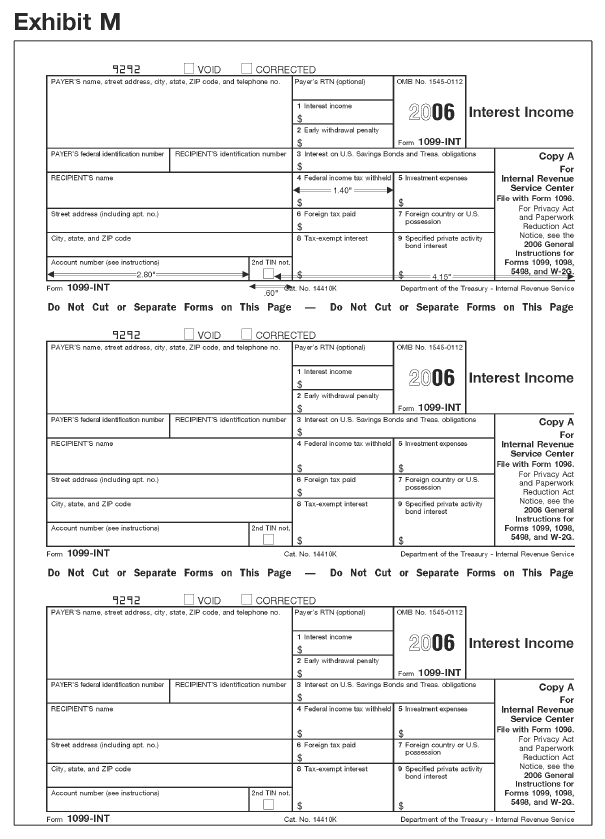
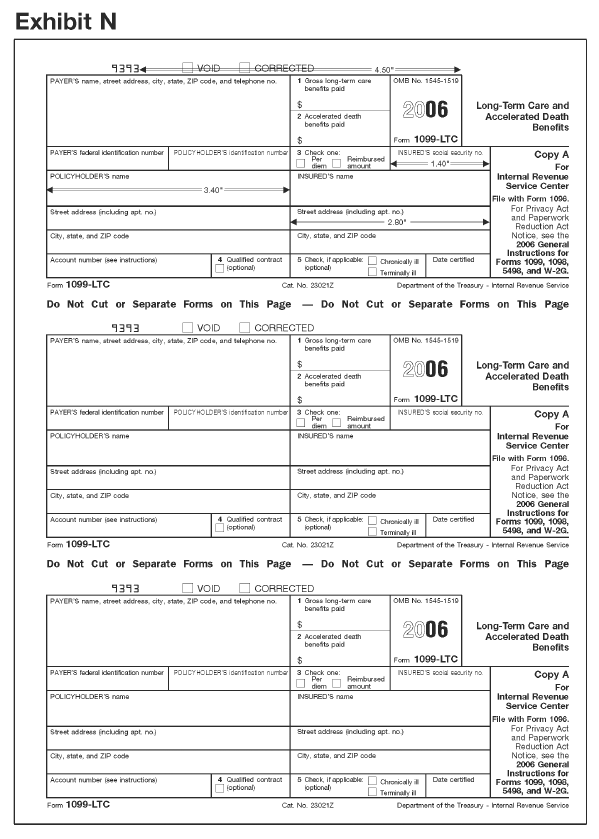
Form identifying numbers (for example, 9191 for Form 1099-DIV) must
be printed in nonreflective black carbon-based ink in print positions 15 through
19 using an OCR A font. The check boxes to the right of the form identifying
numbers must be 10-point boxes. The “VOID” checkbox is in print
position 25. The “CORRECTED” check box is in position 33. Measurements
are made from the left edge of the paper, not including the perforated strip.
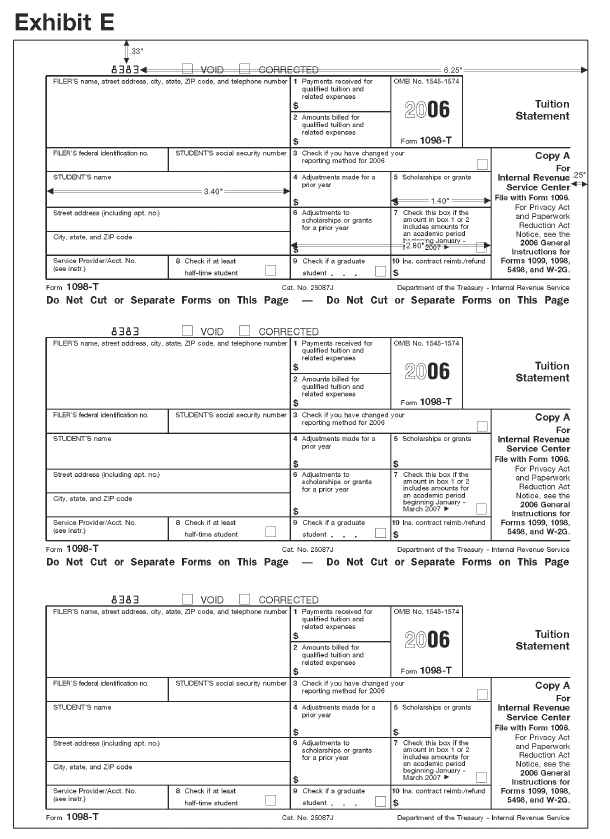
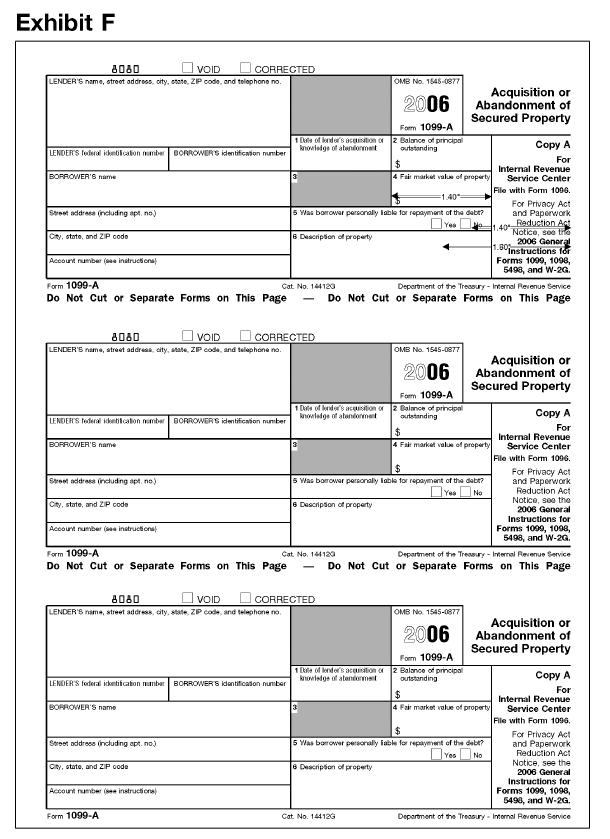
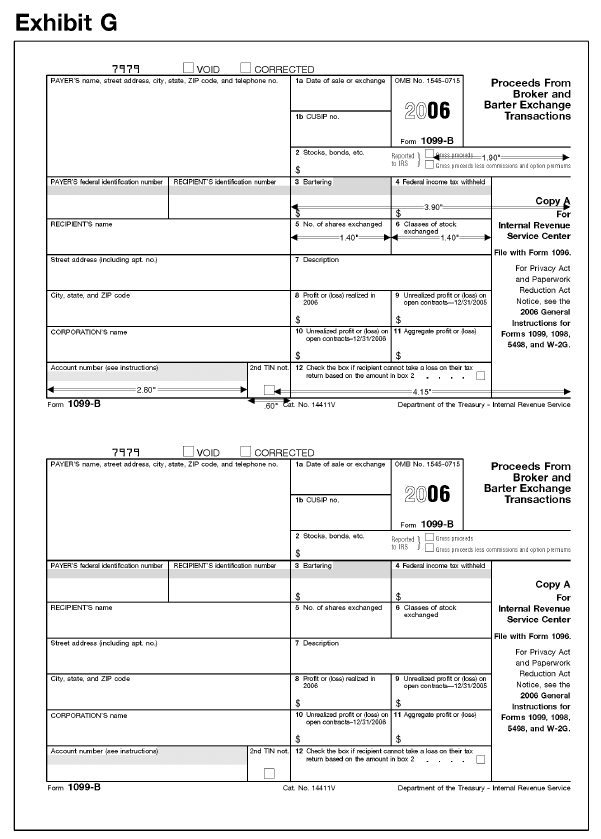
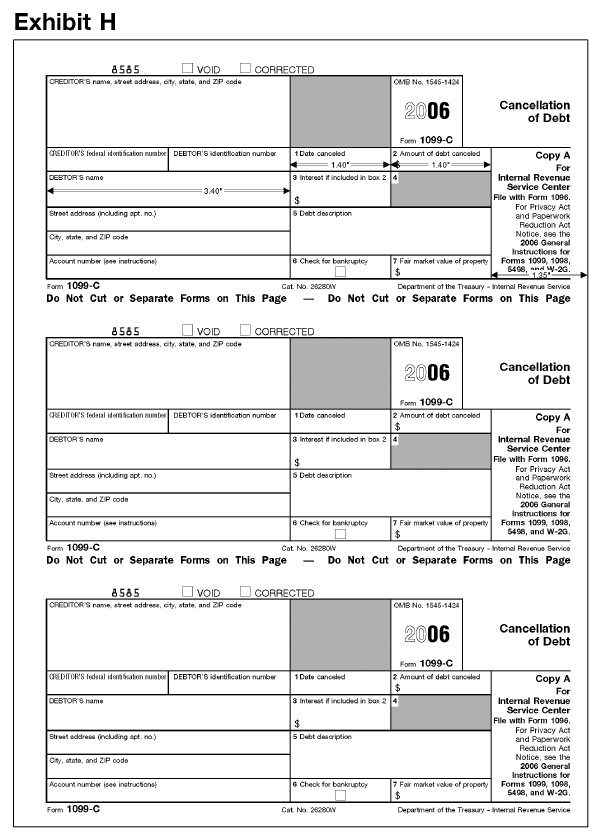
See Exhibits E and N.
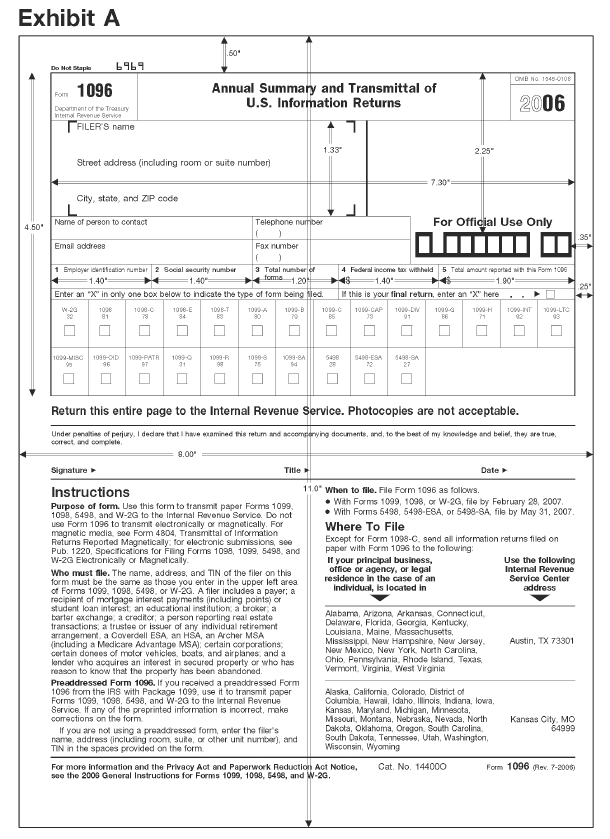
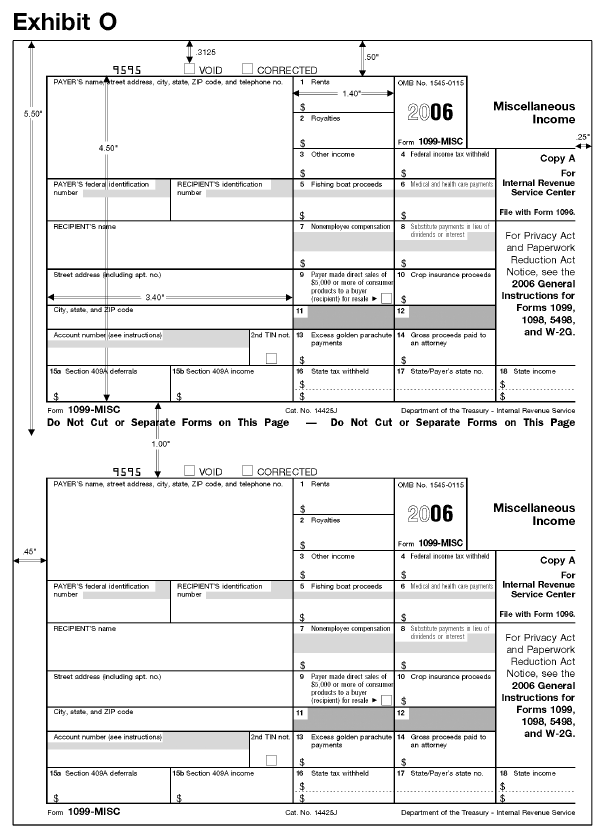
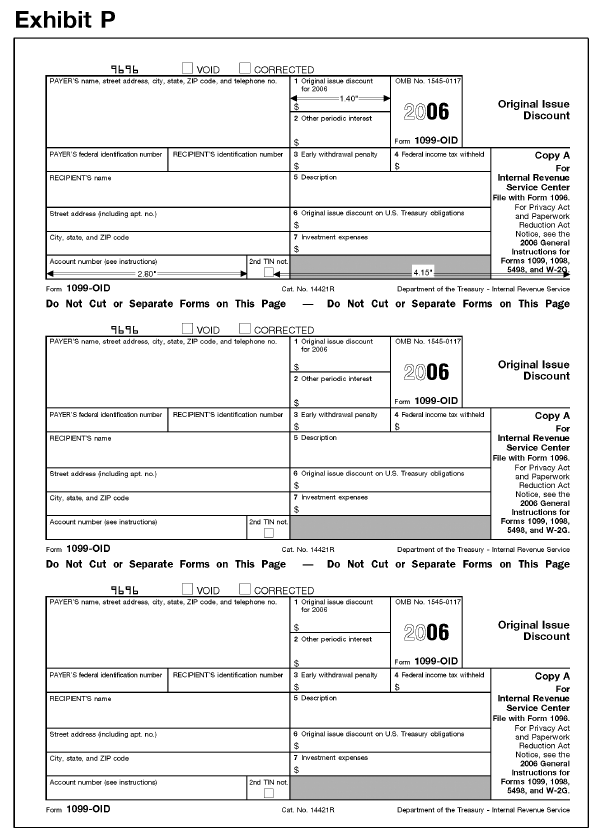
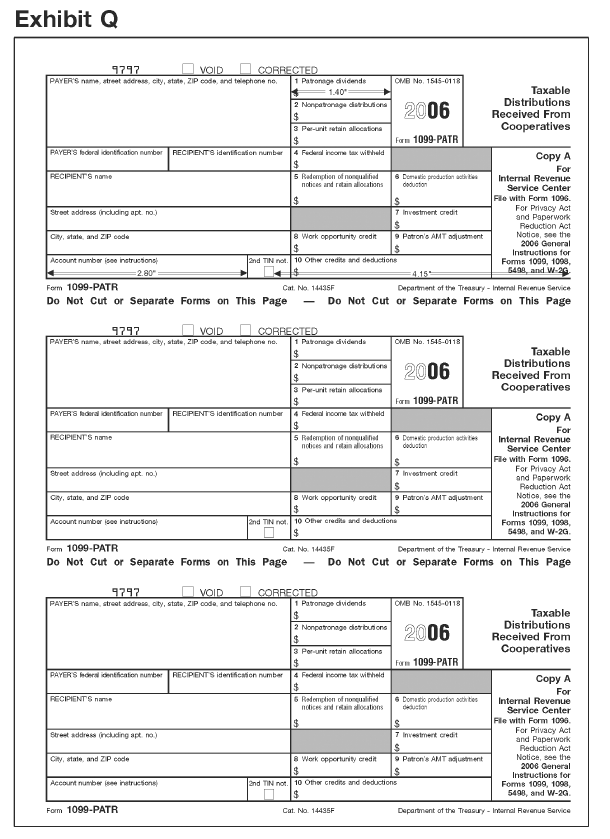
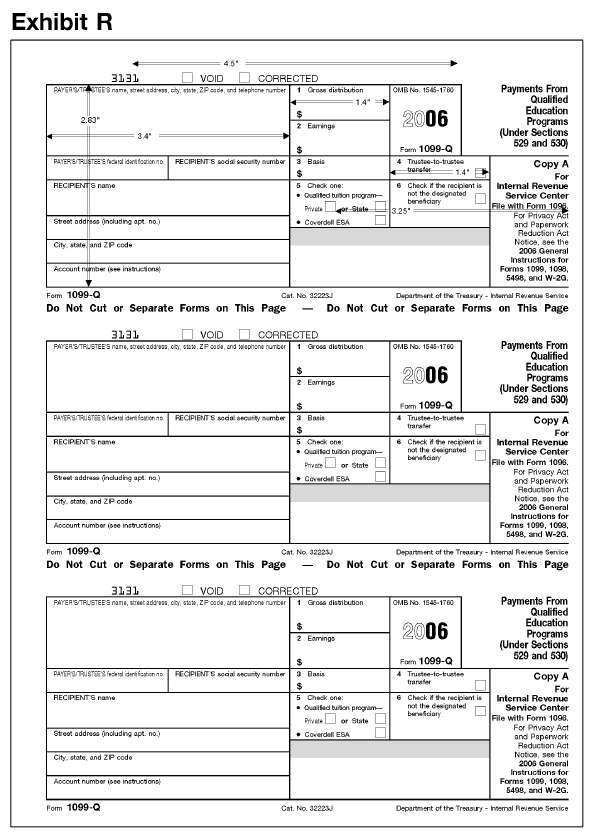
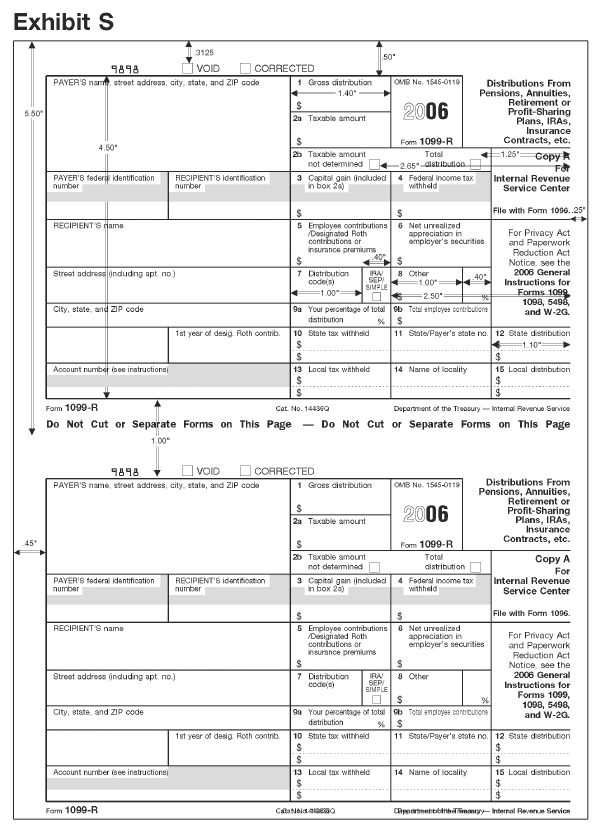
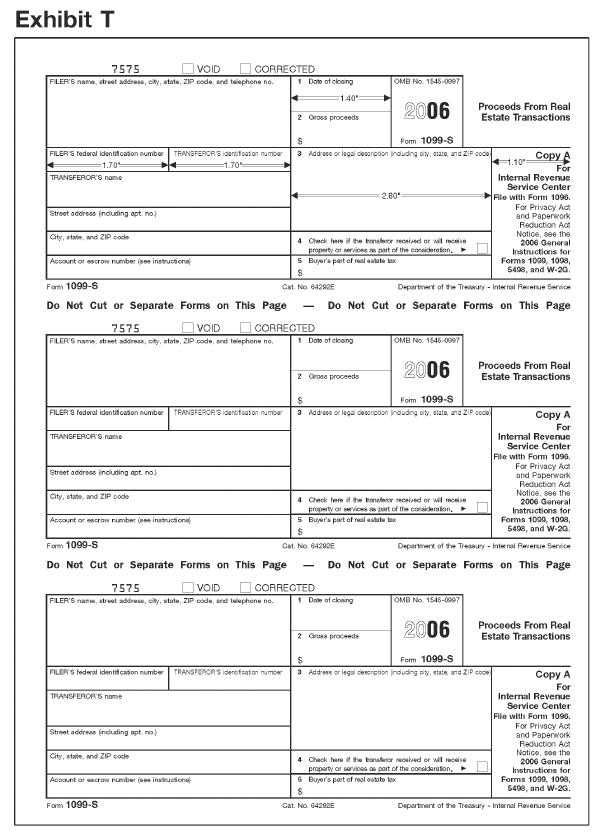
The substitute form must be an exact replica of the official IRS form
with respect to layout and content. To determine the correct form measurements,
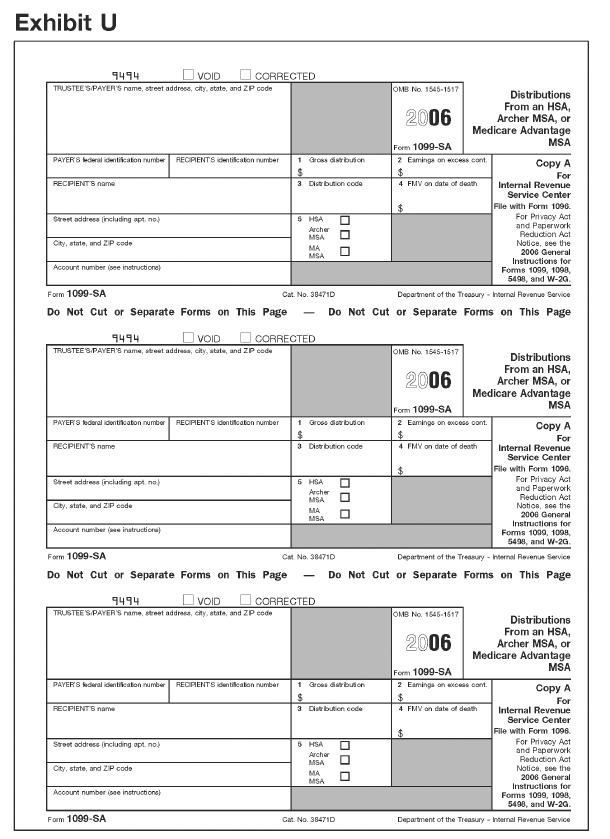
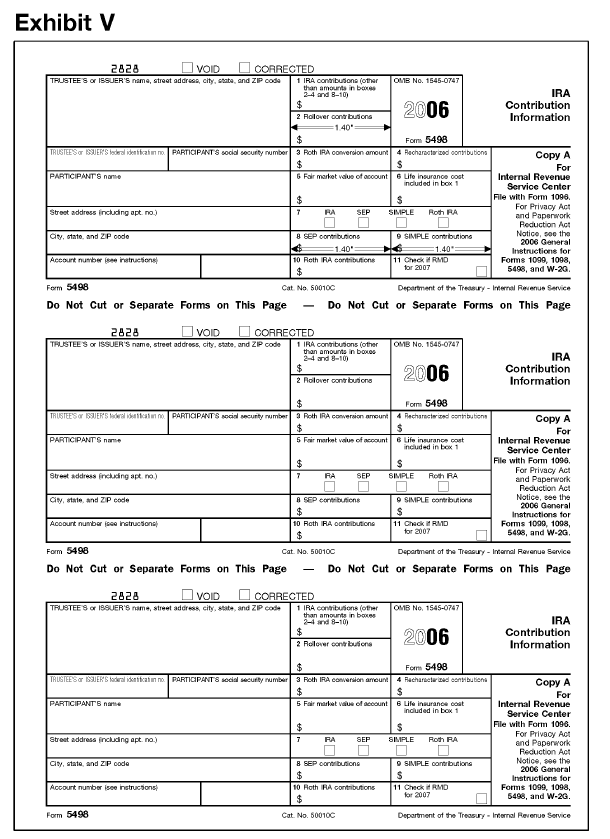
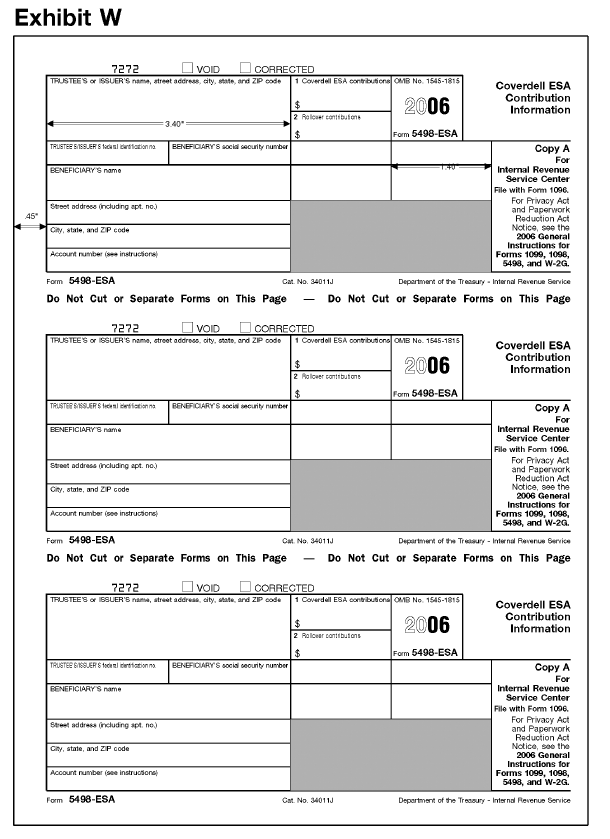
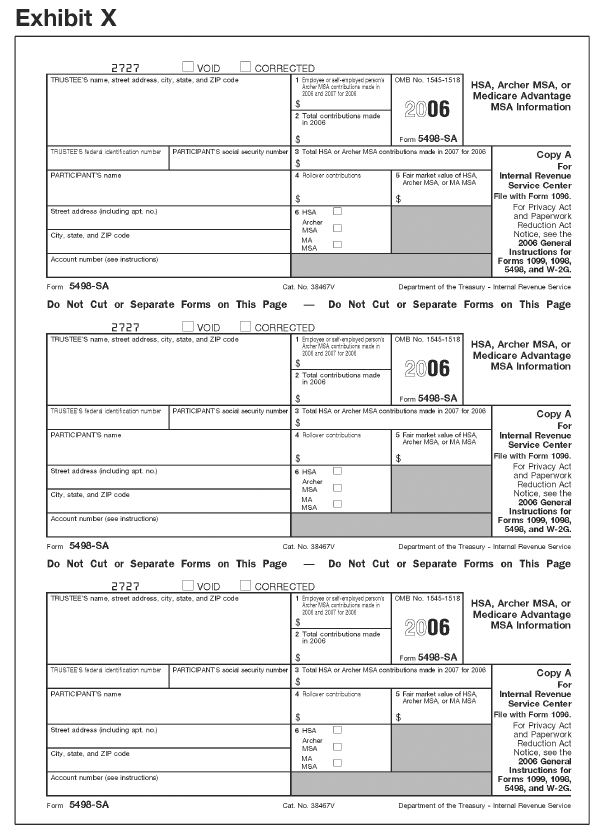
see Exhibits A through Z at the
end of this publication.
Hot wax and cold carbon spots are not permitted on any of the internal
form plies. These spots are permitted on the back of a mailer top envelope
ply.
Use of chemical transfer paper for Copy A is acceptable.
The Government Printing Office (GPO) symbol must be deleted.
2.1.2 Color and Paper Quality
Color and paper quality for Copy A (cut sheets and continuous pinfeed
forms) as specified by JCP Code 0-25, dated November 29, 1978, must be white
100% bleached chemical wood, optical character recognition (OCR) bond produced
in accordance with the following specifications.
Note. Reclaimed fiber in any percentage
is permitted provided the requirements of this standard are met.
2.1.3 Chemical Transfer Paper
Chemical transfer paper is permitted for Copy A only if the following
standards are met:
-
Only chemically backed paper is acceptable for Copy A. Front and back
chemically treated paper cannot be processed properly by machine.
-
Carbon-coated forms are not permitted.
-
Chemically transferred images must be black.
All copies must be clearly legible. Hot wax and cold carbon spots are
not permitted for Copy A. Interleaved carbon should be black and must be of
good quality to assure legibility on all copies and to avoid smudging. Fading
must be minimized to assure legibility.
All print on Copy A of Forms 1098, 1099, 5498, and the print on Form
1096 above the statement, “Return this entire page to the Internal Revenue
Service. Photocopies are not acceptable.” must be in Flint J-6983 red
OCR dropout ink or an exact match. However, the four-digit form identifying
number must be in nonreflective carbon-based black ink in OCR A font.
The shaded areas of any substitute form should generally correspond
to the format of the official form.
The printing for the Form 1096 statement and the following text may
be in any shade or tone of black ink. Black ink should only appear on the
lower part of the reverse side of Form 1096, where it will not bleed through
and interfere with scanning.
Note. The instructions on the front
and back of Form 1096, which include filing addresses, must be printed.
Separation between fields must be 0.1 inch.
Except for Form 1099-R and 1099-MISC, the numbered captions are printed
as solid with no shaded background.
Other printing requirements are discussed below.
The contractor must initiate or have a quality control program to assure
OCR ink density. Readings will be made when printed on approved 20 lb. white
OCR bond with a reflectance of not less than 80%. Black ink must not have
a reflectance greater than 15%. These readings are based on requirements of
the “Scan-Optics Series 9000” Optical Scanner using Flint J-6983
red OCR dropout ink or an exact match.
The following testers and ranges are acceptable:
-
MacBeth PCM-II. The tested Print Contrast Signal
(PCS) values when using the MacBeth PCM-II tester on the “C” scale
must range from .01 minimum to .06 maximum.
-
Kidder 082A. The tested PCS values when using the
Kidder 082A tester on the Infra Red (IR) scale must range from .12 minimum
to .21 maximum. White calibration disc must be 100%. Sensitivity must be set
at one (1).
-
Alternative testers. Alternative testers must be
approved by the Government so that tested PCS values can be established. You
may obtain approval by writing to the following address:
Commissioner
of Internal RevenueAttn: SE:W:CAR:MP:P:B:T
Business Publishing - Tax Products
1111 Constitution Ave., NW Washington, DC 20224
Type must be substantially identical in size and shape to the official
form. All rules are either 1/2-point
or 3/4-point. Rules must
be identical to those on the official IRS form.
Note. The form identifying number must
be nonreflective carbon-based black ink in OCR A font.
Generally, three Forms 1098, 1099, or 5498 (Copy A) are contained on
a single page, 8 inches wide (without any snap-stubs and/or pinfeed holes)
by 11 inches deep.
Exceptions. Forms 1098-C, 1099-B, 1099-DIV,
1099-MISC, 1099-R, and 1042-S contain two documents per page.
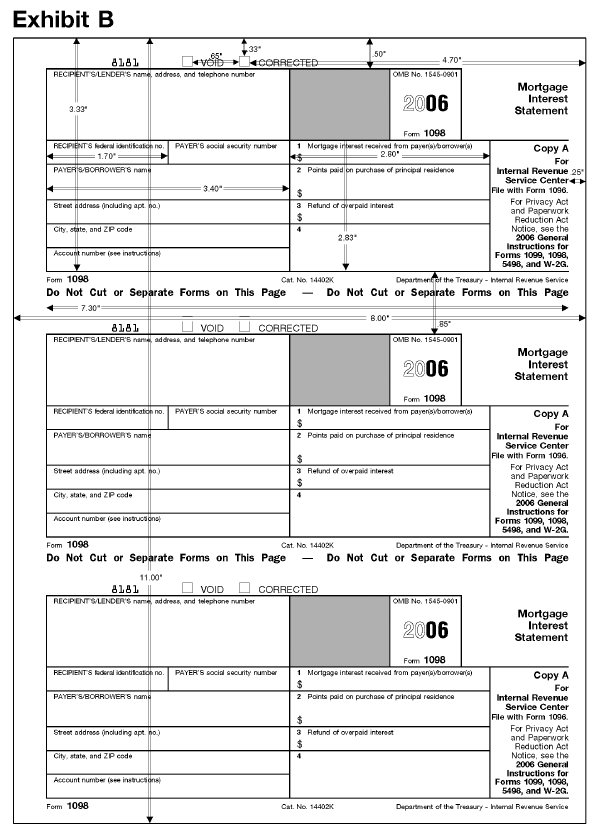
There is a .33 inch top margin from the top of the corrected box, and
a .25 inch right margin. There is a 1/32 (0.0313)
inch tolerance for the right margin. If the right and top margins are properly
aligned, the left margin for all forms will be correct. All margins must be
free of print. See Exhibits A through Z in
this publication for the correct form measurements.
These measurements are constant for all Forms 1098, 1099, and 5498.
These measurements are shown only once in this publication, on Form 1098 (Exhibit
B). Exceptions to these measurements are shown on the rest of the exhibits.
The depth of the individual trim size of each form on a page must be
32/3 inches, the same depth
as the official form.
Exceptions. The depth of Forms 1098-C,
1099-B, 1099-DIV, 1099-MISC, 1099-R, and 1042-S is 51/2 inches.
Copy A (three per page; two per page for Forms 1098-C, 1099-B, 1099-DIV,
1099-MISC, 1099-R, and 1042-S) of privately printed continuous substitute
forms must be perforated at each 11” page depth. No perforations are
allowed between the 32/3”
forms (51/2” for Forms
1098-C, 1099-B, 1099-DIV, 1099-MISC, or 1099-R) on a single copy page of Copy
A.
The words “Do Not Cut or Separate Forms on This Page” must
be printed in red dropout ink (as required by form specifications) between
the three forms (two for Forms 1098-C, 1099-B, 1099-DIV, 1099-MISC, or 1099-R).
Note. Perforations are required between
all the other individual copies (Copies B and C, and Copies 1 and 2 for Forms
1099-R and 1099-MISC, and Copy D for Forms 1098-C, 1099-LTC and 1099-R) in
the set.
You must include the OMB Number on Copies A and Form 1096 in the same
location as on the official form.
The words “For Privacy Act and Paperwork Reduction Act Notice,
see the 2006 General Instructions for Forms 1099, 1098, 5498, and W-2G”
must be printed on Copy A; “For more information and the Privacy Act
and Paperwork Reduction Act Notice, see the 2006 General Instructions for
Forms 1099, 1098, 5498, and W-2G” must be printed on Form 1096.
A postal indicia may be used if it meets the following criteria:
-
It is printed in the OCR ink color prescribed for the form, and
-
No part of the indicia is within one print position of the scannable
area.
The printer’s symbol (GPO) must not be printed on substitute Copy
A. Instead, the employer identification number (EIN) of the forms printer
must be entered in the bottom margin on the face of each individual form of
Copy A, or on the bottom margin on the back of each Form 1096.
The Catalog Number (Cat. No.) shown on the 2006 forms is used for IRS
distribution purposes and need not be printed on any substitute forms.
The form must not contain the statement “IRS approved” or
any similar statement.
Section 2.2 — Instructions for Preparing
Paper Forms That Will Be Filed with the IRS
2.2.1 Recipient Information
The form recipient’s name, street address, city, state, ZIP code,
and telephone number (if required) should be typed or machine printed in black
ink in the same format as shown on the official IRS form. The city, state,
and ZIP code must be on the same line.
The following rules apply to the form recipient’s name(s):
-
The name of the appropriate form recipient must be shown on the first
or second name line in the area provided for the form recipient’s name.
-
No descriptive information or other name may precede the form recipient’s
name.
-
Only one form recipient’s name may appear on the first name line
of the form.
-
If the multiple recipients’ names are required on the form, enter
on the first name line the recipient name that corresponds to the recipient
taxpayer identification number (TIN) shown on the form. Place the other form
recipients’ names on the second name line (only 2 name lines are allowable).
Because certain states require that trust accounts be provided in a
different format, generally filers should provide information returns reflecting
payments to trust accounts with the:
-
Trust’s employer identification number (EIN) in the recipient’s
TIN area,
-
Trust’s name on the recipient’s first name line, and
-
Name of the trustee on the recipient’s second name line.
Although handwritten forms will be accepted, the IRS prefers that filers
type or machine print data entries. Also, filers should insert data in the
middle of blocks well separated from other printing and guidelines, and take
measures to guarantee clear, dark black, sharp images. Carbon copies and photocopies
are not acceptable.
Use the account number box on all Forms 1098, 1099, 5498, and W-2G for
an account number designation when required by the official IRS form. The
account number is required if you have multiple accounts for a recipient for
whom you are filing more than one information return of the same type. Additionally,
the IRS encourages you to include the recipients’ account number on
paper forms if your system of records uses the account number rather than
the name or TIN for identification purposes. Also, the IRS will include the
account number in future notices to you about backup withholding. If you use
window envelopes and a reduced rate to mail statements to recipients, be sure
the account number does not appear in the window. Otherwise, the Postal Service
may not accept them for mailing.
Exception. Form 1098-T can have third
party provider information.
2.2.3 Specifications and Restrictions
Machine-printed forms should be printed using a 6 lines/inch option,
and should be printed in 10 pitch pica (10 print positions per inch) or 12
pitch elite (12 print positions per inch). Proportional spaced fonts are unacceptable.
Substitute forms prepared in continuous or strip form must be burst
and stripped to conform to the size specified for a single sheet before they
are filed with the IRS. The size specified does not include pin feed holes.
Pin feed holes must not be present on forms filed with the IRS.
Do not:
-
Use a felt tip marker. The machine used to “read” paper
forms generally cannot read this ink type.
-
Use dollar signs ($), ampersands (&), asterisks (*), commas (,),
or other special characters in the numbered money boxes.
Exception. Use decimal points to indicate
dollars and cents (for example, 2000.00 is acceptable).
-
Use apostrophes (’), asteriks (*), or other special characters
on the payee name line.
-
Fold Forms 1096, 1098, 1099, or 5498 mailed to the IRS. Mail these forms
flat in an appropriately sized envelope or box. Folded documents cannot be
readily moved through the machine used in IRS processing.
-
Staple Forms 1096 to the transmitted returns. Any staple holes near
the return code number may impair the IRS’s ability to machine scan
the type of documents.
-
Type other information on Copy A.
-
Cut or separate the individual forms on the sheet of forms of Copy A
(except Forms W-2G).
Mail completed paper forms to the IRS service center shown in the Instructions
for Form 1096 and in the 2006 General Instructions for Forms 1099, 1098, 5498,
and W-2G. Specific information needed to complete the forms mentioned in this
revenue procedure are given in the specific form instructions. A chart is
included in the 2006 General Instructions for Forms 1099, 1098, 5498, and
W-2G giving a quick guide to which form must be filed to report a particular
payment.
Part 3
Specifications for Substitute
Form
W-2G (Filed with the IRS)
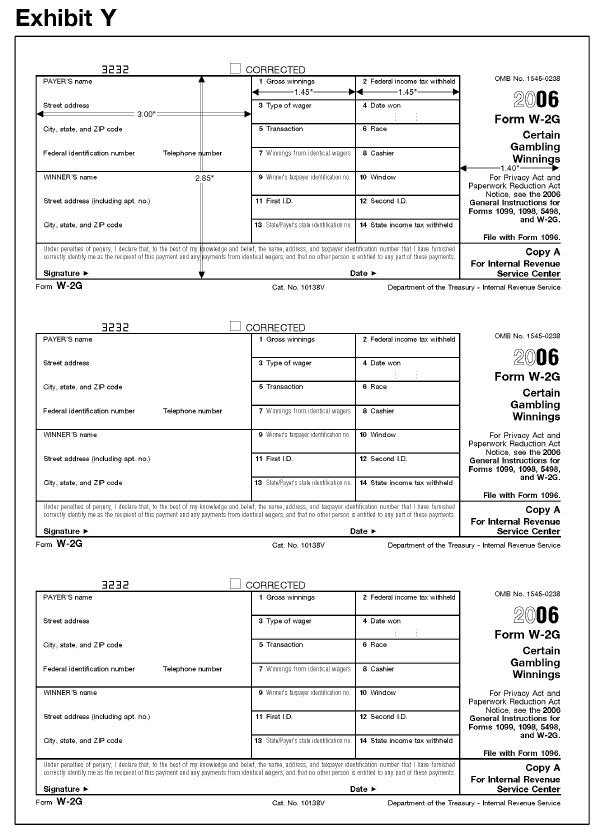
The following specifications give the format requirements for substitute
Form W-2G (Copy A only), which is filed with the IRS.
A filer may use a substitute Form W-2G to file with the IRS (referred
to as “substitute Copy A”). The substitute form must be an exact
replica of the official form with respect to layout and content.
Section 3.2 — Specifications for Copy A
of Form W-2G
3.2.1 Substitute Form W-2G (Copy A)
You must follow these specifications when printing substitute Copy A
of the Form W-2G.
Part 4
Substitute Statements to
Form Recipients and
Form Recipient Copies
Section 4.1 — Specifications
If you do not use the official IRS form to furnish statements to recipients,
you must furnish an acceptable substitute statement. To be acceptable, your
substitute statement must comply with the rules in this section. If you are
furnishing a substitute form, see Regulations sections 1.6042-4, 1.6044-5,
1.6049-6, and 1.6050N-1 to determine how the following statements must be
provided to recipients for most Forms 1099-DIV and 1099-INT, all Forms 1099-OID
and 1099-PATR, and Form 1099-MISC or 1099-S for royalties. Generally, information
returns may be furnished electronically with the consent of the recipient.
See Section 4.5.1.
Note. A trustee of a grantor-type trust
may choose to file Forms 1099 and furnish a statement to the grantor under
Regulations sections 1.671-4(b)(2)(iii) and (b)(3)(ii). The statement required
by those regulations is not subject to the requirements outlined in this section.
4.1.2 Substitute Statements to Recipients for
Certain Forms 1099-INT and 1099-DIV, and for Forms 1099-OID and 1099-PATR
The rules in this section apply to Form 1099-INT (except for interest
reportable under section 6041), 1099-DIV (except for section 404(k) dividends),
1099-OID, and 1099-PATR only. You may furnish form recipients with Copy B
of the official Form 1099 or a substitute Form 1099 (form recipient statement)
if it contains the same language as the official IRS form (such as aggregate
amounts paid to the form recipient, any backup withholding, the name, address,
and TIN of the person making the return, and any other information required
by the official form). Except for state income tax withholding information,
information not required by the official form should not be included on the
substitute form.
You may enter a total of the individual accounts listed on the form
only if they have been paid by the same payer. For example, if you are listing
interest paid on several accounts by one financial institution on Form 1099-INT,
you may also enter the total interest amount. You may also enter a date next
to the corrected box if that box is checked.
A substitute form recipient statement for Forms 1099-INT, 1099-DIV,
1099-OID, or 1099-PATR must comply with the following requirements:
-
Box captions and numbers that are applicable must be clearly identified,
using the same wording and numbering as on the official form.
Note. For Form 1099-INT, if box 3 is
not on your substitute form, you may drop “not included in box 3”
from the box 1 caption.
-
The form recipient statement (Copy B) must contain all applicable form
recipient instructions provided on the front and back of the official IRS
form. You may provide those instructions on a separate sheet of paper.
-
The form recipient statement must contain the following in bold and
conspicuous type:
This is important tax information and is being furnished to the Internal
Revenue Service. If you are required to file a return, a negligence penalty
or other sanction may be imposed on you if this income is taxable and the
IRS determines that it has not been reported.
-
The box caption “Federal income tax withheld” must
be in boldface type on the form recipient statement.
-
The form recipient statement must contain the Office of Management and
Budget (OMB) number as shown on the official IRS form. See Part
5.
-
The form recipient statement must contain the tax year (for example,
2006), form number (for example, Form 1099-INT), and form name (for example,
Interest Income) of the official IRS Form 1099. This information must be displayed
prominently together in one area of the statement. For example, the tax year,
form number, and form name could be shown in the upper right part of the statement.
Each copy must be appropriately labeled (such as Copy B, For Recipient). See Section
4.4 for applicable labels and arrangement of assembly of forms.
Note. Do not include the words “Substitute
for” or “In lieu of” on the form recipient statement.
-
Layout and format of the form is at the discretion of the filer. However,
the IRS encourages the use of boxes so that the statement has the appearance
of a form and can be easily distinguished from other non-tax statements.
-
Each recipient statement of Forms 1099-DIV, 1099-INT, 1099-OID, and
1099-PATR must include the direct access telephone number of an individual
who can answer questions about the statement. Include that telephone number
conspicuously anywhere on the recipient statement.
-
Until new regulations are issued, the IRS will not assess penalties
for use of a logo (for example, the name of the payer in any typeface, font,
or style, and/or a symbolic icon) or slogan on a recipient statement if the
logo or slogan is used by the payer in the ordinary course of its trade or
business. In addition, use of the logo or slogan must not make it less likely
for a reasonable payee to recognize the importance of the statement for tax
reporting purposes.
-
A mutual fund family may state separately on one document (for example,
one piece of paper) the dividend income earned by a recipient from each fund
within the family of funds as required by Form 1099-DIV. However, each fund
and its earnings must be stated separately. The form must contain an instruction
to the recipient that each fund’s dividends and name, not the name of
the mutual fund family, must be reported on the recipient’s tax return.
The form cannot contain an aggregate total of all funds. In addition, a mutual
fund family may furnish a single statement (as a single filer) for Forms 1099-INT,
1099-DIV, and 1099-OID information. Each fund and its earnings must be stated
separately. The form must contain an instruction to the recipient that each
fund’s earnings and name, not the name of the mutual fund family, must
be reported on the recipient’s tax return. The form cannot contain an
aggregate total of all funds.
4.1.3 Substitute Statements to Recipients for
Certain Forms 1098, 1099, 5498, and W-2G
Statements to form recipients for Forms 1098, 1098-C, 1098-E, 1098-T,
1099-A, 1099-B, 1099-C, 1099-CAP, 1099-G, 1099-H, 1099-LTC, 1099-MISC, 1099-Q,
1099-R, 1099-S, 1099-SA, 5498, 5498-ESA, 5498-SA, W-2G, 1099-DIV (only for
section 404(k) dividends reportable under section 6047), and 1099-INT (only
for interest of $600 or more made in the course of a trade or business reportable
under section 6041) can be copies of the official forms or an acceptable substitute.
Caution. The IRS does not require a
donee to use Form 1098-C as the written acknowledgment for contributions of
motor vehicles, boats, and airplanes. However, if you choose to use copies
of Form 1098-C or an acceptable substitute as the written acknowledgment,
then you must follow the requirements of this section 4.1.3.
To be acceptable, a substitute form recipient statement must meet the
following requirements.
-
The tax year, form number, and form name must be the same as the official
form and must be displayed prominently together in one area on the statement.
For example, they may be shown in the upper right part of the statement.
-
The filer’s and the form recipient’s identifying information
required on the official IRS form must be included.
-
Each substitute recipient statement for Forms W-2G, 1098, 1098-C, 1098-E,
1098-T, 1099-A, 1099-B, 1099-CAP, 1099-DIV, 1099-G (excluding state and local
income tax refunds), 1099-H, 1099-INT, 1099-LTC, 1099-MISC (excluding fishing
boat proceeds), 1099-OID, 1099-PATR, 1099-Q, and 1099-S must include the direct
access telephone number of an individual who can answer questions about the
statement. Include the telephone number conspicuously anywhere on the recipient
statement. Although not required, payers reporting on Forms 1099-C, 1099-R,
1099-SA, 5498, 5498-ESA, and 5498-SA are encouraged to furnish telephone numbers.
-
All applicable money amounts and information, including box numbers,
required to be reported to the form recipient must be titled on the form recipient
statement in substantially the same manner as those on the official IRS form.
The box caption “Federal income tax withheld” must be in boldface
type on the form recipient statement.
Exception. If you are reporting a payment
as “Other income” in box 3 of Form 1099-MISC, you may substitute
appropriate language for the box title. For example, for payments of accrued
wages and leave to a beneficiary of a deceased employee, you might change
the title of box 3 to “Beneficiary payments” or something similar.
Note. You cannot make this change on
Copy A.
Note. If federal income tax is withheld
and shown on Form 1099-R or W-2G, Copy B and Copy C must be furnished to the
recipient. If federal income tax is not withheld, only Copy C of Form 1099-R
and W-2G must be furnished. However, for Form 1099-R, instructions similar
to those on the back of the official Copy B and Copy C of Form 1099-R must
be furnished to the recipient. For convenience, you may choose to provide
both Copies B and C of Form 1099-R to the recipient.
-
You must provide appropriate instructions to the form recipient similar
to those on the official IRS form, to aid in the proper reporting on the form
recipient’s income tax return. For payments reported on Forms 1099-B,
and 1099-CAP, the requirement to include instructions substantially similar
to those on the official IRS form may be satisfied by providing form recipients
with a single set of instructions for all Forms 1099-B and 1099-CAP statements
required to be furnished in a calendar year.
-
If you use carbonless sets to produce recipient statements, the quality
of each copy in the set must meet the following standards:
-
All copies must be clearly legible,
-
All copies must be able to be photocopied, and
-
Fading must not diminish legibility and the ability to photocopy.
In general, black chemical transfer inks are preferred, but other colors
are permitted if the above standards are met. Hot wax and cold carbon spots
are not permitted on any of the internal form plies. The back of a mailer
top envelope ply may contain these spots.
-
A mutual fund family may state separately on one document (for example,
one piece of paper) the Form 1099-B information for a recipient from each
fund as required by Form 1099-B. However, the gross proceeds, etc., from each
transaction within a fund must be stated separately. The form must contain
an instruction to the recipient that each fund’s (not the mutual fund
family’s) name and amount must be reported on the recipient’s
tax return. The form cannot contain an aggregate total of all funds.
-
You may use a Uniform Settlement Statement (under the Real Estate Settlement
Procedures Act of 1974 (RESPA)) for Form 1099-S. The Uniform Settlement Statement
is acceptable as the written statement to the transferor if you include the
legend for Form 1099-S in Section 4.3.2 and indicate
which information on the Uniform Settlement Statement is being reported to
the IRS on Form 1099-S.
-
For reporting state income tax withholding and state payments, you may
add an additional box(es) to recipient copies as appropriate.
Note. You cannot make this change on
Copy A.
-
On Copy C of Form 1099-LTC, you may reverse the location of the policyholder’s
and the insured’s name, street address, city, state, and ZIP code for
easier mailing.
-
If an institution insurer uses a third party service provider to file
Form 1098-T, then in addition to the institution or insurers name, address,
and telephone number, the same information may be included for the third party
service provider in the space provided on the form.
-
Logos are permitted on substitute recipient statements for the forms
listed in this section (Section 4.1.3).
Section 4.2 — Composite Statements
4.2.1 Composite Substitute Statements for Certain
Forms 1099-INT, 1099-DIV, 1099-MISC, and 1099-S, and for Forms 1099-OID and
1099-PATR
A composite form recipient statement is permitted for reportable payments
of interest, dividends, original issue discount, patronage dividends, and
royalties (Forms 1099-INT (except for interest reportable under section 6041),
1099-DIV (except for section 404(k) dividends), 1099-MISC or 1099-S (for royalties
only), 1099-OID, or 1099-PATR) when one payer is reporting more than one of
these payments during a calendar year to the same form recipient. Generally,
do not include any other Form 1099 information (for example, 1098 or 1099-A)
on a composite statement with the information required on the forms listed
in the preceding sentence.
Exception. A filer may include Form
1099-B information on a composite form with the forms listed above.
Although the composite form recipient statement may be on one sheet,
the format of the composite form recipient statement must satisfy the following
requirements in addition to the requirements listed earlier in Section
4.1.2.
-
All information pertaining to a particular type of payment must be located
and blocked together on the form and separate from any information covering
other types of payments included on the form. For example, if you are reporting
interest and dividends, the Form 1099-INT information must be presented separately
from the Form 1099-DIV information.
-
The composite form recipient statement must prominently display the
tax year, form number, and form name of the official IRS form together in
one area at the beginning of each appropriate block of information.
-
Any information required by the official IRS forms that would otherwise
be repeated in each information block is required to be listed only once in
the first information block on the composite form. For example, there is no
requirement to report the name of the filer in each information block. This
rule does not apply to any money amounts (for example, federal income tax
withheld) or to any other information that applies to money amounts.
-
A composite statement is an acceptable substitute only if the type of
payment and the recipient’s tax obligation with respect to the payment
are as clear as if each required statement were furnished separately on an
official form.
4.2.2 Composite Substitute Statements to Recipients
for Forms Specified in Section 4.1.3
A composite form recipient statement for the forms specified in Section
4.1.3 is permitted when one filer is reporting more than one type
of payment during a calendar year to the same form recipient. A composite
statement is not allowed for a combination of forms listed in Section
4.1.3 and forms listed in Section 4.1.2.
Exceptions:
-
Substitute payments in lieu of dividends reported in Box 8 of Form 1099-MISC
may be reported on a composite substitute statement with Form 1099-DIV.
-
Form 1099-B information may be reported on a composite form with the
forms specified in Section 4.1.2 as described in Section
4.2.1.
-
Forms 1099-A and 1099-C transactions, if related, may be combined on
Form 1099-C.
-
Royalties reported on Form 1099-MISC or 1099-S may be reported on a
composite form only with the forms specified in Section 4.1.2.
Although the composite form recipient statement may be on one sheet,
the format of the composite form recipient statement must satisfy the requirements
listed in Section 4.2.1 as well as the requirements in Section
4.1.3. A composite statement of Forms 1098 and 1099-INT (for interest
reportable under section 6049) is not allowed.
Section 4.3 — Required Legends
4.3.1 Required Legends for Forms 1098
Form 1098 recipient statements (Copy B) must contain the following legends:
-
Form 1098—
-
“The information in boxes 1, 2, and 3 is important tax information
and is being furnished to the Internal Revenue Service. If you are required
to file a return, a negligence penalty or other sanction may be imposed on
you if the IRS determines that an underpayment of tax results because you
overstated a deduction for this mortgage interest or for these points or because
you did not report this refund of interest on your return.”
-
“Caution. The amount shown may
not be fully deductible by you. Limits based on the loan amount and the cost
and value of the secured property may apply. Also, you may only deduct interest
to the extent it was incurred by you, actually paid by you, and not reimbursed
by another person.”
-
Form 1098-C:
Copy B — “In order to take a deduction of more than $500
for this for contribution, you must attach this copy to your federal tax return.”
Copy C — “This information is being furnished to the Internal
Revenue Service unless box 7 is checked.”
-
Form 1098-E — “This is important tax information and is
being furnished to the Internal Revenue Service. If you are required to file
a return, a negligence penalty or other sanction may be imposed on you if
the IRS determines that an underpayment of tax results because you overstated
a deduction for student loan interest.”
-
Form 1098-T — “This is important tax information and is
being furnished to the Internal Revenue Service.”
4.3.2 Required Legends for
Forms
1099 and W-2G
-
Forms 1099-A, 1099-C, and 1099-CAP:
Copy B — “This is important tax information and is being
furnished to the Internal Revenue Service. If you are required to file a return,
a negligence penalty or other sanction may be imposed on you if taxable income
results from this transaction and the IRS determines that it has not been
reported.”
-
Forms 1099-B, 1099-DIV, 1099-G, 1099-INT, 1099-MISC, 1099-OID, 1099-PATR,
and 1099-Q:
Copy B — “This is important tax information and is being
furnished to the Internal Revenue Service. If you are required to file a return,
a negligence penalty or other sanction may be imposed on you if this income
is taxable and the IRS determines that it has not been reported.”
-
Forms 1099-H:
Copy B — “This is important tax information and is being
furnished to the Internal Revenue Service.”
-
Form 1099-LTC:
Copy B — “This is important tax information and is being
furnished to the Internal Revenue Service. If you are required to file a return,
a negligence penalty or other sanction may be imposed on you if this item
is required to be reported and the IRS determines that it has not been reported.”
Copy C — “Copy C is provided to you for information only.
Only the policyholder is required to report this information on a tax return.”
-
Form 1099-R:
Copy B — “Report this income on your federal tax return.
If this form shows federal income tax withheld in box 4, attach this copy
to your return.”
Copy C — “This information is being furnished to the Internal
Revenue Service.”
-
Form 1099-S:
Copy B — “This is important tax information and is being
furnished to the Internal Revenue Service. If you are required to file a return,
a negligence penalty or other sanction may be imposed on you if this item
is required to be reported and the IRS determines that it has not been reported.”
-
Form 1099-SA:
Copy B — “This information is being furnished to the Internal
Revenue Service.”
-
Form W-2G:
Copy B — “This information is being furnished to the Internal
Revenue Service. Report this income on your federal tax return. If this form
shows federal income tax withheld in box 2, attach this copy to your return.”
Copy C — “This is important tax information and is being
furnished to the Internal Revenue Service. If you are required to file a return,
a negligence penalty or other sanction may be imposed on you if this income
is taxable and the IRS determines that it has not been reported.”
4.3.3 Required Legends for Forms 5498
Form 5498 recipient statements (Copy B) must contain the following legends:
-
Form 5498 — “This information is being furnished to the
Internal Revenue Service.”
Note. If you do not furnish another
statement to the participant because no contributions were made for the year,
the statement of the fair market value and any required minimum distribution,
of the account must contain this legend and a designation of which information
is being furnished to the IRS.
-
Form 5498-ESA — “The information in boxes 1 and 2 is being
furnished to the Internal Revenue Service.”
-
Form 5498-SA — “The information in boxes 1 through 6 is
being furnished to the Internal Revenue Service.”
Section 4.4 — Miscellaneous Instructions
for Copies B, C, D, 1, and 2
Copies B, C, and in some cases, D, 1, and 2 are included in the official
assembly for the convenience of the filer. You are not legally required to
include all these copies with the privately printed substitute forms. Furnishing
Copies B and, in some cases, C will satisfy the legal requirement to provide
statements of information to form recipients.
Note. If an amount of federal income
tax withheld is shown on Form 1099-R or W-2G, Copy B (to be attached to the
tax return) and Copy C must be furnished to the recipient. Copy D (Forms 1099-R
and W-2G) may be used for filer records. Only Copy A should be filed with
the IRS.
4.4.2 Arrangement of Assembly
Copy A (“For Internal Revenue Service Center”) of all forms
must be on top. The rest of the assembly must be arranged, from top to bottom,
as follows.
-
Form 1098 — Copy B “For Payer”; Copy C “For
Recipient.”
-
Form 1098-C — Copy B “For Donor”; Copy C “For
Donor’s Records”; Copy D “For Donee.”
-
Form 1098-E — Copy B “For Borrower”; Copy C “For
Recipient.”
-
Form 1098-T — Copy B “For Student”; Copy C “For
Filer.”
-
Form 1099-A — Copy B “For Borrower”; Copy C “For
Lender.”
-
Forms 1099-B, 1099-DIV, 1099-G, 1099-H, 1099-INT, 1099-OID, 1099-PATR,
1099-Q, and 1099-SA — Copy B “For Recipient”; Copy C “For
Payer.”
-
Form 1099-C — Copy B “For Debtor”; Copy C “For
Creditor.”
-
Form 1099-CAP — Copy B “For Shareholder”; Copy C “For
Corporation.”
-
Form 1099-LTC — Copy B “For Policyholder”; Copy C
“For Insured”; and Copy D “For Payer.”
-
Form 1099-MISC — Copy 1 “For State Tax Department”;
Copy B “For Recipient”; Copy 2 “To be filed with recipient’s
state income tax return, when required”; and Copy C “For Payer.”
-
Form 1099-R — Copy 1 “For State, City, or Local Tax Department”;
Copy B “Report this income on your federal tax return. If this form
shows federal income tax withheld in box 4, attach this copy to your return”;
Copy C “For Recipient’s Records”; Copy 2 “File this
copy with your state, city, or local income tax return, when required”;
Copy D “For Payer.”
-
Form 1099-S — Copy B “For Transferor”; Copy C “For
Filer.”
-
Form 5498 — Copy B “For Participant”; Copy C “For
Trustee or Issuer.”
-
Form 5498-ESA — Copy B “For Beneficiary”; Copy C “For
Trustee.”
-
Form 5498-SA — Copy B “For Participant”; Copy C “For
Trustee.”
-
Form W-2G — Copy 1 “For State Tax Department”; Copy
B “Report this income on your federal tax return. If this form shows
federal income tax withheld in box 2, attach this copy to your return”;
Copy C “For Winner’s Records”; Copy 2 “Attach this
copy to your state income tax return, if required.”; Copy D “For
Payer.”
Perforations are required between forms on all copies except Copy A
to make separating the forms easier. (Copy A of Form W-2G may be perforated.)
Section 4.5 — Electronic Delivery of Form
1099 and Form 5498 Payee Statements
4.5.1 Electronic Recipient Statements
If you are required to furnish a written statement (Copy B or an acceptable
substitute) to a recipient, then you may furnish the statement electronically
instead of on paper. This includes furnishing the statement to recipients
of Forms 1098, 1098-E, 1098-T, 1099-A, B, C, CAP, DIV, H, INT, G, LTC, MISC,
OID, PATR, Q, R, S, SA, 5498, 5498-ESA, and 5498-SA. It also includes Form
W-2G (except for horse and dog racing, jai alai, sweepstakes, wagering pools,
and lotteries).
Note. Until further guidance is issued,
you can not furnish Form 1098-C electronically.
If you meet the requirements listed below, you are treated as furnishing
the statement timely.
The recipient must consent in the affirmative and not have withdrawn
the consent before the statement is furnished. The consent by the recipient
must be made electronically in a way that shows that he or she can access
the statement in the electronic format in which it will be furnished.
You must notify the recipient of any hardware or software changes prior
to furnishing the statement. A new consent to receive the statement electronically
is required after the new hardware or software is put into service.
Prior to furnishing the statements electronically, you must provide
the recipient a statement with the following statements prominently displayed:
-
If the recipient does not consent to receive the statement electronically,
a paper copy will be provided.
-
The scope and duration of the consent. For example, whether the consent
applies to every year the statement is furnished or only for the January 31
immediately following the date of the consent.
-
How to obtain a paper copy after giving consent.
-
How to withdraw the consent. The consent may be withdrawn at any time
by furnishing the withdrawal in writing (electronically or on paper) to the
person whose name appears on the statement. Confirmation of the withdrawal
also will be in writing (electronically or on paper).
-
Notice of termination. The notice must state under what conditions the
statements will no longer be furnished to the recipient.
-
Procedures to update the recipient’s information.
-
A description of the hardware and software required to access, print
and retain a statement, and a date the statement will no longer be available
on the website.
Format, Posting, and Notification
Additionally, you must:
-
Ensure the electronic format contains all the required information and
complies with the guidelines in this document.
-
Post, on or before the January 31 due date, the applicable statement
on a website accessible to the recipient through October 15 of that year.
-
Inform the recipient, electronically or by mail, of the posting and
how to access and print the statement.
For more information, see Regulations section 31.6051-1. For electronic
furnishing of Forms 1098-E and 1098-T, see Regulations section 1.6050S-2.
For electronic furnishing of Forms 1099-R, 1099-SA, 1099-Q, 5498, 5498-ESA,
and 5498-SA, see Notice 2004-10, 2004-6 I.R.B. 433.
Part 5
Additional Instructions
for Substitute
Forms 1098, 1099, 5498, W-2G, and 1042-S
Section 5.1 — Paper Substitutes for Form
1042-S
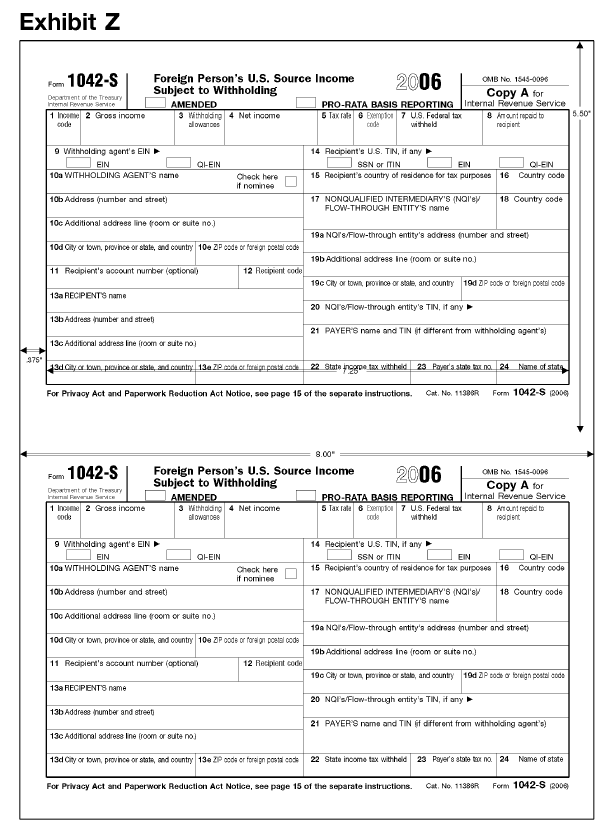
Paper substitutes of Copy A for Form 1042-S, Foreign Person’s
U.S. Source Income Subject to Withholding, that totally conform
to the specifications contained in this procedure may be privately printed
without prior approval from the Internal Revenue Service. Proposed substitutes
not conforming to these specifications must be submitted for consideration.
Note. Copies B, C, D, and E of Form
1042-S may contain multiple income entries for the same recipient, that is
multiple rows of the top boxes 1-8 of the form.
5.1.2 Time Frame For Submission of Form 1042-S
The request should be submitted by November 15 of the year prior to
the year the form is to be used. This is to allow the Service adequate time
to respond and the submitter adequate time to make any corrections. These
requests should contain a copy of the proposed form, the need for the specific
deviation(s), and the number of information returns to be printed.
Form 1042-S is subject to annual review and possible change. Withholding
agents and form suppliers are cautioned against overstocking supplies of the
privately printed substitutes.
Copies of the official form for the reporting year may be obtained from
most Service offices. The Service provides only cut sheets (no carbon interleaves)
of these forms. Continuous fan-fold/pin-fed forms are not provided.
5.1.5 Instructions For Withholding Agents
Instructions for withholding agents:
-
Only original copies may be filed with the Service. Carbon copies and
reproductions are not acceptable.
-
The term “Recipient’s U.S. TIN” for an individual
means the social security number (SSN) or IRS individual taxpayer identification
number (ITIN), consisting of nine digits separated by hyphens as follows:
000-00-0000. For all other recipients, the term means employer identification
number (EIN) or qualified intermediary employer identification number (QI-EIN).
The QI-EIN designation includes a withholding foreign partnership employer
identification number (WP-EIN) and a withholding foreign trust employer identification
number (WT-EIN). The EIN and QI-EIN consist of nine digits separated by a
hyphen as follows: 00-0000000. The taxpayer identification number (TIN) must
be in one of these formats.
-
Withholding agents are requested to type or machine print whenever possible,
provide quality data entries on the forms (that is, use black ribbon and insert
data in the middle of blocks well separated from other printing and guidelines),
and take other measures to guarantee a clear, sharp image. Withholding agents
are not required, however, to acquire special equipment solely for the purpose
of preparing these forms.
-
The “VOID,” “CORRECTED,” and “PRO-RATA
BASIS REPORTING” boxes must be printed at the top center of the form
under the title and checked, if applicable.
-
Substitute forms prepared in continuous or strip form must be burst
and stripped to conform to the size specified for a single form before they
are filed with the Service. The dimensions are found below. Computer cards
are acceptable provided they meet all requirements regarding layout, content,
and size.
5.1.6 Substitute Form 1042-S Format Requirements
Section 5.2 — OMB Requirements for All
Forms in This Revenue Procedure
The Paperwork Reduction Act (the Act) of 1995 (Public Law 104-13) requires
that:
-
OMB approves all IRS tax forms that are subject to the Act. Each IRS
form contains (in or near the upper right corner) the OMB approval number,
if any. (The official OMB numbers may be found on the official IRS printed
forms and are also shown on the forms in the exhibits in Part 6.)
-
Each IRS form (or its instructions) states:
-
Why the IRS needs the information,
-
How it will be used, and
-
Whether or not the information is required to be furnished to the IRS.
This information must be provided to any users of official or substitute
IRS forms or instructions.
5.2.2 Substitute Form Requirements
The OMB requirements for substitute IRS forms are:
-
Any substitute form or substitute statement to a recipient must show
the OMB number as it appears on the official IRS form.
-
For Copy A, the OMB number must appear exactly as shown on the official
IRS form.
-
For any copy other than Copy A, the OMB number must use one of the following
formats.
-
OMB No. XXXX-XXXX (preferred) or
-
OMB # XXXX-XXXX (acceptable).
5.2.3 Required Explanation to Users
All substitute forms (Copy A only) must state “For Privacy Act
and Paperwork Reduction Act Notice, see the 2006 General Instructions for
Forms 1099, 1098, 5498, and W-2G.” (or “For Privacy Act and Paperwork
Reduction Act Notice, see separate instructions.” for Copy A of Form
1042-S).
If no instructions are provided to users of your forms, you must furnish
them with the exact text of the Privacy Act and Paperwork Reduction Act Notice.
Section 5.3 — Reproducible Copies of Forms
You can order official IRS forms and publications 24 hours a day, 7
days a week, by calling 1-800-TAX-FORM (1-800-829-3676). Other ways to get
federal tax material include:
Note. Several IRS forms are provided
electronically on the IRS home page and on the Federal Tax Forms CD-ROM, but
Copy A of Forms 1096, the 1098 series, 1099 series, and 5498 series cannot
be used for filing with the IRS when printed from a conventional printer.
These forms contain drop-out ink requirements as described in Part 2 of this
publication.
You can download tax materials from the Internet by visiting the IRS
web site at www.irs.gov.
5.3.3 IRS Federal Tax Forms CD-ROM
The IRS also offers an alternative to downloading electronic files and
provides current and prior-year access to tax forms and instructions through
its Federal Tax Forms CD-ROM. The CD, Pub. 1796, Federal
Tax Products on CD-ROM, will be available for the upcoming filing
season. You may buy the CD-ROM on the Internet at www.irs.gov/cdorders or
by calling 1-877-CDFORMS (1-877-233-6767).
5.3.4 GPO Supt. of Documents Bookstores
The Government Printing Office (GPO) Superintendent of Documents Bookstores
also sell individual copies of tax forms, instructions, and publications.
Section 5.4 — Effect on Other Revenue Procedures
5.4.1 Other Revenue Procedures
Revenue Procedure 2005-69, 2005-2 C.B. 864, which provides rules and
specifications for private printing of 2005 substitute forms and statements
to recipients, is superseded.
Section 6.1 — Exhibits of Forms in the
Revenue Procedure
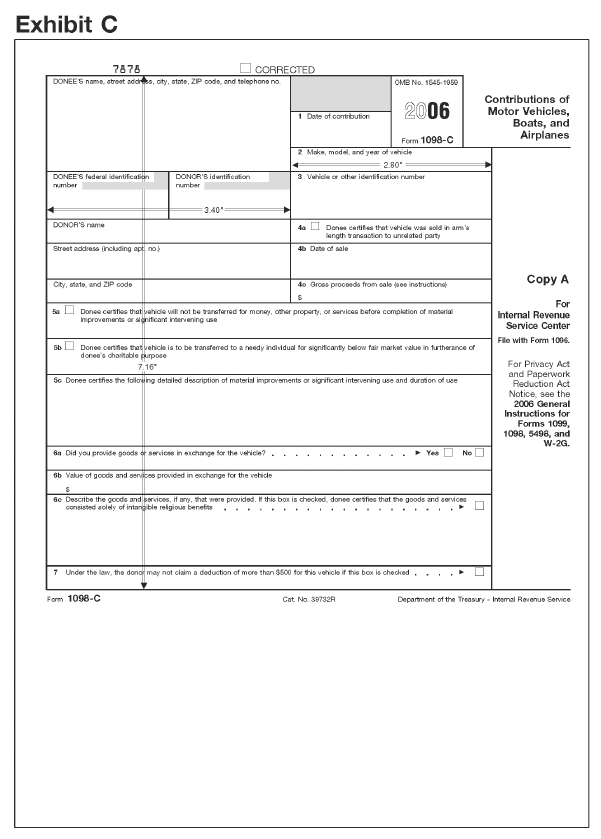
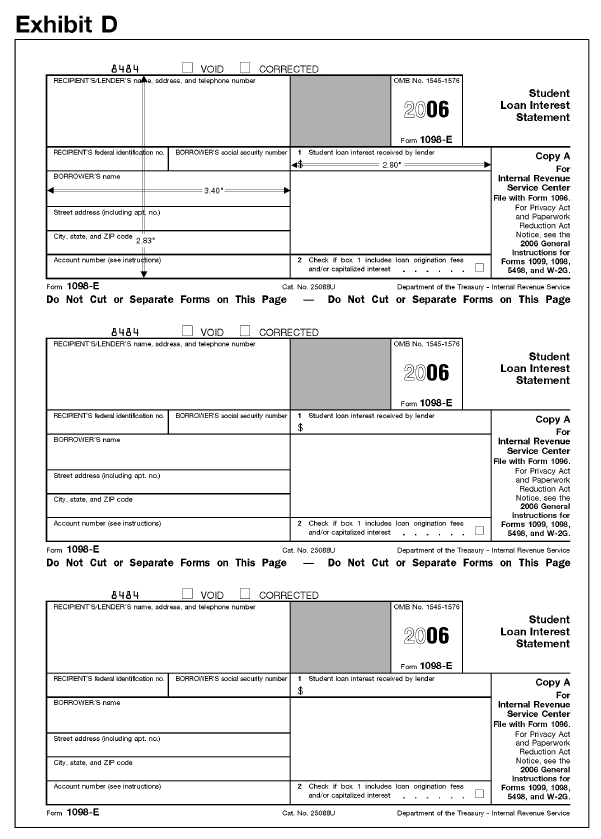
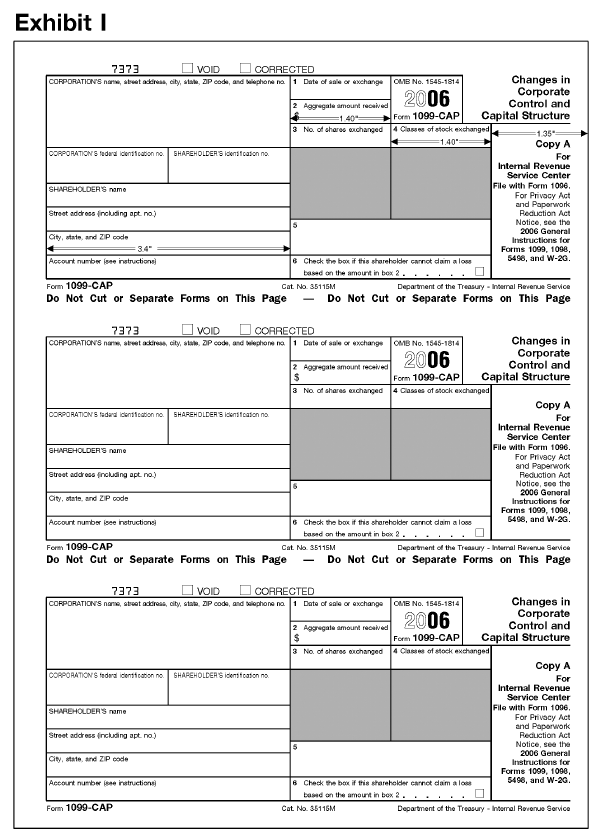
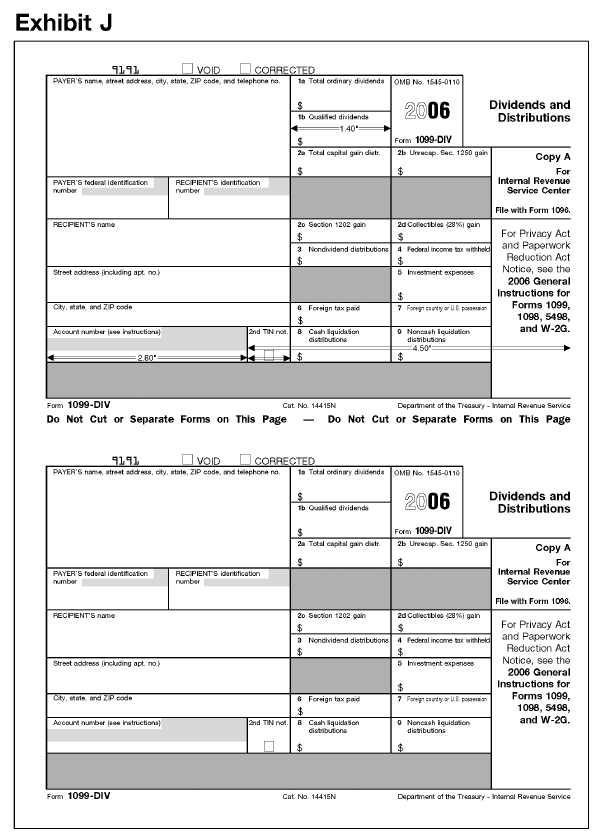
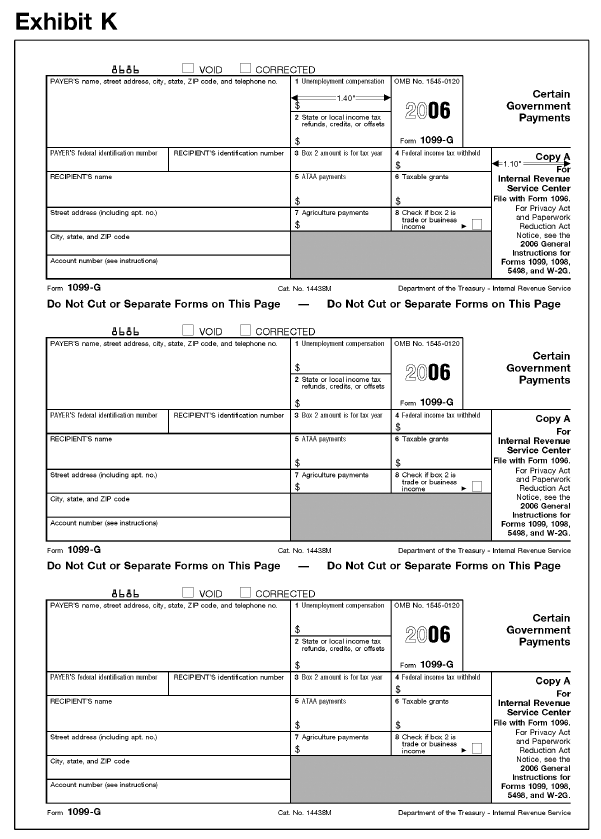
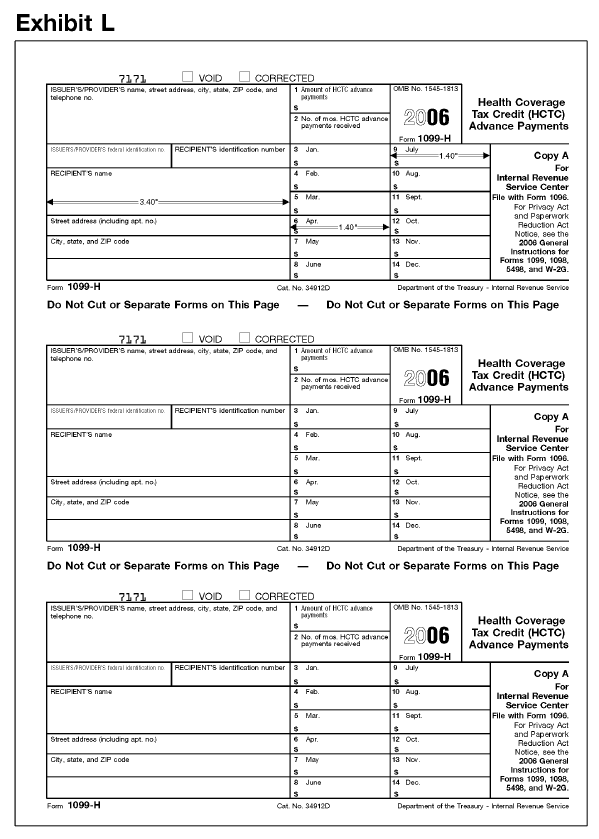
Exhibits A through Z illustrate some of the specifications that were
discussed earlier in this revenue procedure. The dimensions apply to the actual
size forms, but the exhibits have been reduced in size.
Generally, the illustrated dimensions apply to all like forms. For example,
Exhibit B shows 11.00” from the top edge to the bottom edge of Form
1098 and .85” between the bottom rule of the top form and the top rule
of the second form on the page. These dimensions apply to all forms that are
printed three to a page.
Keep in mind the following guidelines when printing substitute forms.
-
Closely follow the specifications to avoid delays in processing the
forms.
-
Always use the specifications as outlined in this revenue procedure
and illustrated in the exhibits.
-
Do not add the text line “Do Not Cut or Separate Forms on This
Page” to the bottom form. This will cause inconsistency with the specifications.
Internal Revenue Bulletin 2007-03
SEARCH:
You can either: Search all IRS Bulletin Documents issued since January 1996, or Search the entire site. For a more focused search, put your search word(s) in quotes.
2007 Document Types | 2007 Weekly IRBs
IRS Bulletins Main | Home
|